Emergency Water Damage Restoration
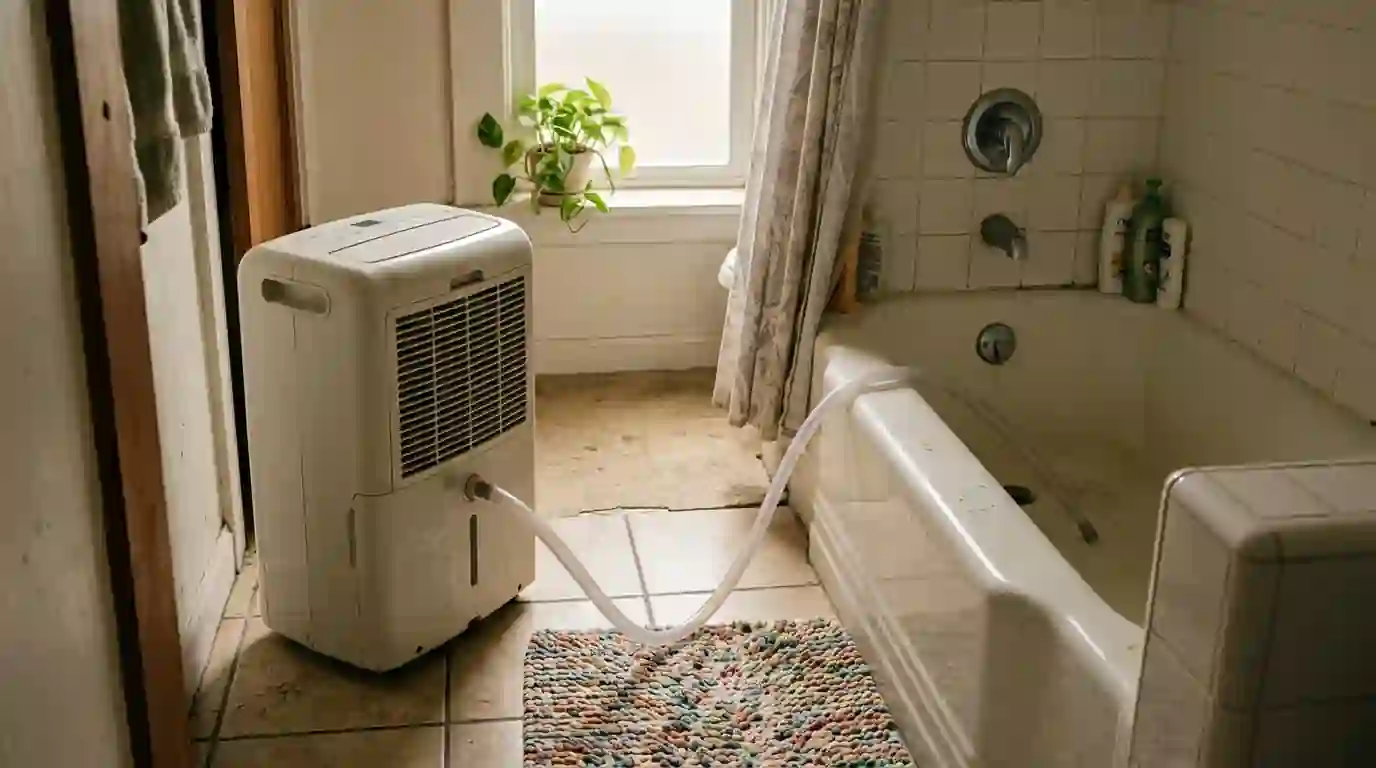
Shutoff, extraction and drying set up on the first visit.
What this involvesWater, mold, fire and storm work
Thirty-three jobs, grouped by what actually happened to the house. If you are not sure which one fits, call and describe what you see.
24/7 emergency line
(323) 709-0141Quick answer
Most restoration calls in Los Angeles fall into six families: active water, drying and rebuild, mold and odor, fire and smoke, flood and sewage, and commercial or inspection work. If water is still moving, start with emergency water removal; everything else follows from what that first visit finds.
Start here
Pages below explain each job in plain terms: what the work involves, what drives the cost, how long the house is disrupted, and what you can safely do before we arrive. They are grouped the way the damage happens, not alphabetically, so the jobs that usually follow each other sit together.
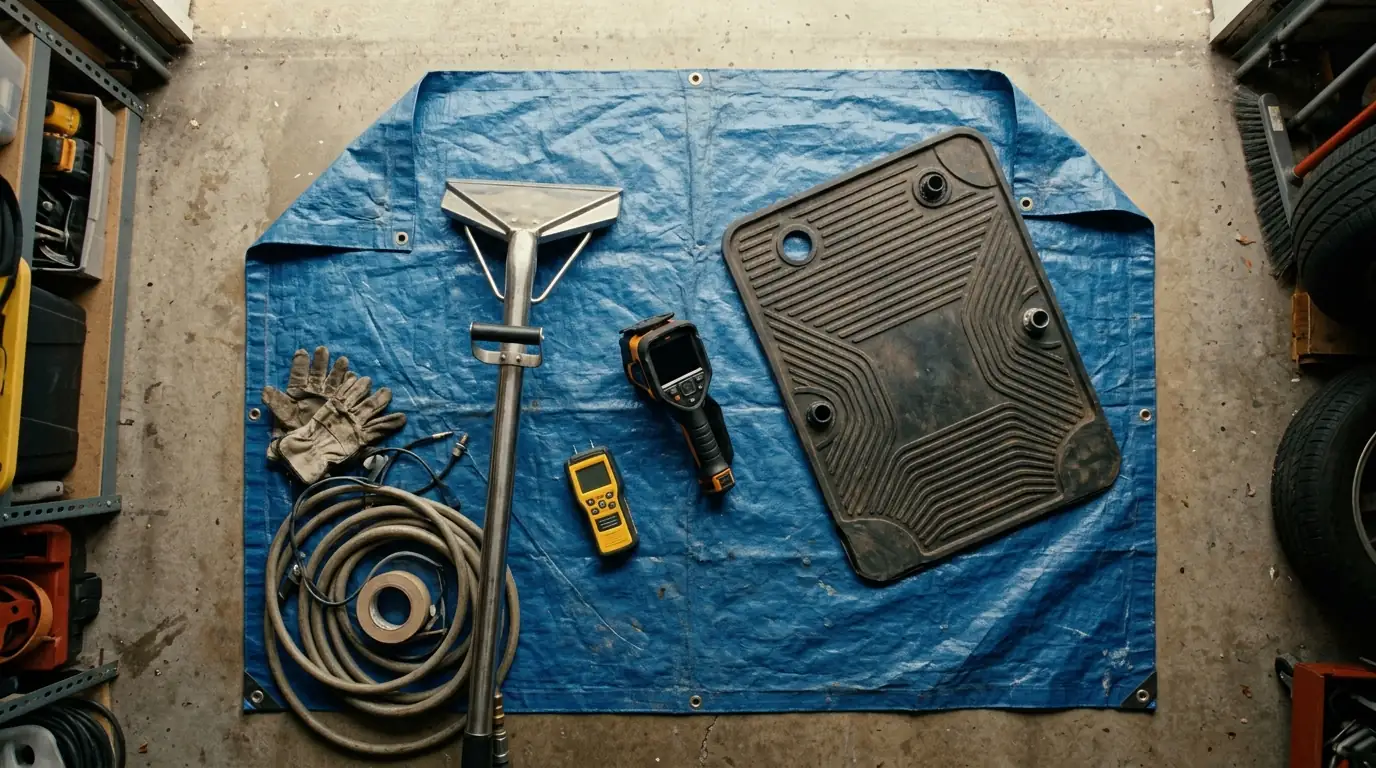
01 / Emergency Water Removal / 10 jobs
These are the calls where water is on the floor or coming through the ceiling right now. Each one starts the same way: stop the source, pull the water out, and find how far it went before it hides in walls and subfloors. The difference is where it came from, which decides what can be dried and what has to come out.
Shutoff, extraction and drying set up on the first visit.
What this involvesSupply lines, pinholes and old galvanized pipe.
What this involvesStains, sagging drywall and wet attic insulation.
What this involvesWarm spots and lifting floors over concrete.
What this involvesWater heaters, washers, dishwashers, fridge lines.
What this involvesClean or contaminated, and the ceiling below.
What this involvesPumping, insulation and vapor barrier under the house.
What this involvesPans, valves and tub drains leaking behind tile.
What this involvesCondensate overflow from attic and closet units.
What this involvesDraining the belly, insulation and soft floor decking.
What this involves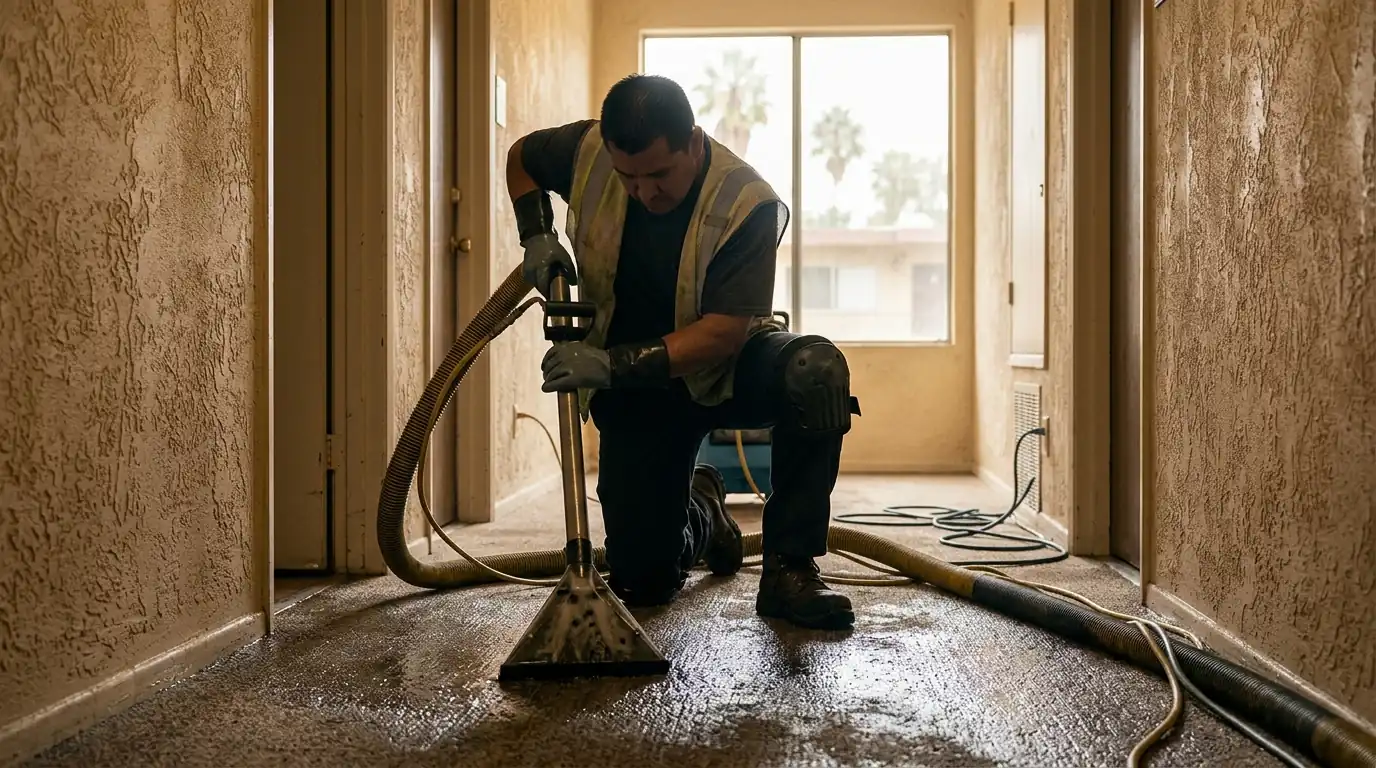
02 / Drying and Rebuild / 8 jobs
Once the standing water is gone, the real work is inside the materials. Drying runs to a measured reading, not a day count, and only then does the rebuild start. Keeping drying and rebuild with one crew means the moisture logs and photos carry straight into the repair scope.
Walls, subfloors and plaster dried to a reading.
What this involvesCupped and buckled floors dried with mats.
What this involvesExtraction, new pad and relaying the carpet.
What this involvesFlood cuts, ceiling board and matched texture.
What this involvesFlooring, cabinets, trim and paint put back.
What this involvesInventory, cleaning and storage of belongings.
What this involvesLath and plaster dried in place and patched.
What this involvesRotted subfloor, joists and sill plates replaced.
What this involves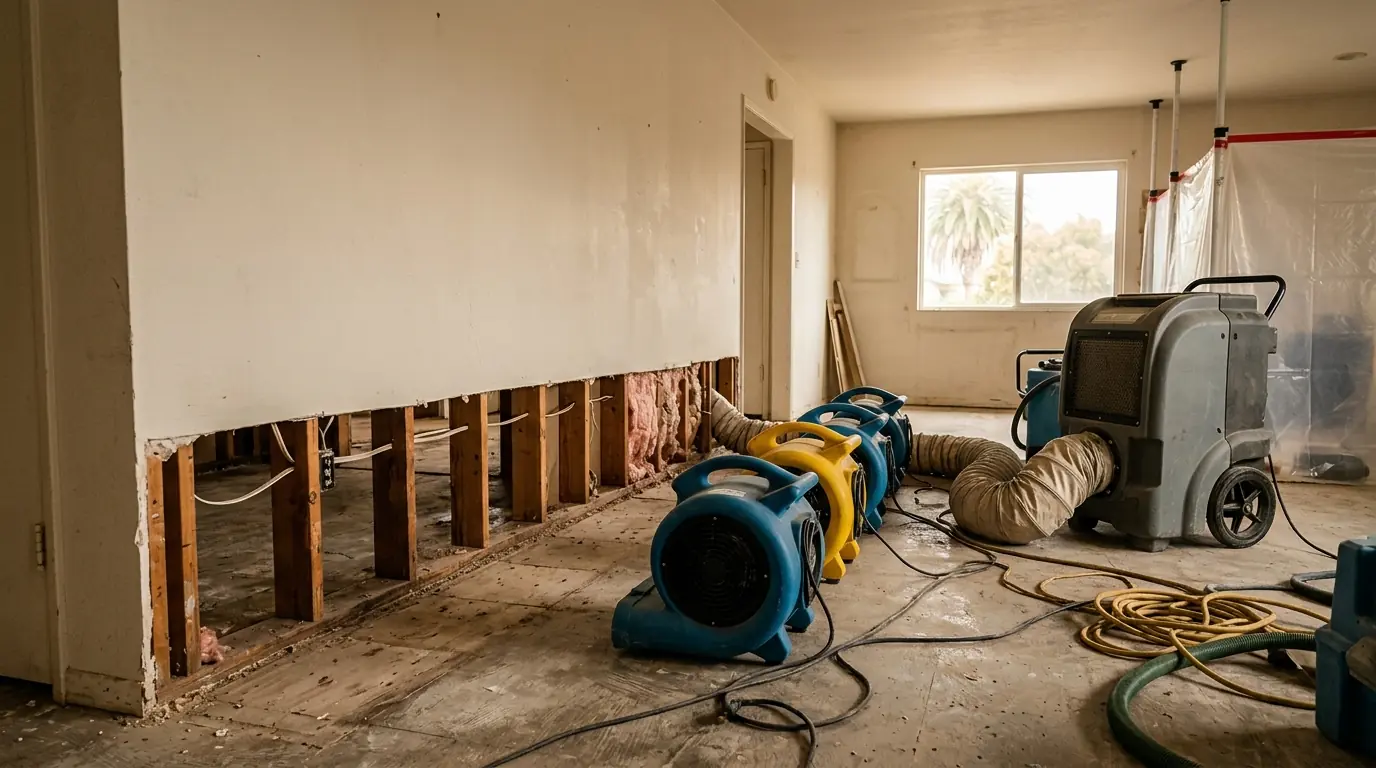
03 / Mold and Odor / 3 jobs
Mold and lingering smells are almost always a moisture story. Inspection finds the water first, remediation removes what grew on it, and odor work removes the residue instead of covering it. If the moisture is still there, no treatment lasts.
Moisture mapping plus air and surface samples.
What this involvesContainment, removal and air scrubbing.
What this involvesMusty, smoke and sewage smells traced to the source.
What this involves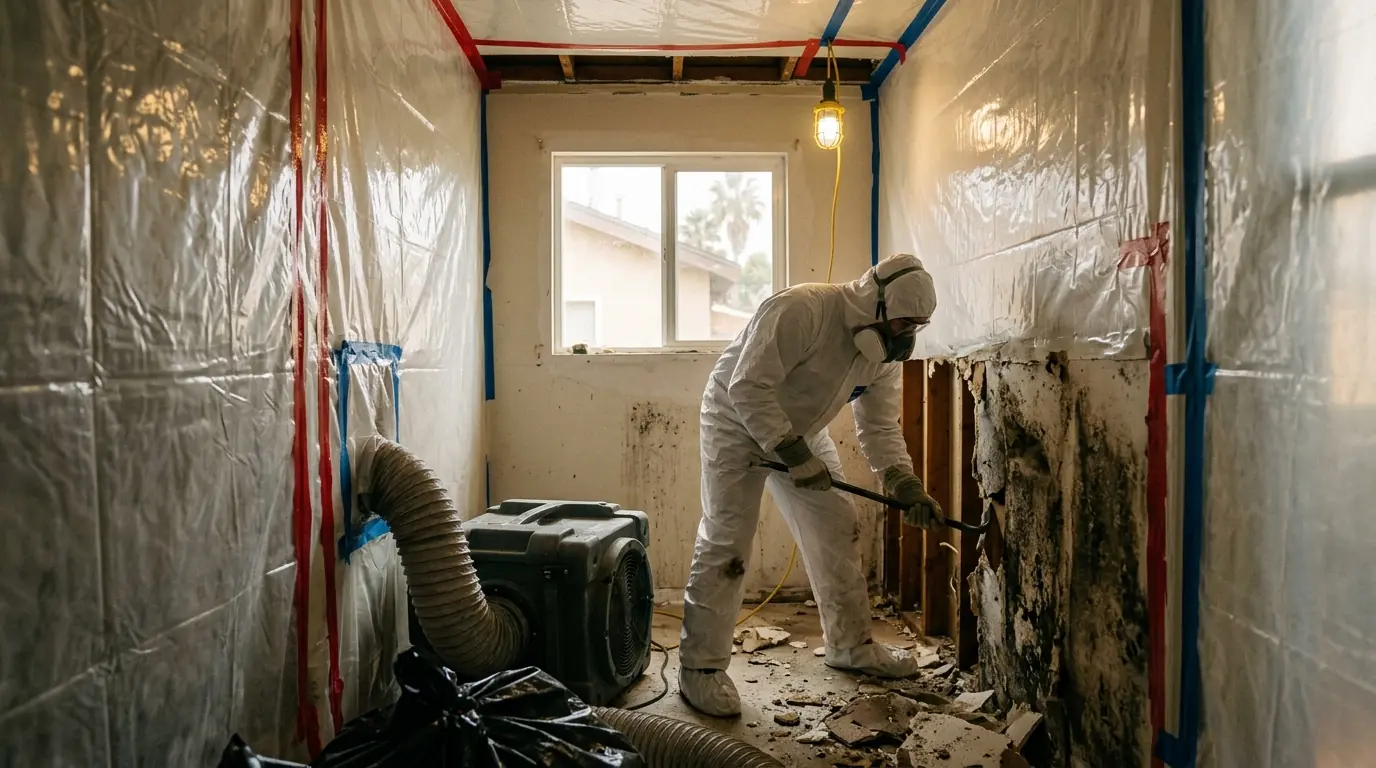
04 / Fire and Smoke / 4 jobs
Fire jobs are three losses at once: what burned, the soot that traveled through the house, and the water used to put it out. Securing the house and drying the firefighting water come first; soot cleaning and odor follow in the right order for the soot you have.
Firefighting water, burned material and rebuild.
What this involvesDry, oily and protein soot, plus the ducts.
What this involvesAsh and smoke in standing homes, inside and out.
What this involvesRoofs tarped and openings boarded any hour.
What this involves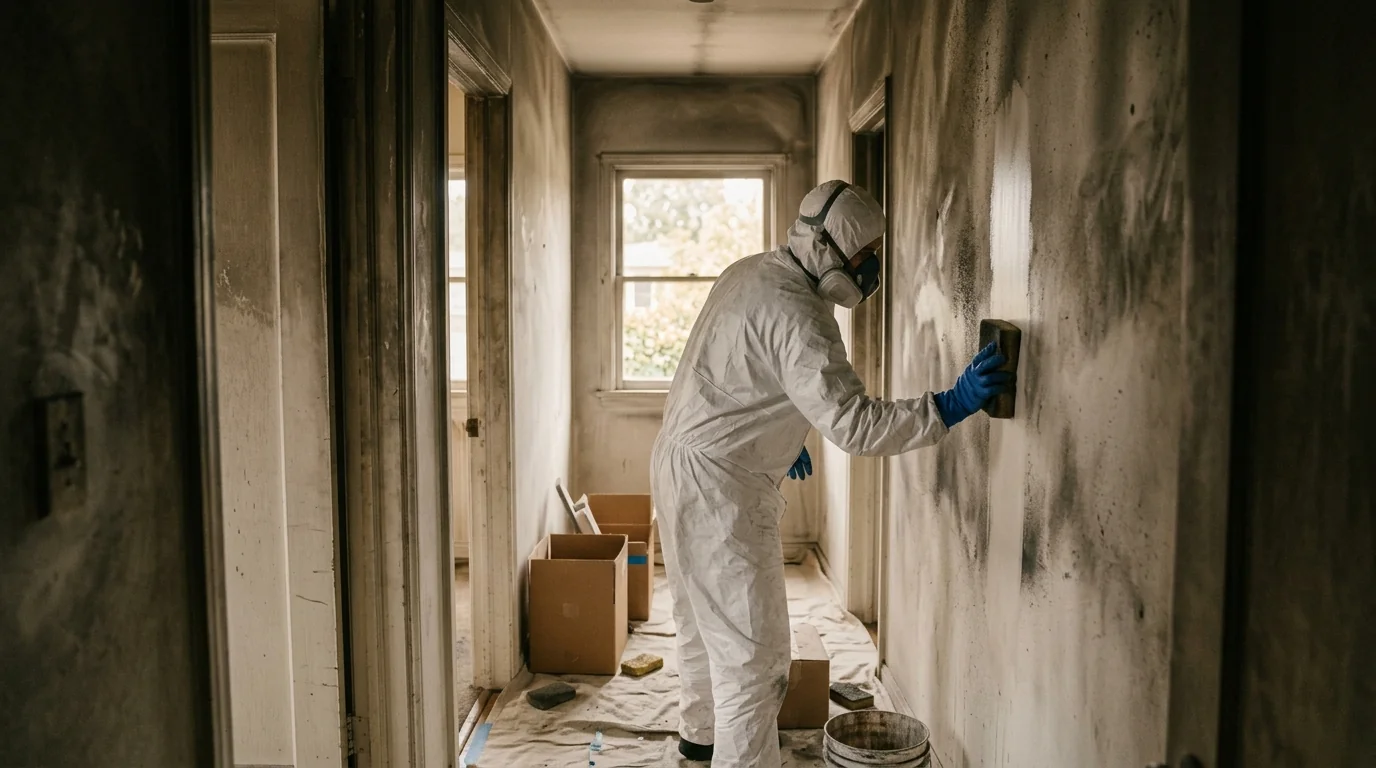
05 / Flood, Sewage and Disaster / 4 jobs
Outside water and sewage are handled as contaminated from the start: containment, removal of porous materials, disinfection, then drying. Earthquakes add broken water lines, cracked finishes and fallen contents all at once. These losses are also where insurance coverage differs most, so documentation starts before anything moves.
Storm water in garages and ground floors.
What this involvesContaminated water contained, removed, disinfected.
What this involvesMud, debris and wind damage after storms.
What this involvesBroken heaters and lines, cracked walls, fallen contents.
What this involves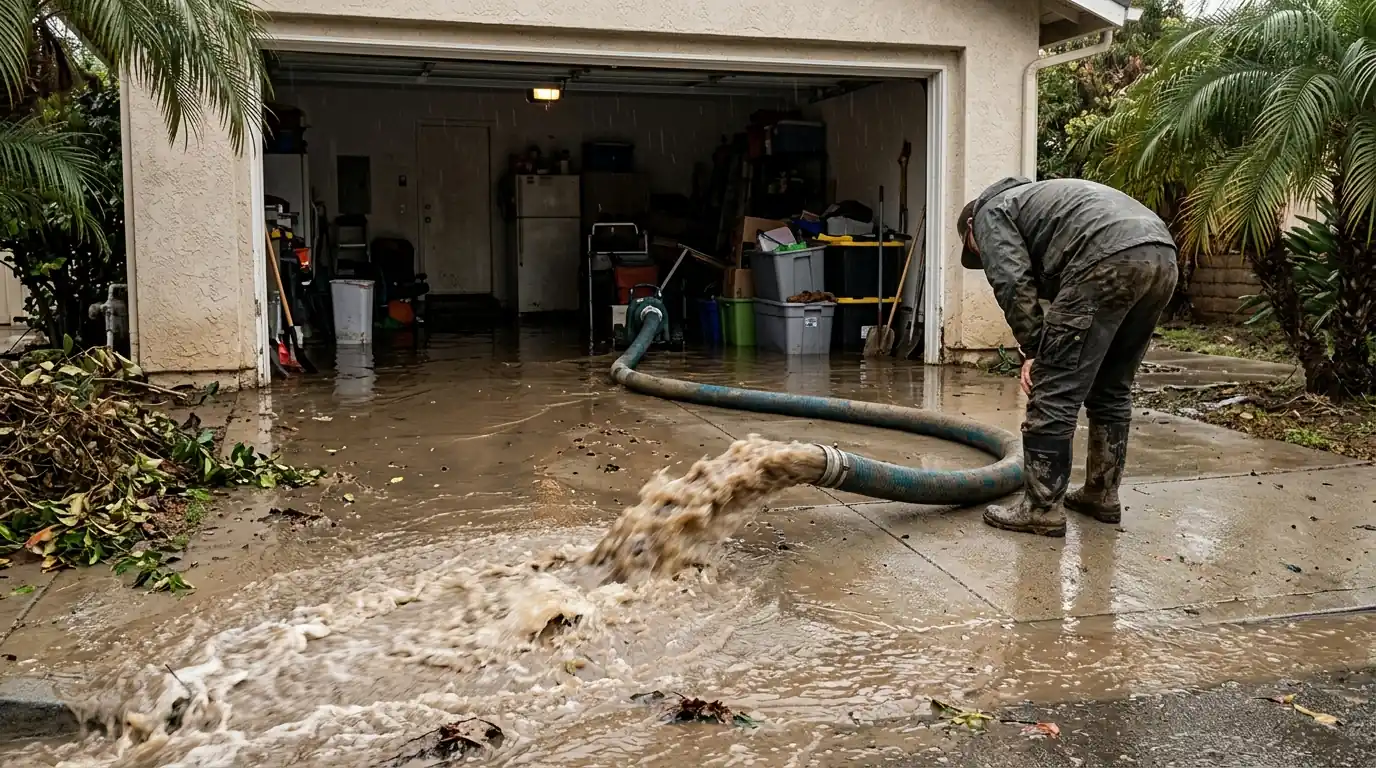
06 / Commercial and Inspection / 4 jobs
Commercial and multi-unit losses need drying planned around open hours and residents, and records split by area or unit. Inspection is for the other side: finding out whether something is wet before anyone opens a wall.
Offices, retail, restaurants and warehouses.
What this involvesLeaks between units, with records per unit.
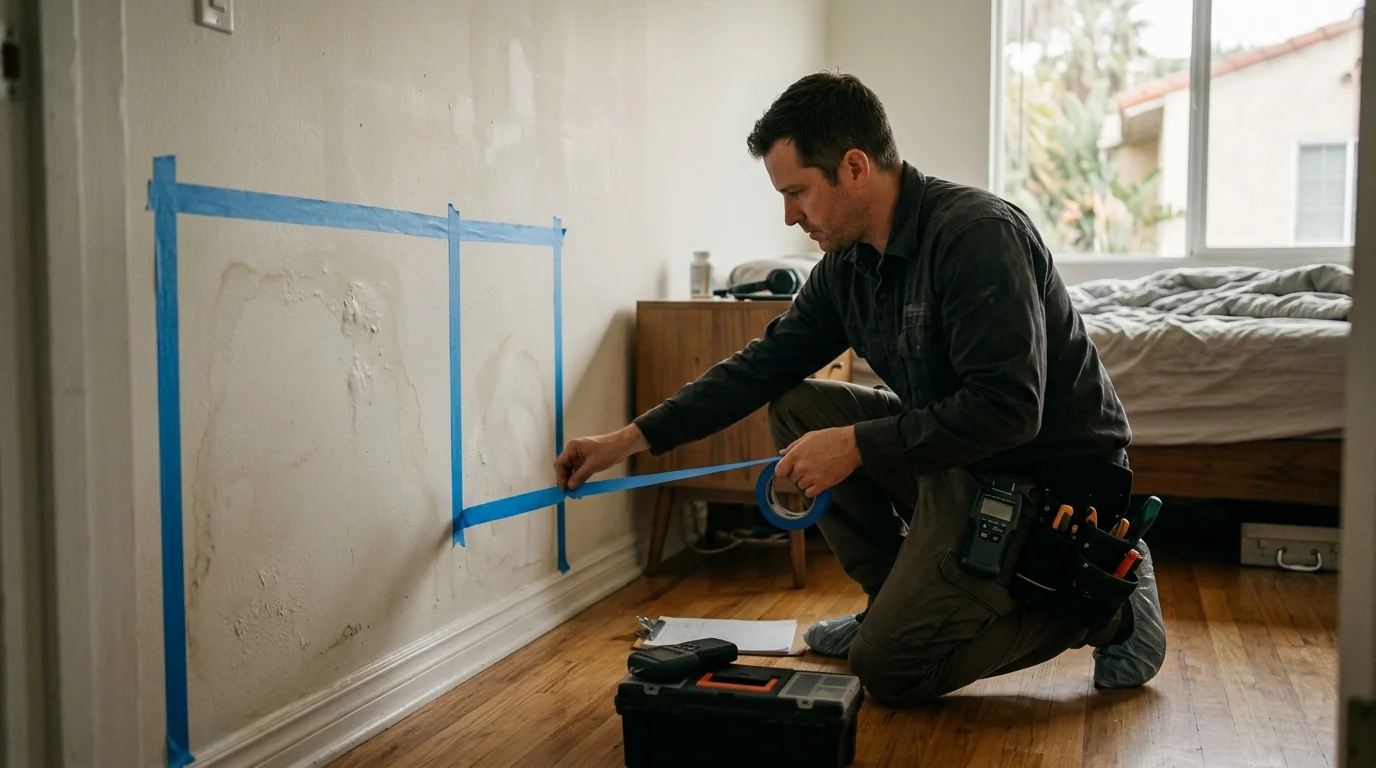
What this involvesThermal imaging and a written moisture map.
What this involvesSprinkler discharge across floors and tenants.
What this involves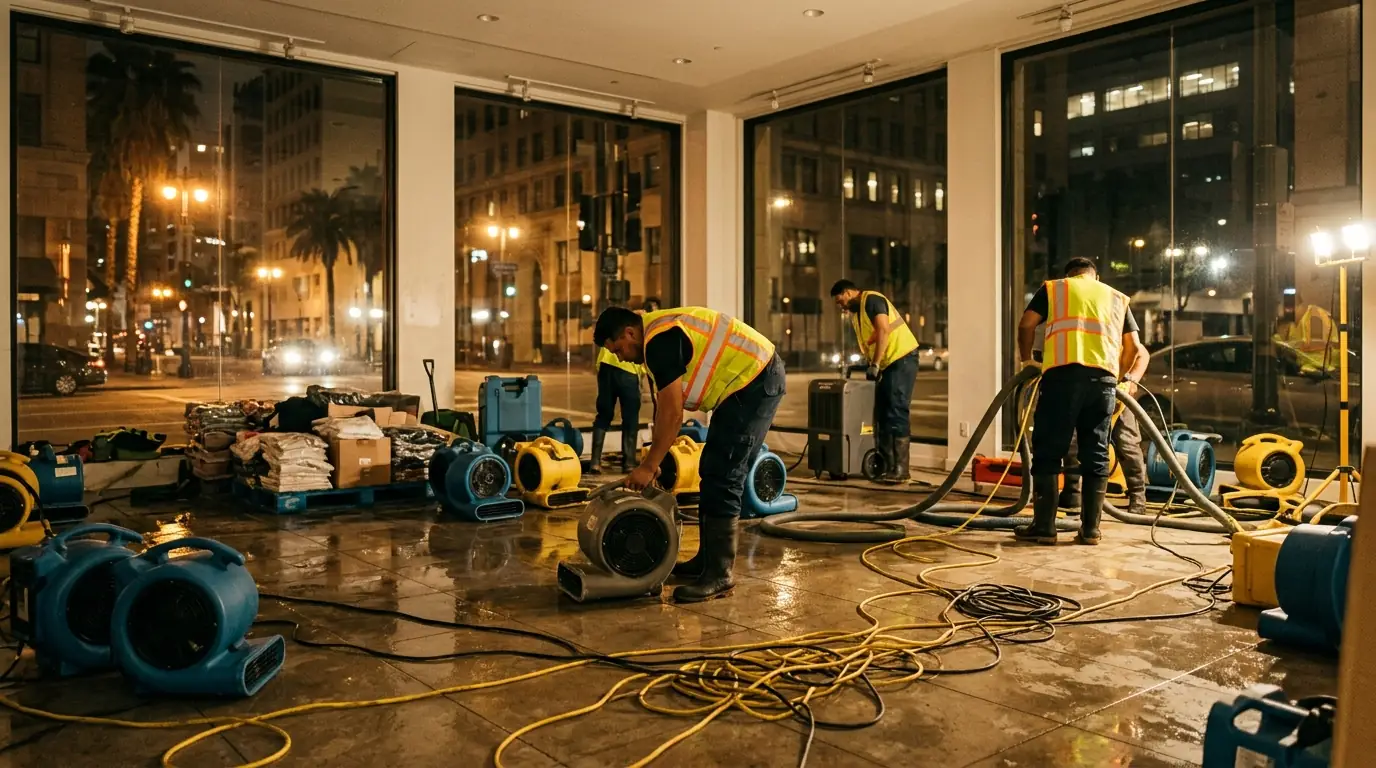
Selection guide
Match what you are seeing to where to start. The first visit usually shows what comes next.
| What you are seeing | Start with |
|---|---|
| Water is still coming in or standing on the floor | Emergency water damage restoration |
| A pipe burst or a supply hose let go | Burst pipe cleanup |
| The ceiling is stained, dripping or sagging | Ceiling and roof leak water damage |
| Sewage came up a drain or tub | Sewage backup cleanup |
| Storm water or mud got in from outside | Flood cleanup |
| There was a fire, even a small one | Fire damage restoration |
| A stain below the bathroom or a soft floor by the shower | Shower and tub leak water damage |
| Water dripping from the ceiling near the AC or attic hatch | AC leak water damage |
| It smells musty but nothing looks wet | Mold inspection and testing |
| An old leak was never properly dried | Water damage inspection |
How we work
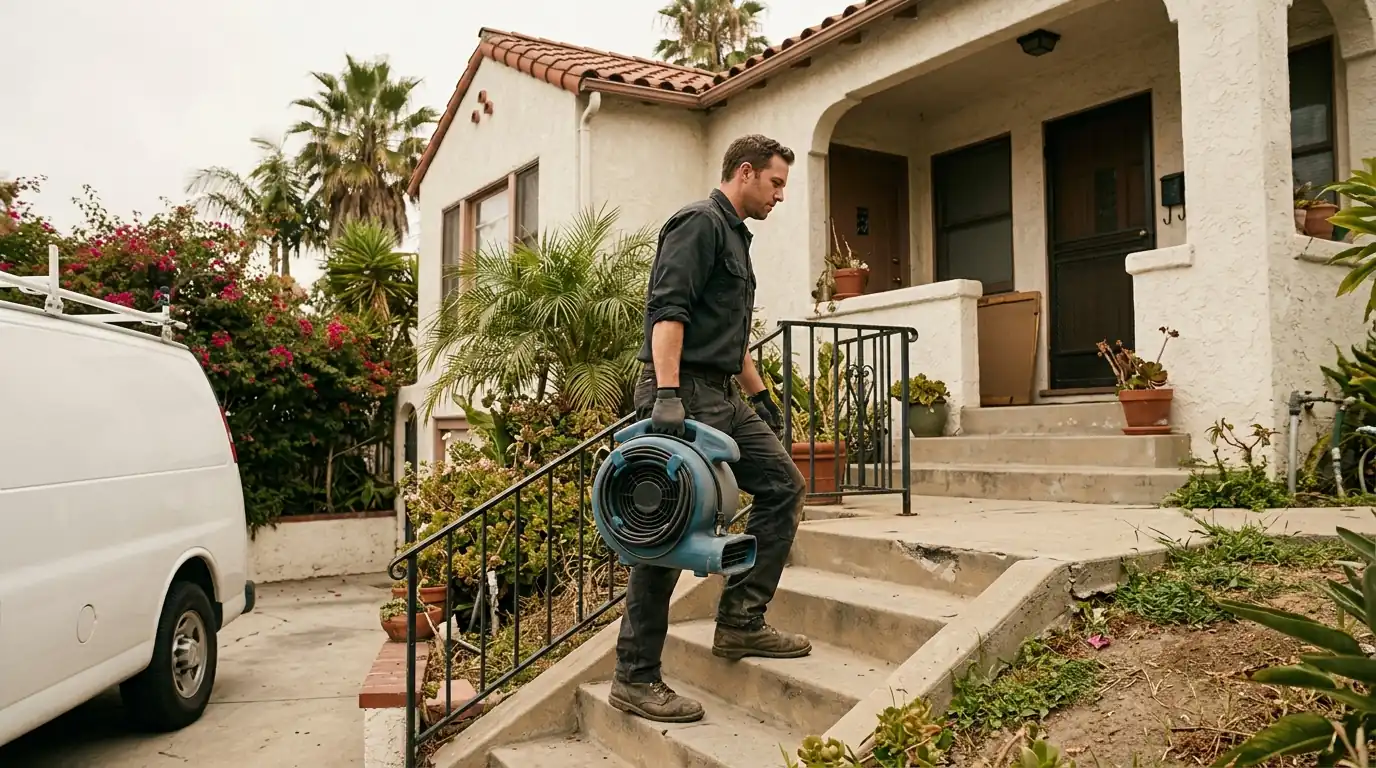
One phone line covers all 33 jobs, answered 24/7. The crew that extracts the water also runs the drying, takes the readings, removes mold if it appears, and rebuilds the rooms, so there is one set of photos and one moisture log from start to finish.
That matters most when you file a claim. Adjusters ask for dated readings and photos in the order the work happened; splitting a job across companies is where those records get lost.
FAQ
Call the main line and describe what you see. Dispatch matches it to the right job and truck.
Yes. The same crew dries the structure and puts it back together, using one set of records.
We document every job with dated photos and moisture readings. Coverage decisions are your insurer's.
Yes, offices, retail, restaurants, warehouses and apartment buildings, scheduled around your hours.
Inspection and moisture testing are their own service, with a written moisture map.
The phone is answered 24/7, and emergency water, sewage and board-up calls are dispatched at any hour.
Call and describe what you see. We will tell you where to start.
24/7 emergency line
(323) 709-0141The West Coast Builders
153 Japanese Village Plaza Mall, Los Angeles, CA 90012