Contaminated water, handled 24/7
Sewage backup cleanup in Los Angeles, any hour
Sewage is the one water loss you should not clean yourself. It carries bacteria into every porous thing it touches, and those things come out.
- Answered 24/7
- Tubs, showers, floor drains
- Under-house sewage
Updated September 2026
24/7 emergency line
(323) 709-0141- 1Stop using waterNo flushing, no showers, no laundry.
- 2Keep people outKids and pets especially.
- 3We contain and cleanProtective gear, then removal.
Quick answer
For a sewage backup in Los Angeles, stop running any water in the house, keep everyone out of the affected rooms and call. The job is containment, extraction, removal of every porous material the sewage touched, disinfection of what stays, then drying. Nothing contaminated is dried in place, and the drain line itself needs a plumber.
What you might notice
Signs a sewer line is starting to back up
Gurgling drains
Toilets or tubs burble when water runs.
Slow drains everywhere
More than one fixture draining slowly.
Water in the tub
Rising when the washer drains.
Sewer smell
Odor from drains or under the house.
Wet yard spot
Soggy ground over the sewer line.
Cleanout overflowing
Water at the outdoor cleanout cap.
Toilet bubbles
Air rising in the bowl.
How the job runs
How a sewage cleanup runs
WetDry and signed off
- 1
Stop the inflow
No water use until the line is cleared.
- 2
Contain the area
Plastic barriers and a separate work path.
- 3
Extract contaminated water
Protective gear, then extraction.
- 4
Remove porous materials
Bagged and hauled, never dried in place.
- 5
Clean and disinfect
Antimicrobial on every remaining surface.
- 6
Dry the structure
Air movers and a dehumidifier to dry.
- 7
Clear and document
Final readings, photos and a written scope.
The job
Why sewage cleanup is different from other water
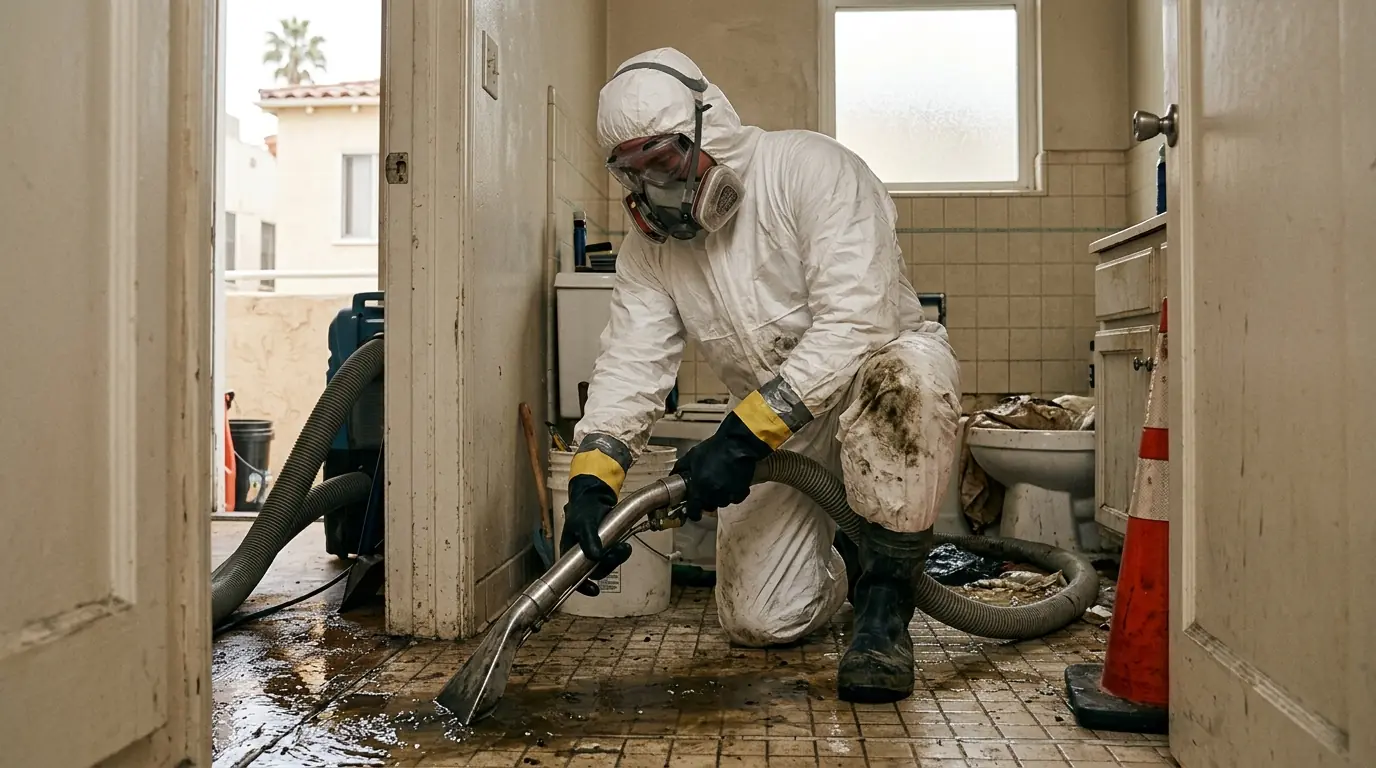
Sewage is Category 3 water, the most contaminated class. Carpet, pad, drywall edges, insulation and upholstered items it reached are removed rather than cleaned, because bacteria live inside them.
Hard surfaces like tile, sealed concrete, framing and fixtures are cleaned, disinfected and dried. The area is sealed off while that happens.
Variations of this job
Main line backup
A main line backup happens when the sewer line leaving the house is blocked by roots, grease, a collapsed section or a city-side problem, so everything drained in the house comes back up at the lowest fixture. That is usually a ground-floor shower, tub or floor drain. Stop using water immediately, because every flush adds to the spill. We clean up the damage; the blockage itself needs a plumber with a camera, and we note which fixture overflowed so they know where to start.
Shower and tub backup
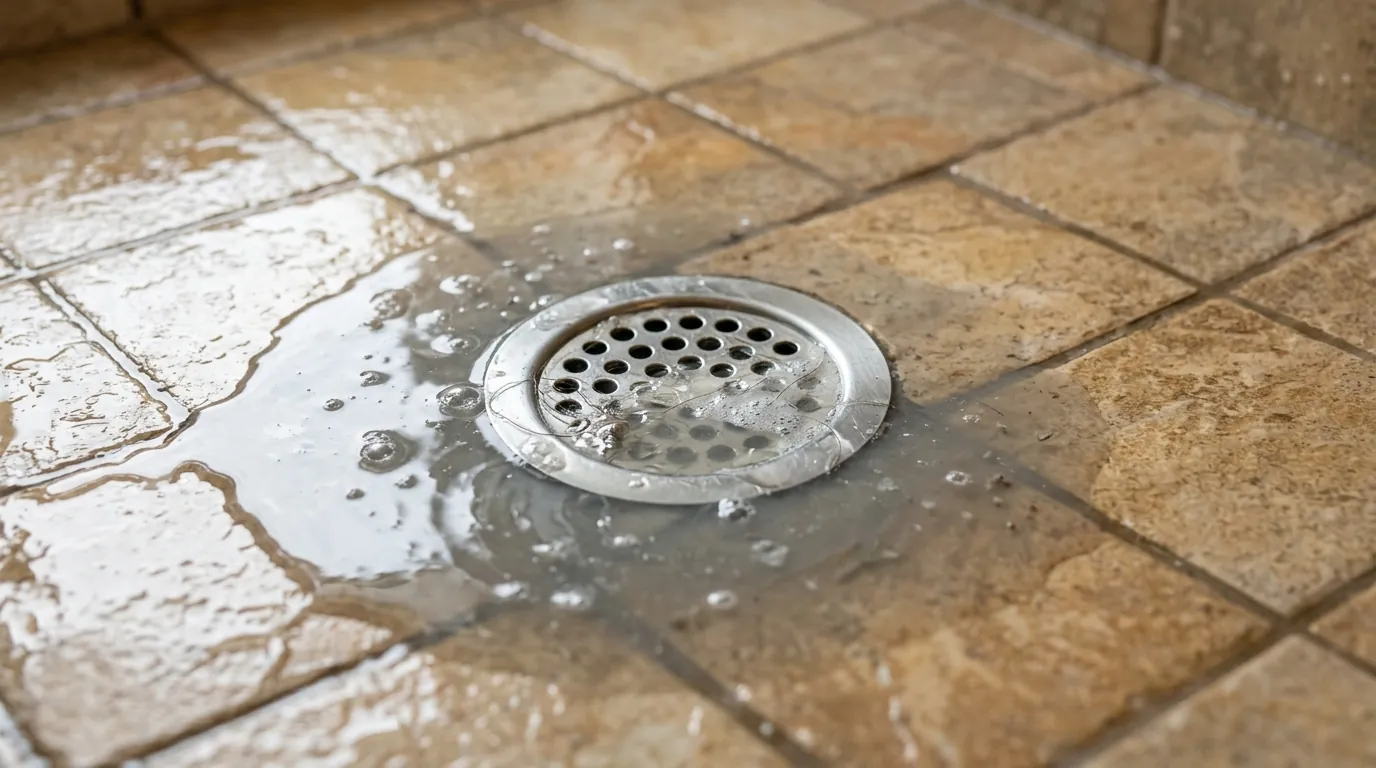
A shower and tub backup is often the first sign of a main line problem, because the tub drain sits lowest in the bathroom. Gray-black water fills the tub, then overflows onto the floor and into the hallway. We extract it, remove wet bath mats, baseboard and any carpet it reached, disinfect the tub and tile, and dry the subfloor. If the overflow ran through a wall or into the room below, that material comes out too. The tub itself is usually saved.
Sewage under the house
Sewage under the house comes from a broken drain line in a crawl space, and it can go unnoticed for weeks apart from a smell. The soil and vapor barrier are contaminated, insulation above may be soaked, and moisture feeds odor into the living space. We remove contaminated insulation and vapor barrier, treat the soil and framing with an antimicrobial, dry the space, and lay a new barrier once the line is repaired. Crawl space access gets sealed between visits so odor stays out of the house.
Los Angeles conditions
Public sewer, private laterals
In the Los Angeles and Long Beach metro, nearly every home drains to public sewer, which means a backup is almost always the private lateral between the house and the street, not a septic tank. Standard homeowner policies often exclude sewage backup unless a separate endorsement was added, so it is worth checking your policy before cleanup starts; we document the loss either way.
Sewage coming up a drain right now? Stop using water and call; we will take it from there.
Call (323) 709-0141What is included
What a sewage cleanup includes
- Photos before anything moves
- Containment of the work area
- Protective gear for the crew
- Extraction of contaminated water
- Removal of porous materials
- Antimicrobial on hard surfaces
- Drying with daily readings
- Odor treatment after drying
- Written scope for your claim
Cost factors
What sewage cleanup costs
2026 guides put black water mitigation at $7 to $7.50 per square foot, with typical black water jobs at $3,000 to $10,000 or more, and uninsured sewage losses reaching $10,000 to $40,000 or more. Planning ranges only.
Area affected
Rooms and square footage reached.
Materials removed
Carpet, drywall, cabinets, insulation.
Containment
Sealing the area from clean rooms.
Crawl space work
Soil treatment and new barrier.
Contents
Items cleaned versus discarded.
Drying days
Equipment until readings reach dry.
FAQ
Sewage backup questions
Usually, if the affected rooms are closed off and no one uses the water. Vulnerable people should stay away until cleanup is done.
We strongly advise against it. Sewage needs protective gear, containment and removal of porous materials.
Often only with a sewage backup endorsement. Check your policy; we document the loss either way.
We handle the damage. The blockage needs a plumber with a camera.
Yes. Carpet and pad that sewage reached are removed, not cleaned.
Once contaminated material is out and the area is disinfected and dry, yes.
Related work
What else the same leak can lead to
Flood Cleanup
Rain intrusion
More on flood CleanupStorm and Mudslide Cleanup
Mud and debris removal
More on storm and Mudslide CleanupEarthquake Damage Cleanup
Water heater and pipe breaks
How we handle earthquake Damage CleanupShower and Tub Leak Water Damage
Shower pan leak
How we handle shower and Tub Leak Water DamageAC Leak Water Damage
Condensate drain line clog
How we handle AC Leak Water DamageSewage in the house right now?
Stop running water, keep people out of those rooms, and call us.
24/7 emergency line
(323) 709-0141