Guide: mold and moisture
How fast mold grows after a leak in a Los Angeles home
Mold does not need a flood. It needs a material that stays wet for a day or two, which is exactly what a hidden leak provides.
By June Calloway, Restoration Guides Editor Updated September 2026
24/7 emergency line
(323) 709-0141- 1Find the waterMold follows moisture.
- 2Dry within a dayBefore growth starts.
- 3Do not paint over itIt comes back through.
Quick answer
Mold can begin growing on wet porous materials like drywall paper, carpet pad and wood within 24 to 48 hours, according to EPA guidance. In Los Angeles homes it usually starts from a hidden leak rather than humidity, so the fix is finding the water and drying the material within a day, not spraying the stain.
The timeline
The 24 to 48 hour window
Mold spores are already in every house. What they need to grow is food and water: the paper facing on drywall, the wood in framing and subfloors, the backing on carpet. Once those materials stay wet for a day or two, growth can start, even if nothing shows on the surface yet.
That is why the first day after a leak matters so much. Materials that are dried within 24 hours rarely grow mold. Materials left wet for several days often do, and by then the growth is usually on the back side of the drywall or under the flooring where you cannot see it.
Local conditions
Why LA homes grow mold from leaks, not weather
Los Angeles averages about 14.25 inches of rain a year, mostly in a few winter storms, and outdoor air is dry for much of the year. So the mold we find here is rarely a humidity problem. It is almost always a leak: a supply line under a sink, a shower pan, a roof flashing, a slow drip behind a washer.
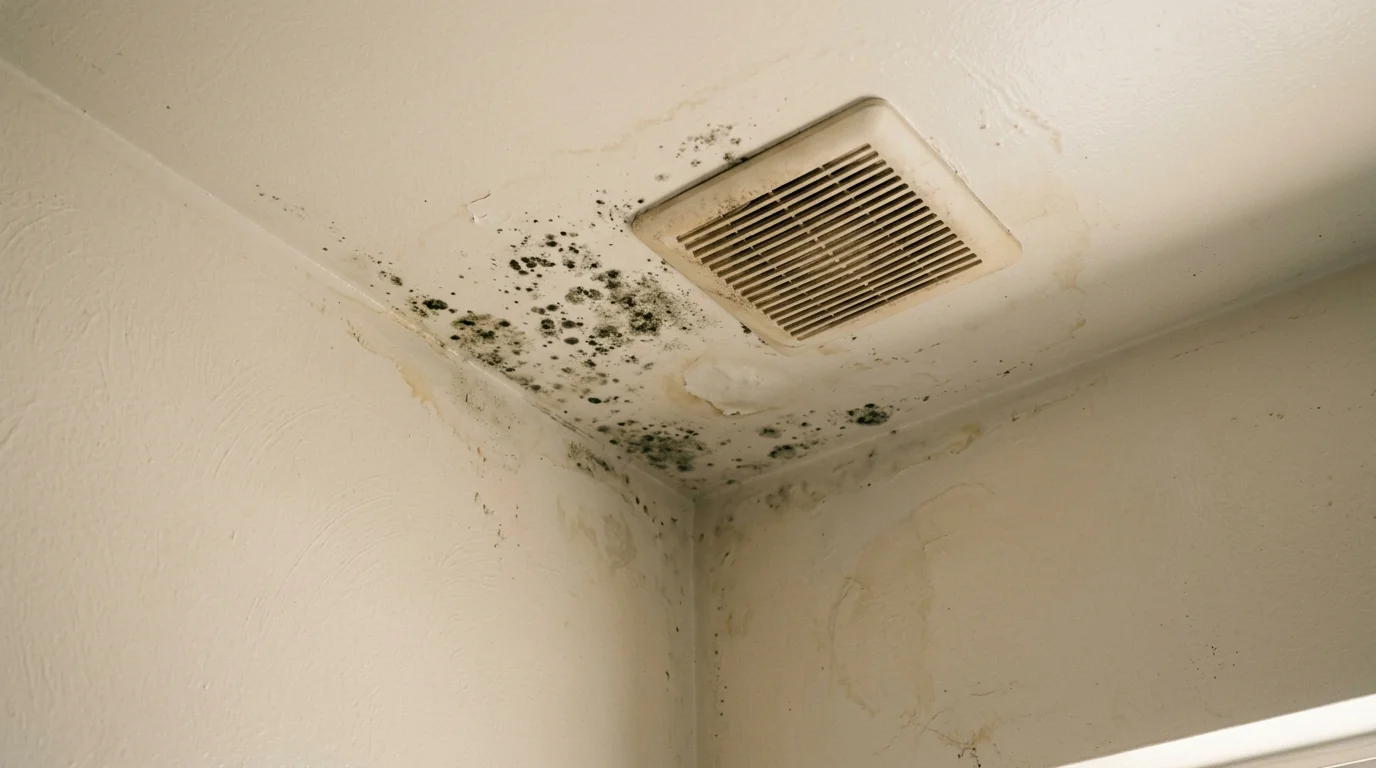
Bathrooms are the exception worth mentioning. A shower with no working exhaust fan can keep a ceiling damp enough to grow mold on paint, even without a leak. That kind of surface growth usually cleans off; mold inside the wall does not.
Hidden spots
Where it hides in a typical house
Check under kitchen and bathroom sinks, behind and under the dishwasher and fridge, around the base of toilets and tubs, in the water heater closet, in the attic below any roof stain, and in the crawl space if the house has a raised floor. These are the places water collects without anyone seeing it.
The signs are a musty smell that is strongest in one room, baseboard that has swollen or come away from the wall, paint that bubbles, or dark spotting low on a wall. A moisture meter or thermal camera finds the wet area before any of that shows, and testing for hidden mold narrows it down when you smell it but cannot see it.
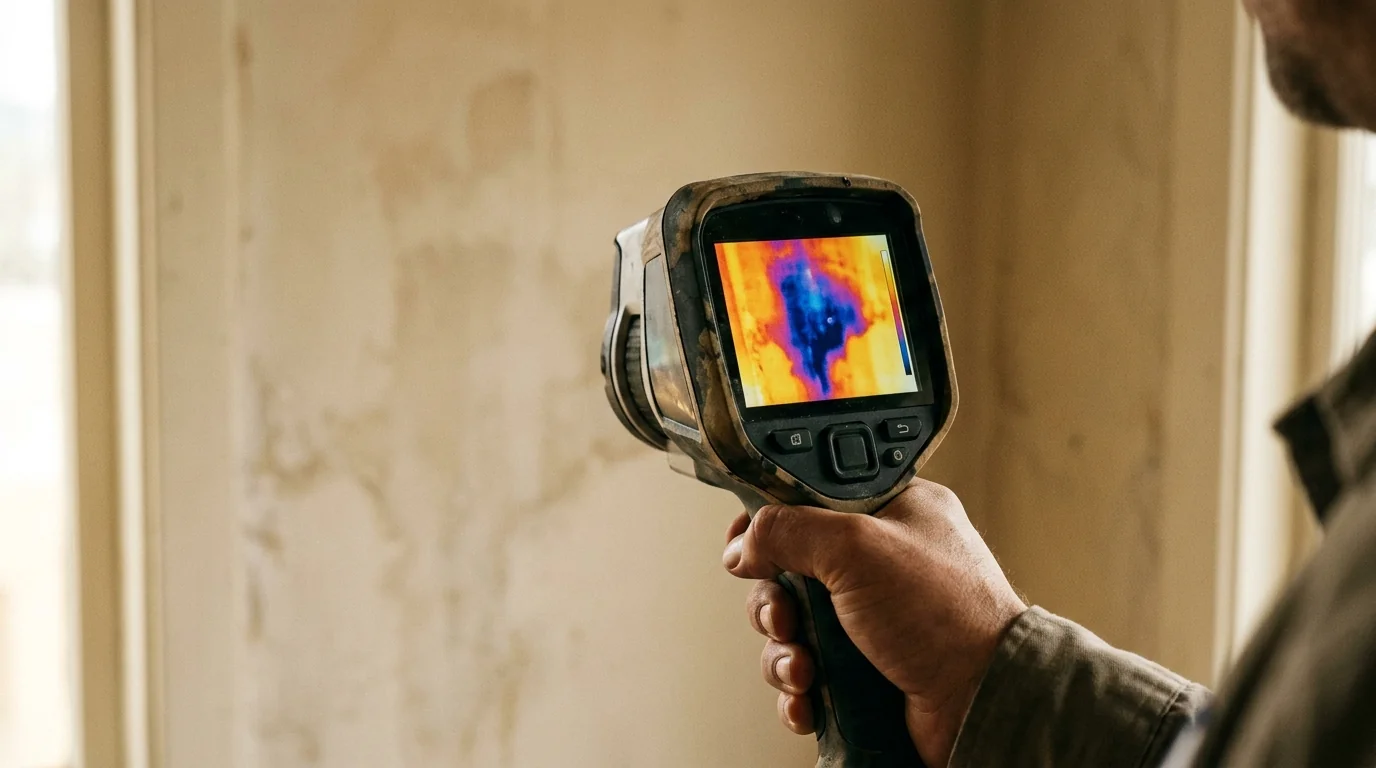
Smell something musty after a leak? Call and we will find the moisture before the mold spreads.
Call (323) 709-0141A common mistake
Why painting over it does not work
After the February 2024 storm, when the mayor declared a local emergency and water got into roofs and walls across the city, a lot of stains were simply painted over once they looked dry. Some of those walls were still wet inside, and the mold we open up months later often traces back to exactly that.
Paint does not stop mold that is growing behind it or inside it. The wall has to be confirmed dry with readings first, and any growth on the back of the drywall removed, before the surface is repaired.
Action steps
What to do in the first two days
Stop the water, then get wet materials drying as fast as possible. Pull wet rugs and pad, open cabinet doors, and get air moving, but understand that fans alone will not dry the inside of a wall or a subfloor. Proper drying uses dehumidifiers and, where needed, air pushed into the wall cavity.
If you are not sure how far the water went, a moisture survey answers it without opening anything. Our moisture testing page explains how that works, and structural drying covers the equipment side.
Size matters
Cleaning it yourself versus calling for remediation
EPA guidance treats small areas, roughly under 10 square feet, as something a homeowner can often clean with gloves, a mask and a household cleaner, as long as the moisture source is fixed. Mold on grout, caulk or a painted bathroom ceiling usually falls into that category.
Larger areas, growth inside walls, in the attic or crawl space, or anything after contaminated water, is a job for containment and removal. Disturbing it without containment spreads spores through the house. Our mold remediation page walks through that process.
Prevention
Keeping it from happening next time
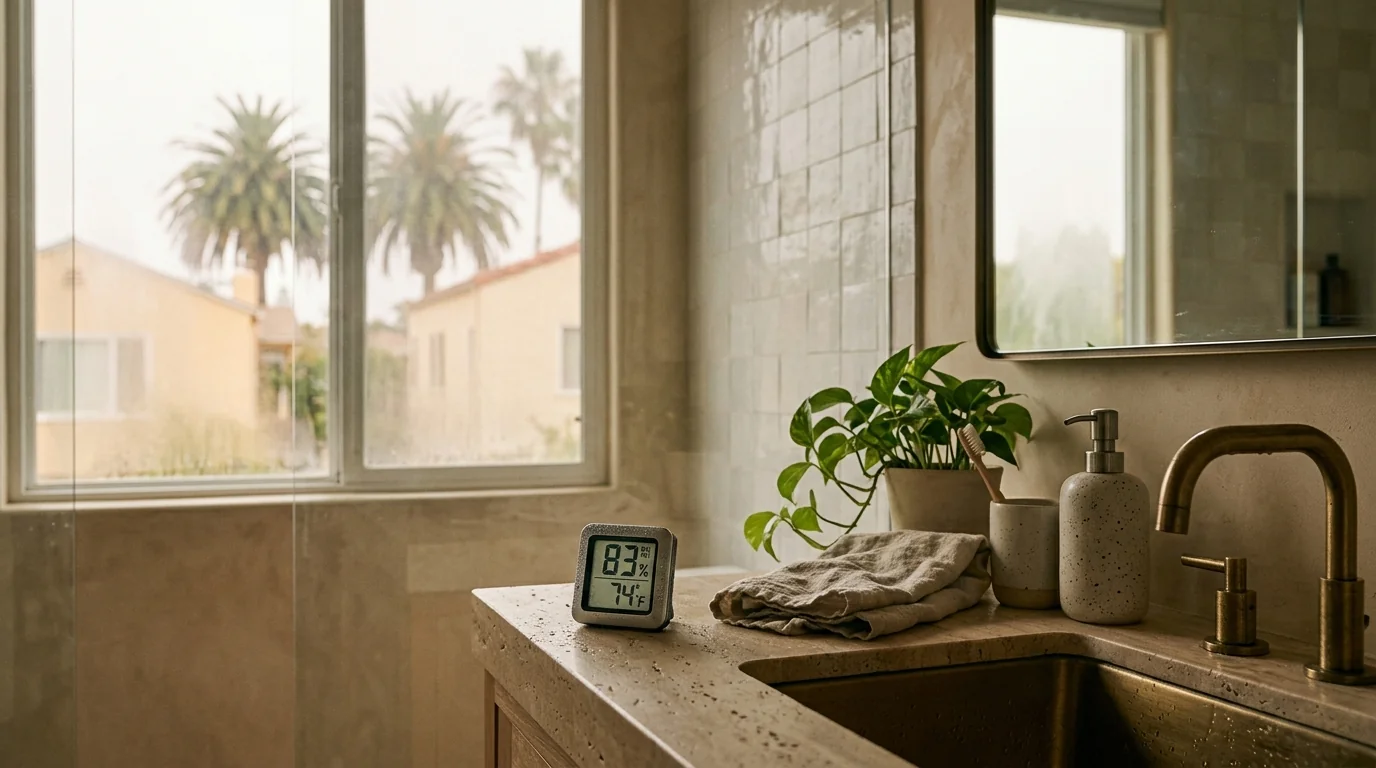
Most of the leaks that grow mold are slow and hidden, so prevention is mostly about seeing water sooner. Swap rubber washer hoses for braided steel ones, put a drain pan with a leak alarm under the water heater, and set inexpensive leak sensors under sinks, behind the dishwasher and next to the fridge.
Run the bathroom fan during showers and for twenty minutes after. Look under sinks once a month for swelling or damp. After any storm that stains a ceiling, have it checked for moisture before it is painted, not after.
Costs
What it costs when it gets that far
2026 cost guides put a mold inspection at $300 to $650 and mold remediation at $15 to $30 per square foot, often $1,500 to $15,000 or more in total. A smaller remediation after water sat too long typically adds $1,100 to $3,400 to a water job.
Drying a leak properly in the first day costs far less than any of those numbers. That is the whole argument for calling early.
FAQ
Questions readers ask
On wet porous materials, it can start within 24 to 48 hours.
No. It often grows on the back of drywall or under flooring first.
It helps, but only once wet materials are removed or dried and the leak is fixed.
On hard surfaces it can clean mold. It does not reach growth inside drywall or wood.
Not for visible growth. Testing helps when you smell it but cannot find it.
Only if the moisture returns. Fixing the water is the real fix.
Keep reading
More from our restoration guides
Getting an LA House Ready for the Rain Season
Rain season prep.
Read: rain season prepHow Long Structural Drying Takes in Los Angeles, CA
How long drying takes.
Our guide to how long drying takesOld Pipes and Water Damage Risk in LA Homes
Old pipes and leak risk.
Our guide to old pipes and leak riskWorried a leak left mold behind?
Call and we will map the moisture and tell you honestly what we find.
24/7 emergency line
(323) 709-0141