Fire, soot and firefighting water
Fire damage restoration for Los Angeles homes
A fire leaves three problems: what burned, the soot that spread through the house, and the water the fire department used. All three start doing damage right away.
- Answered 24/7
- Kitchen and electrical fires
- Water from firefighting
Updated September 2026
24/7 emergency line
(323) 709-0141- 1Wait for the all-clearFrom the fire department.
- 2We secure the houseBoard-up and tarping first.
- 3Then water and sootDry out, then clean.
Quick answer
Fire damage restoration in Los Angeles starts once the fire department releases the house: secure openings, extract the firefighting water, remove what burned, clean soot from everything that can be saved, treat odor, then rebuild. Soot is acidic and starts etching surfaces within days, so cleaning should not wait for the whole claim to settle.
How the job runs
From fire release to a clean house
WetDry and signed off
- 1
Get the all-clear
No entry until the fire department releases it.
- 2
Secure the property
Board-up, tarping and site fence as needed.
- 3
Extract firefighting water
Same day, before it spreads further.
- 4
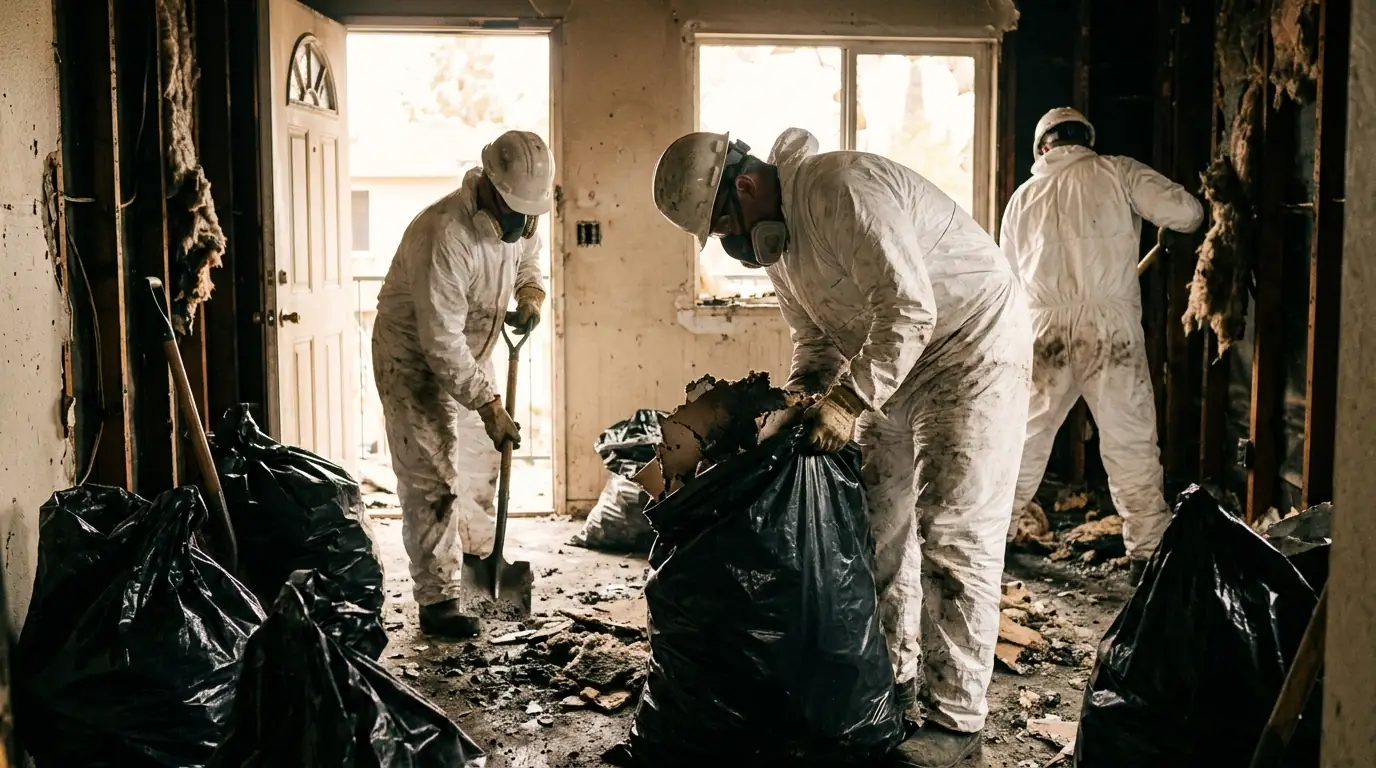
Remove burned material
Charred drywall, insulation, cabinets.
- 5
Clean soot
Dry sponges, degreasers, HEPA vacuums.
- 6
Treat odor
Sealing and deodorizing at the source.
- 7
Rebuild
Drywall, cabinets, flooring and paint.
The job
What a house needs after a fire
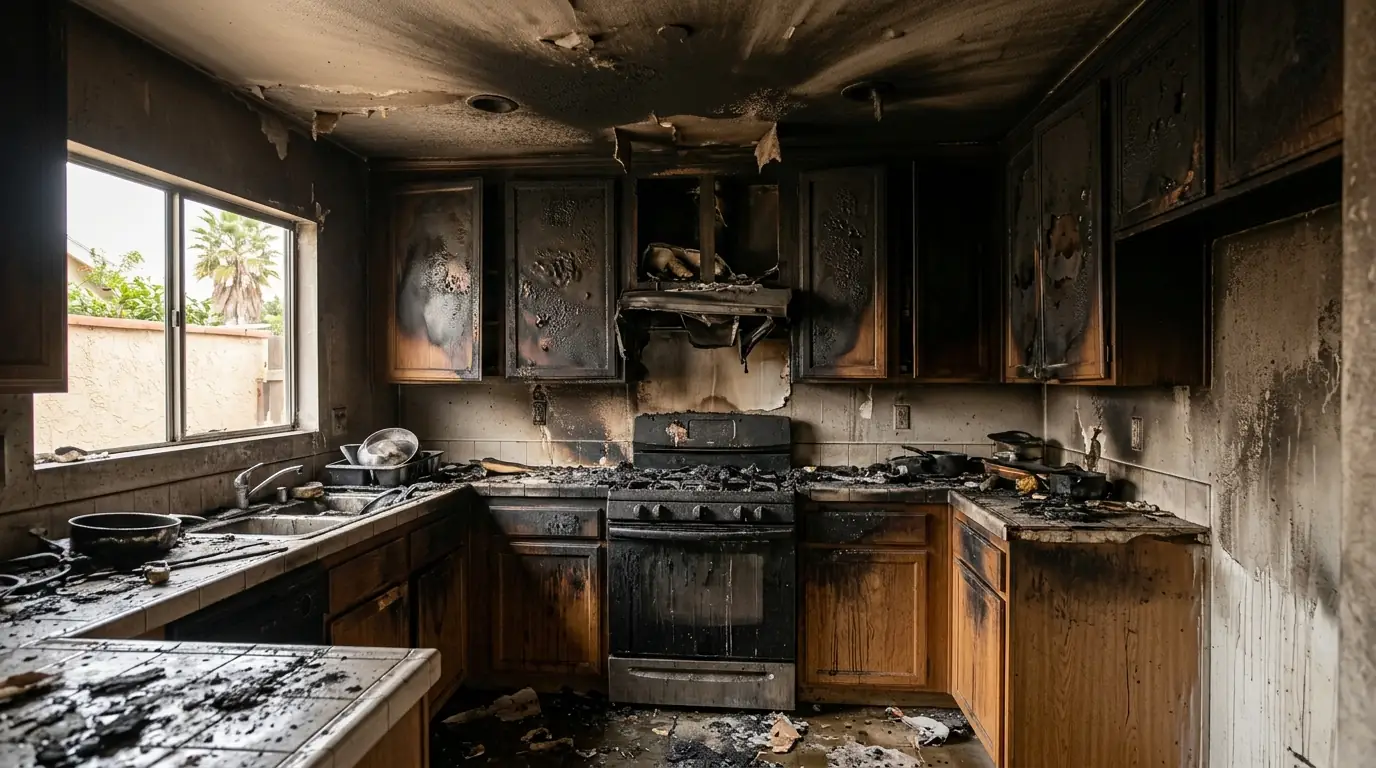
Most home fires we see are contained to one room, usually a kitchen, but the smoke and soot travel through the whole house on air currents and through the HVAC. Rooms that never saw flame still need cleaning.
The water used to put the fire out is its own loss. It soaks drywall and flooring and needs drying before mold starts. For a house that survived a wildfire, read cleaning ash from a standing home.
Time
How long fire restoration takes
Water extraction and soot cleaning usually take one to two weeks for a one-room fire. The rebuild depends on cabinets, permits and materials, and often runs longer than the cleanup.
Variations of this job
Kitchen fire
A kitchen fire usually starts at the cooktop and leaves greasy protein soot on cabinets, ceilings and every surface in the room, plus a strong smell that settles into drywall. We remove burned cabinets and appliances, clean or replace what the heat damaged, degrease the soot film from every surface, and seal the framing and drywall that held the smoke before rebuilding. Protein residue is nearly invisible but smells for months if it is not removed properly. Range hood ducts are cleaned too.
Electrical fire
An electrical fire starts inside a wall, panel or appliance, so the damage is often hidden behind drywall. Wiring and framing near the origin are exposed and inspected, and the circuit stays off until an electrician clears it. The soot from burning plastics and wire insulation is oily and dark and spreads further than you expect. We open the affected walls, clean the cavity, treat the odor at the source, and rebuild once the wiring is repaired. Nothing is closed up until the electrician signs off.
Water damage from firefighting
Water damage from firefighting is the part people underestimate. Hoses put hundreds of gallons into a structure in minutes, and that water runs into floors, walls and rooms far from the fire. It is also dirty, carrying ash and soot. We extract it the same day, pull wet insulation and flooring, and set drying equipment while soot cleaning goes on in dry rooms. Left for a few days, this water turns a fire job into a mold job too, which nobody wants on the same claim.
Los Angeles conditions
Fire season taught this city a lot
The January 2025 Palisades Fire destroyed 6,837 structures and damaged another 973, and together with the Eaton Fire it reached across Pacific Palisades, Altadena and Malibu. The damaged-but-standing homes are the ones restoration is for: houses with heat damage on one side, smoke through the attic and ash in every closet. Most structure fires we handle are smaller, but the cleaning follows the same rules.
Cost factors
What fire damage restoration costs
2026 guides put fire and smoke restoration at $2,900 to $38,325, with a national average of $20,470. A contained one-room fire runs about $3,000 to $10,000; multiple rooms about $10,000 to $30,000. Planning ranges only.
Area burned
Rooms with direct fire damage.
Soot spread
How far smoke traveled in the house.
Firefighting water
Drying and material removal.
Soot type
Protein and plastic soot take longer.
Contents
Items cleaned, packed or replaced.
Rebuild scope
Cabinets, drywall, flooring, paint.
Your options
Clean it or replace it?
Distance from the fire and the soot type decide most of it.
| Item | Usually cleaned | Usually replaced |
|---|---|---|
| Painted walls in other rooms | Yes | If soot etched them |
| Drywall near the fire | Rarely | Yes |
| Kitchen cabinets | If only smoke-stained | If heat-warped or charred |
| Insulation in the attic | No | Yes, if smoke reached it |
| Hard contents | Most dishes, metal, glass | Melted plastics |
FAQ
Fire damage questions
Only after the fire department releases the house. We can walk through with you then.
Please do not. Wiping soot smears it into surfaces and can make them unsalvageable.
Smoke travels through air gaps and ducts. Those rooms need cleaning and deodorizing too.
Yes. Firefighting water is extracted and dried the same day, alongside soot work.
Accidental house fires are usually covered. We document everything the way adjusters expect.
Yes. If it ran during or after the fire, the ducts need cleaning.
Related work
Related work from the same call
Smoke and Soot Cleanup
Dry soot
How we handle smoke and Soot CleanupWildfire Smoke and Ash Cleanup
Interior ash removal
How we handle wildfire Smoke and Ash CleanupEmergency Board-Up and Tarping
Roof tarping
Emergency Board-Up and TarpingEmergency Water Damage Restoration
24 hour water damage cleanup
Emergency Water Damage RestorationBurst Pipe Cleanup
Supply line failure
Burst Pipe CleanupFire department just left?
Call now. We will secure the house and get the water out before it spreads.
24/7 emergency line
(323) 709-0141