Contain it, remove it, dry it
Mold removal and remediation for Los Angeles homes
Spraying mold kills nothing that matters. Remediation means sealing the area, removing the material it grew on, cleaning the air, and fixing the water that fed it.
- Answered 24/7
- Bathrooms, attics, crawl spaces
- Containment and air cleaning
Updated September 2026
24/7 emergency line
(323) 709-0141- 1Do not disturb itScrubbing spreads spores.
- 2We contain the areaPlastic, negative air.
- 3Remove and clearMaterial out, air cleaned.
Quick answer
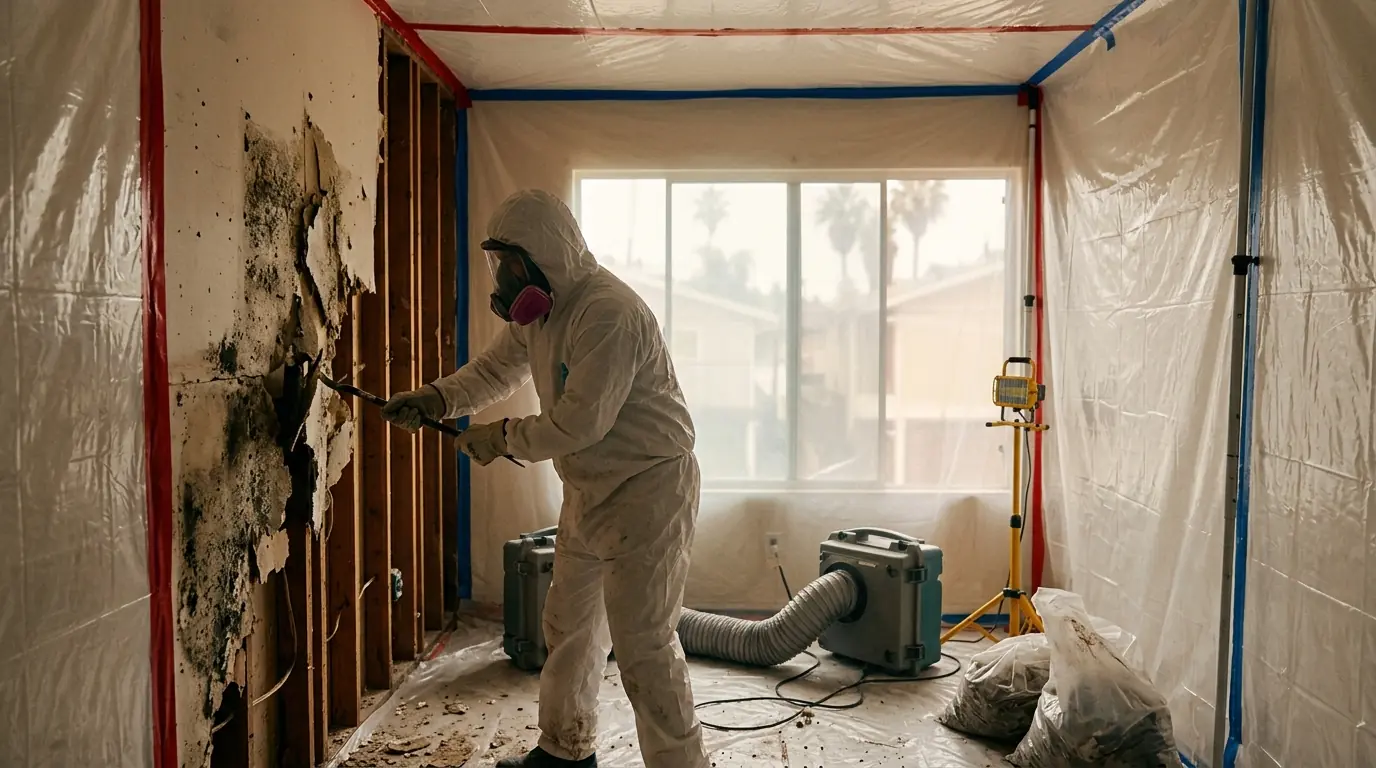
Mold remediation in Los Angeles means isolating the affected area with plastic containment and negative air, removing moldy porous materials like drywall and insulation, HEPA-vacuuming and cleaning framing, running air scrubbers, and fixing the moisture source. Without the moisture fixed, mold comes back regardless of what was sprayed on it.
The job
What remediation actually involves
Mold grows on materials that stayed wet: drywall paper, wood, insulation, carpet backing. On porous materials it roots in, so those are removed. On framing and hard surfaces it is cleaned off.
Containment matters because disturbing mold releases spores, and without it the rest of the house gets them. Many bathroom mold jobs trace back to a leaking shower pan.
Cost factors
What mold remediation costs
2026 guides put mold remediation at $15 to $30 per square foot, or $1,500 to $15,000 or more in total; a smaller remediation after a water loss often runs $1,100 to $3,400. Planning ranges only.
Affected area
Square feet of growth and removal.
Location
Attic and crawl space access.
Containment size
Plastic, doors and negative air.
Materials removed
Drywall, insulation, flooring.
Moisture source
Repair of the cause, separate trade.
Clearance testing
Optional air samples after.
Do it yourself or call
When you can handle it yourself
Small surface spots are often a homeowner job. Hidden or larger growth is not.
| What you can do | What we handle | |
|---|---|---|
| Spots on grout or caulk | Clean with a household cleaner | Not usually needed |
| Patch under 10 square feet | Clean with gloves and a mask | Call if it returns |
| Growth behind a wall | Leave it closed | Contain, open and remove |
| Attic or crawl space | Do not disturb it | Containment and removal |
Variations of this job
Bathroom mold
Bathroom mold on grout and caulk is usually surface growth and cleans off. Mold that shows through paint on a ceiling or at the base of a wall behind a tub usually means water got into the wall from a leaking valve, a failed shower pan or poor ventilation. We open the wall inside containment, remove the affected drywall and insulation, clean the framing, dry the cavity, and point out the leak or fan problem so the plumber or electrician can fix it.
Attic mold
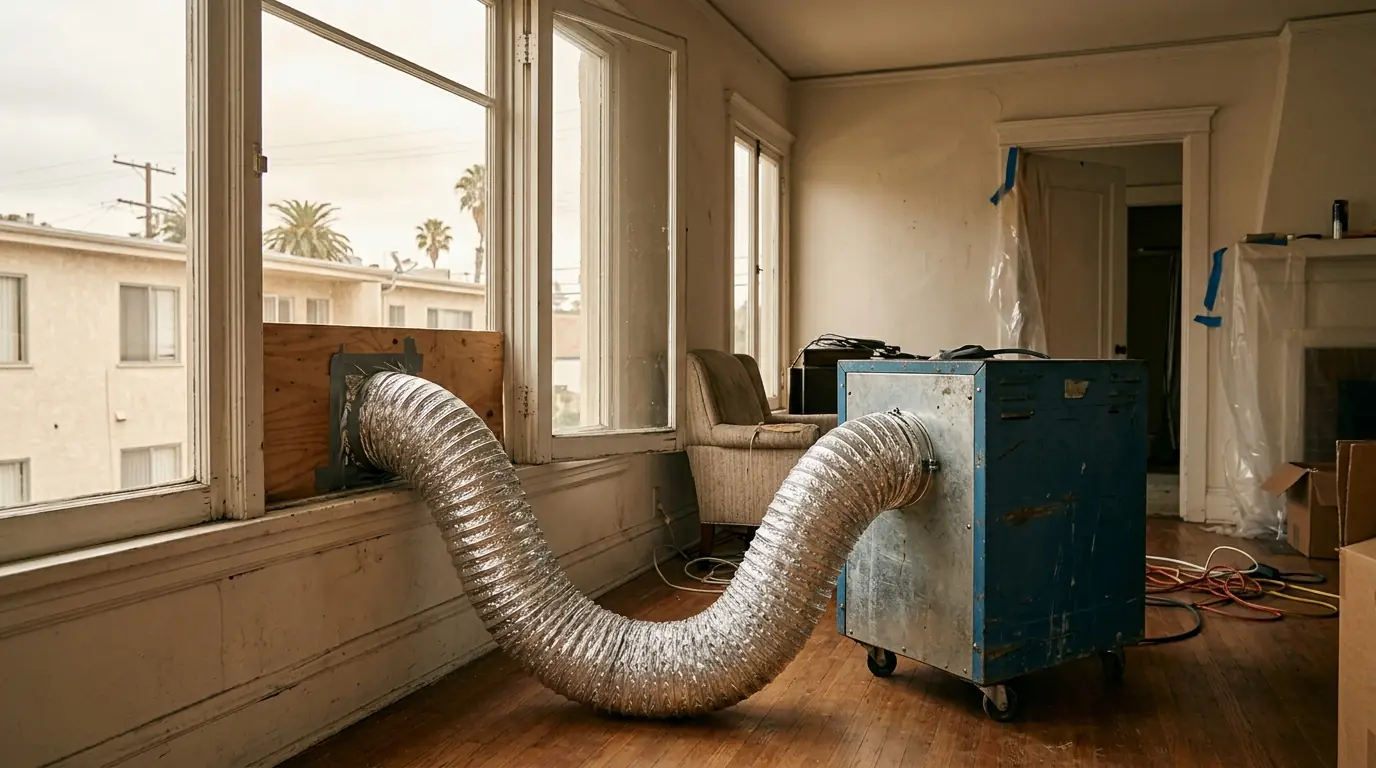
Attic mold shows up as dark staining on the roof sheathing, usually from a roof leak, bathroom fans venting into the attic, or blocked ventilation. The sheathing is structural, so it is cleaned and treated rather than removed unless it is rotten. Wet or moldy insulation comes out. We HEPA-vacuum and clean the affected boards, run an air scrubber, and note the vents or roof issue that caused the moisture, since that is what stops it returning. Attic work is scheduled for cooler hours where we can.
Crawl space and wall cavity mold
Crawl space and wall cavity mold grows where water sat unseen, on joists, sill plates and the back of drywall. It often announces itself only as a musty smell upstairs. We contain the area, remove moldy insulation, vapor barrier and drywall, clean framing with HEPA vacuums and an antimicrobial, and dry the space. A new vapor barrier or closed wall only goes in once readings confirm the wood is dry. Heavy growth on structural wood gets flagged for a carpenter to check strength before closing up.
What is included
What remediation includes
- Moisture source identified
- Plastic containment and zipper door
- Negative air with HEPA exhaust
- Removal of moldy porous materials
- HEPA vacuuming of framing
- Antimicrobial on cleaned surfaces
- Drying to a dry reading
- Air scrubbing during work
- Photos and notes for your file
Los Angeles conditions
Mold follows the storms here
Our mold calls tend to follow storms by a few weeks. During the February 2024 storm the mayor declared a local emergency and the area recorded 475 mudslides and a record 390 fallen trees, with water getting into roofs, walls and crawl spaces across Los Angeles. Walls that got wet then and were painted over without drying are a common source of the mold we open up later.
How the job runs
How a mold remediation runs
WetDry and signed off
- 1
Find the moisture
Readings and the source first.
- 2
Set containment
Plastic walls and a zipper door.
- 3
Negative air
Filtered exhaust keeps spores inside.
- 4
Remove porous material
Bagged inside containment.
- 5
Clean what stays
HEPA vacuum, antimicrobial on framing.
- 6
Dry and scrub the air
Dehumidifier and air scrubbers.
- 7
Clear and close
Visual check, optional air test, rebuild.
FAQ
Mold remediation questions
On hard non-porous surfaces it can clean it. On drywall or wood it does not reach the roots.
Usually not. Containment keeps the work area sealed from the rest of the home.
Not if the moisture source is fixed and the area is dried. That is the real fix.
Not for visible growth. Testing helps when growth is hidden or to confirm clearance.
Often only when caused by a covered sudden water loss, sometimes with limits.
Yes, drywall, insulation and paint once the area is cleared and dry.
Related work
Other restoration jobs worth knowing about
Mold Inspection and Testing
Air sampling
How we handle mold Inspection and TestingOdor Removal
Musty water odor
More on odor RemovalDrywall Water Damage Repair
Flood cut
Drywall Water Damage Repair in Los AngelesWater Damage Reconstruction
Flooring replacement
What water Damage Reconstruction involvesContents Pack-Out and Cleaning
Furniture and electronics
What contents Pack-Out and Cleaning involvesFound mold, or smell it?
Leave it undisturbed and call. We will find the moisture and contain it first.
24/7 emergency line
(323) 709-0141