Guide: after a wildfire
Cleaning wildfire smoke and ash from a standing Los Angeles home
A house that made it through a wildfire can still be full of fine ash and smoke residue in every room, closet and duct. The way it is cleaned decides whether the smell ever leaves.
By June Calloway, Restoration Guides Editor Updated September 2026
24/7 emergency line
(323) 709-0141- 1Do not sweep or blowIt lifts the finest ash.
- 2Keep the HVAC offUntil ducts are cleaned.
- 3Protect yourselfN95 and gloves.
Quick answer
To clean wildfire smoke and ash from a standing home, do not sweep, dust or use a leaf blower, because that lifts fine particles back into the air. Keep the HVAC off until ducts are cleaned, wear an N95 and gloves, and remove ash with HEPA vacuums and dry cleaning methods before any wet cleaning.
The problem
What a wildfire leaves in a house that did not burn
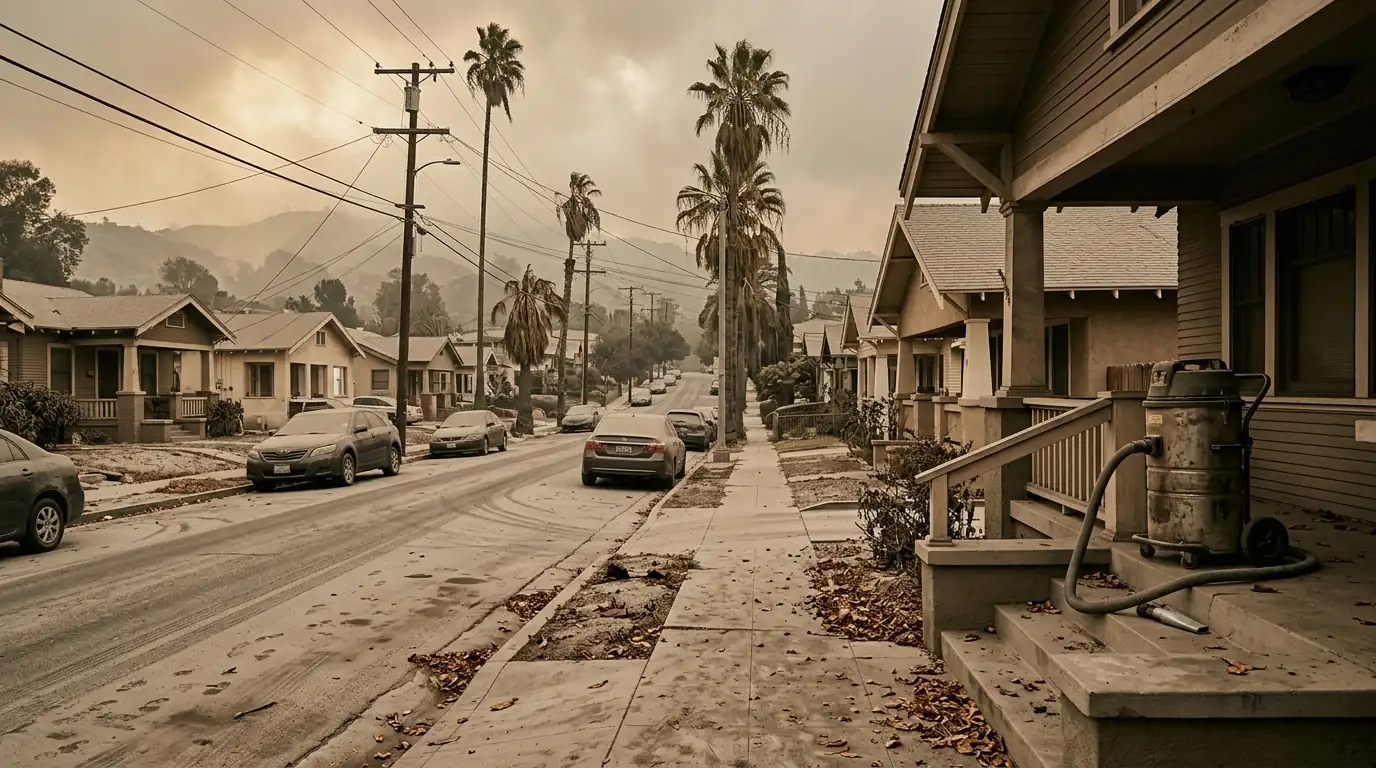
Wind carries ash and smoke into homes through vents, gaps around doors and windows, attic vents and the air intake of the heating and cooling system. The ash settles on floors, sills, shelves and inside closets and cabinets. Smoke residue coats walls and soaks into fabrics, which is where the odor lives.
The January 2025 Palisades and Eaton fires destroyed more than 17,000 homes and buildings, and left many more around Pacific Palisades, Altadena and Malibu standing but full of smoke and ash. Those houses need cleaning before they are comfortable to live in again.
Safety first
Before you start: protect yourself
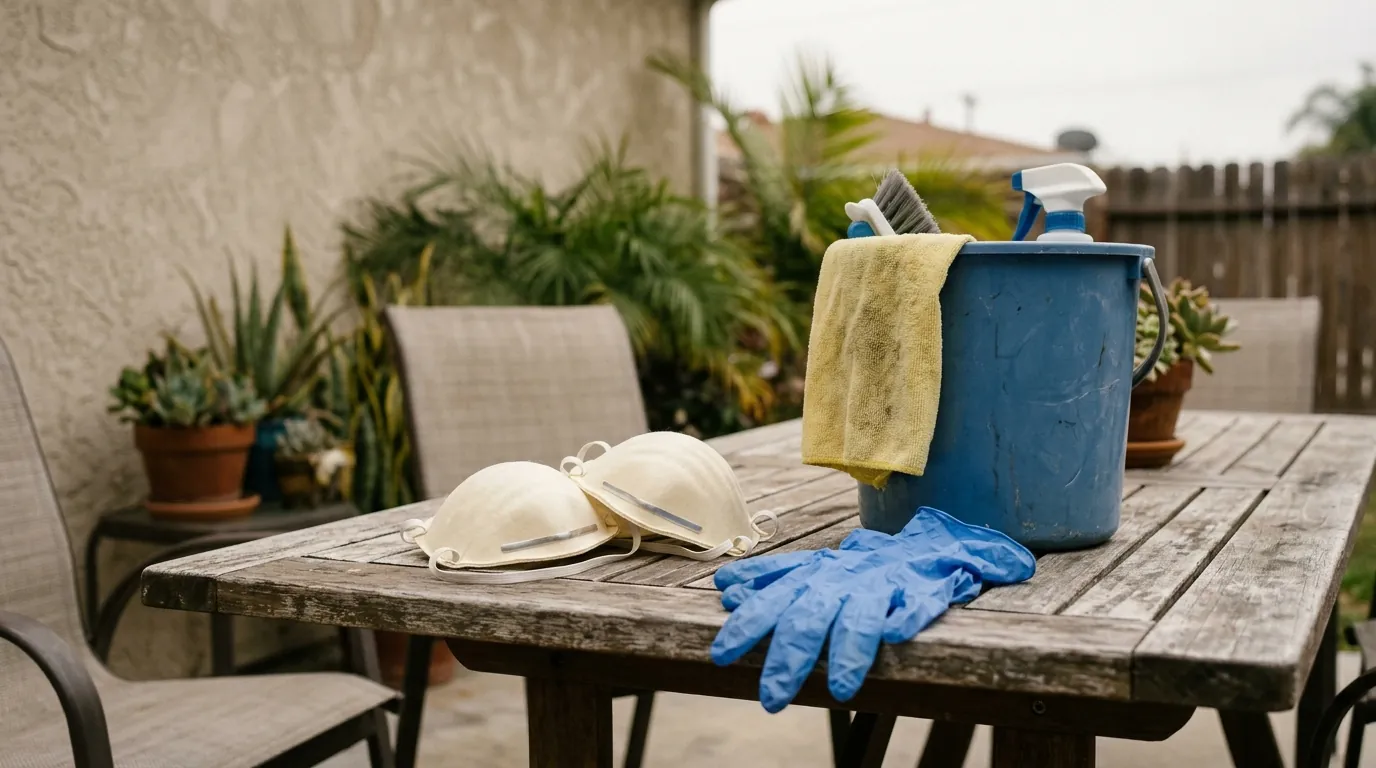
Wildfire ash can carry fine particles and residues from everything that burned. If you have to handle it, wear a well-fitted N95 respirator, gloves, long sleeves and eye protection. Keep children and pets out of rooms that have not been cleaned.
Follow the local authorities on when it is safe to go back and whether any areas are restricted. If the home has visible fire, heat or structural damage, that is a full fire restoration job rather than a cleaning job.
Avoid these
The three things not to do
Do not sweep, dust with a dry cloth or use a leaf blower, inside or out. All three push the finest ash back into the air and onto surfaces you already cleaned. Do not run a regular household vacuum either; without a HEPA filter it blows fine particles out the exhaust.
And do not run the heating or air conditioning until the system has been cleaned. The return pulls ash from the whole house into the ducts and then blows it back into every room each time it runs.
Inside
How the interior is cleaned properly
Cleaning works from the top of each room down. Ceilings, walls, window sills, blinds, shelves and floors are HEPA-vacuumed first to remove loose ash. Then surfaces are cleaned with dry chemical sponges, which lift residue without smearing it, and only after that with damp cleaning where needed.
Closets, cabinets and drawers are opened and cleaned, because ash works its way inside. Clothing, bedding and curtains are sorted for proper textile cleaning. Our page on cleaning smoke residue explains why the order matters.
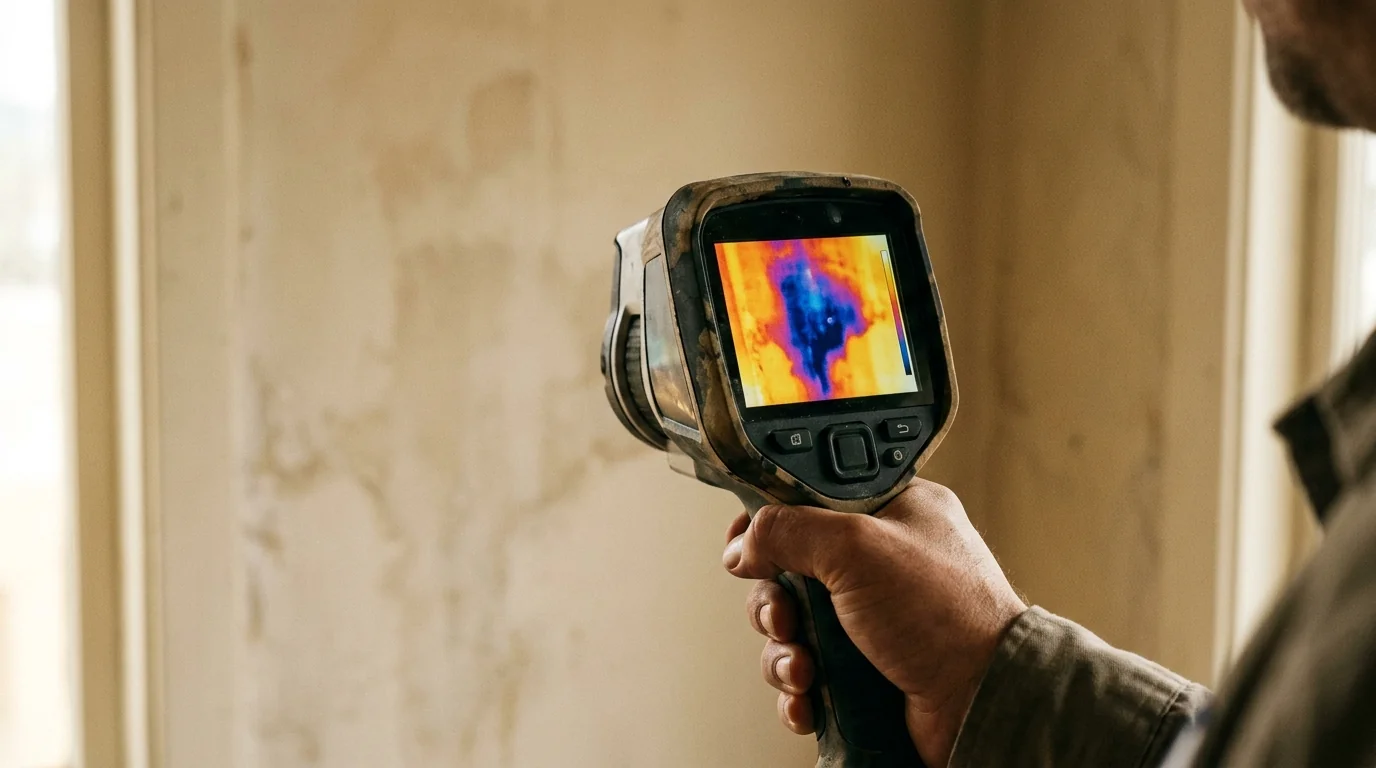
Home standing but full of ash and smoke? Keep the HVAC off and call; we will clean it room by room.
Call (323) 709-0141Hidden places
Ducts, the air handler and the attic
If the system was running or the intake was open during the fire, the ducts, the blower and the coil need cleaning, and the filter needs replacing. Registers and grilles come off and get cleaned too. Only then should the system run normally again.
Attic insulation near vents often holds a layer of ash. Where it is heavily contaminated or smells of smoke, it is replaced rather than cleaned, because insulation cannot be washed.
Contents
Clothing, furniture and belongings
Smoke odor settles into fabric and soft furniture. Most clothing and bedding that only absorbed smoke comes back with proper cleaning; items heavily coated in ash may need specialist textile cleaning. Upholstered furniture and mattresses are assessed individually, since some hold odor even after cleaning.
Hard items like dishes, metal and glass usually clean up well. Electronics that took in ash should be checked before long use. Photograph belongings before cleaning so there is a record for your claim, and our contents cleaning page explains how larger jobs are handled.
Exterior
Cleaning the outside
Ash on stucco, decks, patios and driveways keeps tracking in and blowing back through vents until it is removed. Loose ash is collected with HEPA vacuums where practical before any washing, then surfaces are washed at low pressure so stucco and paint are not damaged.
Gutters, roof edges, window screens and tracks are cleared. Local rules may require keeping ash runoff out of storm drains, so it is contained rather than hosed into the street.
Local note
Living next to a rebuild
The first ground-up rebuild in Pacific Palisades only received its certificate of occupancy in November 2025, and empty lots and construction sites lined the neighborhood into 2026. Standing homes next to active rebuilds keep getting dust and ash for a long time, and some owners have us clean twice: once after the fire, and again when the neighboring work winds down.
Keeping filters fresh and windows closed on windy days helps between cleanings. Our full ash cleanup page covers what the full job includes.
Costs
What cleanup usually costs
2026 cost guides put soot cleanup at $2.75 to $6.50 per square foot of affected surface, and overall fire and smoke restoration at $4.25 to $6.50 per square foot. Duct cleaning, insulation replacement and textile cleaning are added where needed.
Smoke damage from a wildfire is often covered by homeowner policies. Document each room with photos before cleaning starts; our claims guide covers what adjusters look for.
FAQ
Questions readers ask
Only with a HEPA-filtered vacuum. A regular vacuum blows fine particles back out.
Follow local guidance. Keep uncleaned rooms closed and children and pets out of them.
After the ducts and air handler are cleaned and the filter is replaced.
Yes, once residue is cleaned from surfaces, fabrics and ducts.
Lightly affected items often wash out; heavily ash-soaked items need specialist cleaning.
Often, yes. Photograph each room before cleaning starts.
Keep reading
More from our restoration guides
Filing a Water Damage Claim in Los Angeles, CA
Filing a water damage claim.
Filing a water damage claim, explainedGetting an LA House Ready for the Rain Season
Rain season prep.
Our guide to rain season prepWater Leak in Los Angeles: What to Do in the First Hour
First hour after a leak.
Our guide to first hour after a leakSmoke and ash in a standing home?
Call and we will walk the house and plan the cleanup with you.
24/7 emergency line
(323) 709-0141