Storm water out, answered 24/7
Flood cleanup in Los Angeles after storms and rain
Floodwater from outside is never clean. It carries soil, street runoff and sewage, and anything porous it soaked is usually a loss.
- Answered 24/7
- Garages and ground floors
- Silt and mud removal
Updated September 2026
24/7 emergency line
(323) 709-0141- 1Stay out of deep waterPower off if it is safe.
- 2We pump and extractStanding water and silt.
- 3Clean, then dryDisinfect before drying.
Quick answer
Flood cleanup in Los Angeles means removing outside water that came in through doors, garages or low walls during a storm. That water is treated as contaminated, so the job is pumping, silt removal, cutting out soaked drywall and flooring, disinfecting, then drying. Starting within a day keeps it from becoming a mold job.
How the job runs
How a flood cleanup runs
WetDry and signed off
- 1
Safety first
Power to the area off, no wading through deep water.
- 2
Pump standing water
Submersible pumps, then extraction wands.
- 3
Remove silt and mud
Shovels and squeegees before any drying.
- 4
Sort contents
Clean what can be cleaned, list what cannot.
- 5
Cut out soaked material
Flood cut on drywall, flooring pulled.
- 6
Disinfect
Antimicrobial on framing, slab and wall bases.
- 7
Dry and confirm
Equipment until readings reach dry.
The job
Why outside water is handled differently
Rainwater that ran across a yard, a street or a hillside picks up soil, oil and whatever the storm drains could not carry. Once it is inside, it is black water under the industry categories.
So we clean before we dry. Drying contaminated material in place only locks the contamination into it.
Variations of this job
Rain intrusion
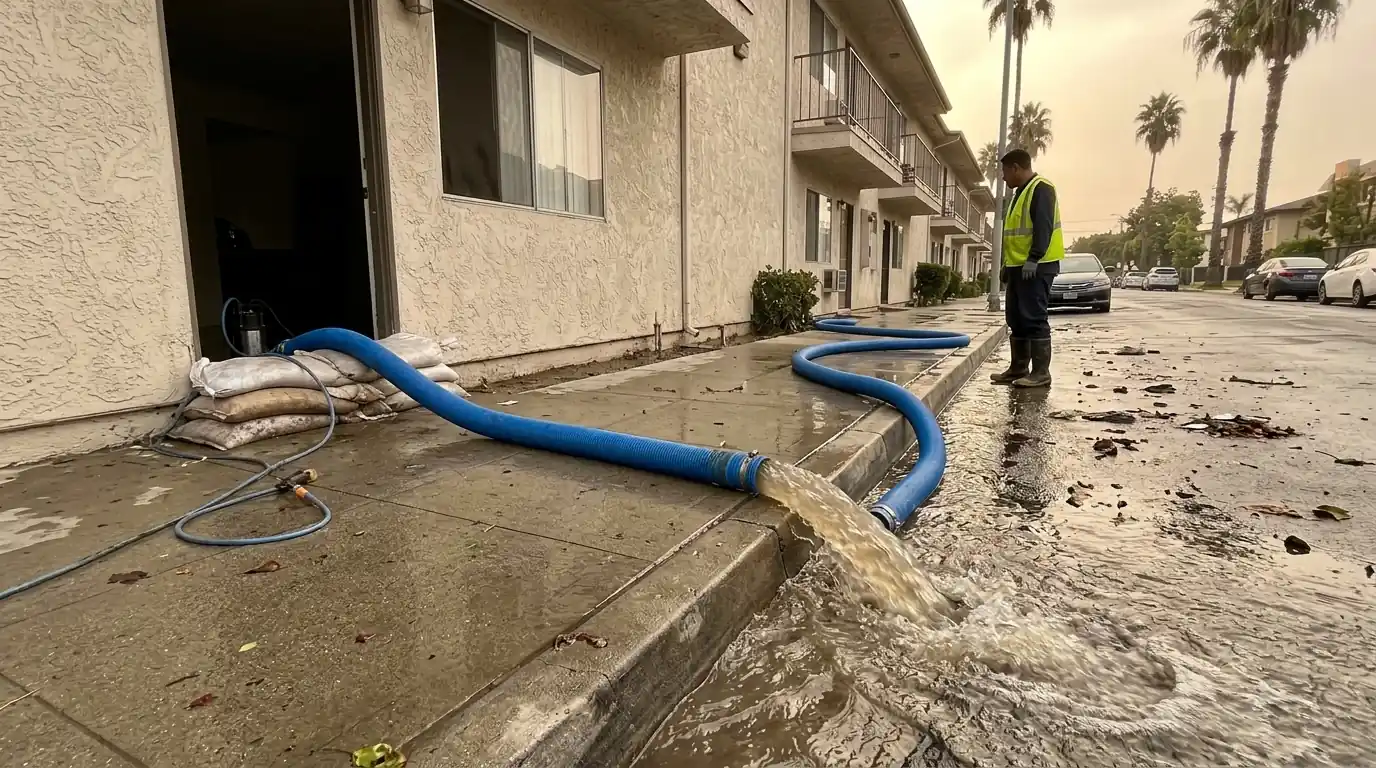
Rain intrusion is water pushed under doors, through slider tracks or in at low wall vents during a heavy storm. It usually covers a strip along one wall rather than a whole floor. We extract, pull baseboard and the bottom of the drywall where it wicked up, disinfect the wall base and slab, and dry. Weep holes and door thresholds get noted, because the same spot usually takes water in the next storm too. Fixing the threshold is cheaper than a second cleanup.
Garage and ground-floor flooding
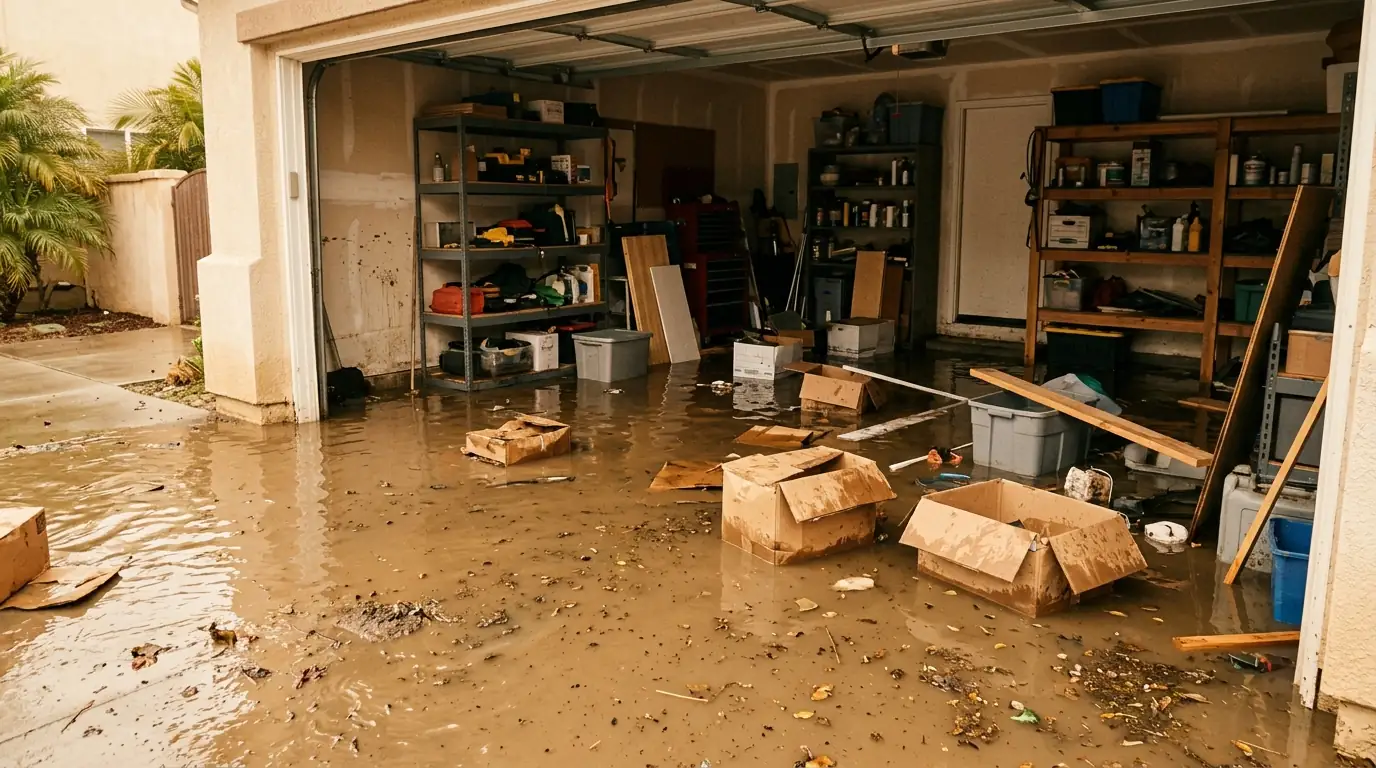
Garage and ground-floor flooding is the most common flood call here, because garages sit lowest and have the widest opening. We pump standing water with a submersible pump, shovel and squeegee out the silt, and sort what can be cleaned from what cannot. Cardboard, particle board and upholstered items that sat in floodwater usually go. Concrete and sealed metal clean up. Ground-floor living space gets a flood cut on the drywall, usually a foot or two above the water line.
Outdoor water contamination
Outdoor water contamination is why flood cleanup costs more than a burst pipe cleanup of the same size. Everything the water touched gets cleaned with an antimicrobial after the silt is out, including framing, slab and wall bases. Porous materials are removed rather than dried. We keep the work area separated from the rest of the house so mud and contaminated dust do not get tracked through clean rooms while the drying equipment runs. Crews change boots and covers when they leave that zone.
Los Angeles conditions
Where the storms hit hardest
The February 2024 storm showed where flood calls come from. Firefighters rescued 16 people from floodwater in Studio City, mud forced its way into a home in Baldwin Hills, and hillside streets in Beverly Crest were evacuated as slopes gave way. Low garages below a slope and ground floors at the bottom of a canyon street take the water first, and most policies exclude it, so documentation matters.
Do it yourself or call
What you can do, and what to leave
Some early moves help. Wading into it does not.
| What you can do | What we handle | |
|---|---|---|
| Water still coming in | Sandbags at the door if safe | Pump out once it stops |
| Deep standing water | Stay out, power off at the panel | Pump and extract |
| Mud on the floor | Photograph it first | Shovel, squeegee, haul |
| Soaked boxes and furniture | Move dry items higher | Sort, clean or discard |
What is included
What a flood cleanup includes
- Photos before anything moves
- Pumping of standing water
- Silt and mud removal
- Contents sorted and listed
- Flood cut on wet drywall
- Wet flooring removed
- Antimicrobial on every touched surface
- Drying with daily readings
- Records for a flood or homeowner claim
Cost factors
What flood cleanup costs
2026 guides put flooded lower-level cleanup at $500 to $10,000 or more, and black water mitigation at $7 to $7.50 per square foot. Standard homeowner policies usually exclude outside flood water, so check for a separate flood policy.
Depth and spread
Inches of water and how many rooms.
Silt and mud
Shoveling and hauling adds labor.
Materials removed
Drywall, flooring and contents lost.
Disinfection
Every touched surface gets treated.
Drying days
Slab and framing drying by the day.
Contents
Items cleaned versus discarded.
FAQ
Flood cleanup questions
Once it has run across soil and pavement, yes. It is treated as black water, the same as sewage.
Outside flood water is usually excluded without a separate flood policy. Check yours; we document either way.
Not when floodwater soaked it. The wet section is cut out a foot or two above the water line.
We clean hard items and list the rest. Vehicles go to your auto insurer.
Often while drying runs, if the flooded rooms are closed off. We will tell you honestly.
Often, if the grade or drain is unchanged. We note the entry point so it can be fixed.
Related work
What else the same leak can lead to
Sewage Backup Cleanup
Main line backup
How we handle sewage Backup CleanupStorm and Mudslide Cleanup
Mud and debris removal
How we handle storm and Mudslide CleanupEarthquake Damage Cleanup
Water heater and pipe breaks
Earthquake Damage CleanupShower and Tub Leak Water Damage
Shower pan leak
Shower and Tub Leak Water DamageAC Leak Water Damage
Condensate drain line clog
AC Leak Water DamageStorm water inside right now?
Stay out of deep water, switch off power to the area if it is safe, and call.
24/7 emergency line
(323) 709-0141