After the shaking stops
Earthquake damage cleanup for Los Angeles homes
An earthquake rarely does one thing. It snaps a water line, drops a heater, cracks plaster and throws the contents of every shelf on the floor, all in the same minute.
- Answered 24/7
- Broken heaters and lines
- Cracks, glass and openings
Updated September 2026
24/7 emergency line
(323) 709-0141- 1Check for gas firstSmell it? Leave and call.
- 2Shut off the waterMain valve if lines broke.
- 3We secure and cleanWater, glass, openings.
Quick answer
Earthquake damage cleanup in Los Angeles starts with safety: if you smell gas, leave and call the gas utility and 911. Then shut off the water if lines broke. We secure openings, extract water from broken heaters and pipes, dry the structure, clear broken glass and damaged contents, and document everything for your claim.
How the job runs
How an earthquake cleanup runs
WetDry and signed off
- 1
Safety check
Gas, electrical and obvious structural damage.
- 2
Water off
Main valve and any broken lines.
- 3
Photograph in place
Damage and contents before moving.
- 4
Secure openings
Broken windows and doors boarded.
- 5
Extract and remove
Water, wet pad, loose plaster, glass.
- 6
Dry the structure
Air movers, dehumidifier, cavity drying.
- 7
Document and plan repairs
Records for the claim and next steps.
The job
What an earthquake leaves behind
The most expensive earthquake damage in a house is often water: a heater that tipped and tore its line, or a pipe that cracked inside a wall. It keeps flowing until someone shuts it off.
Around that come cracked drywall and plaster, broken windows, fallen shelves and a floor covered in glass. We handle all of it on one scope. To get ready for the next one, read earthquake prep for water heaters and pipes.
Variations of this job
Water heater and pipe breaks
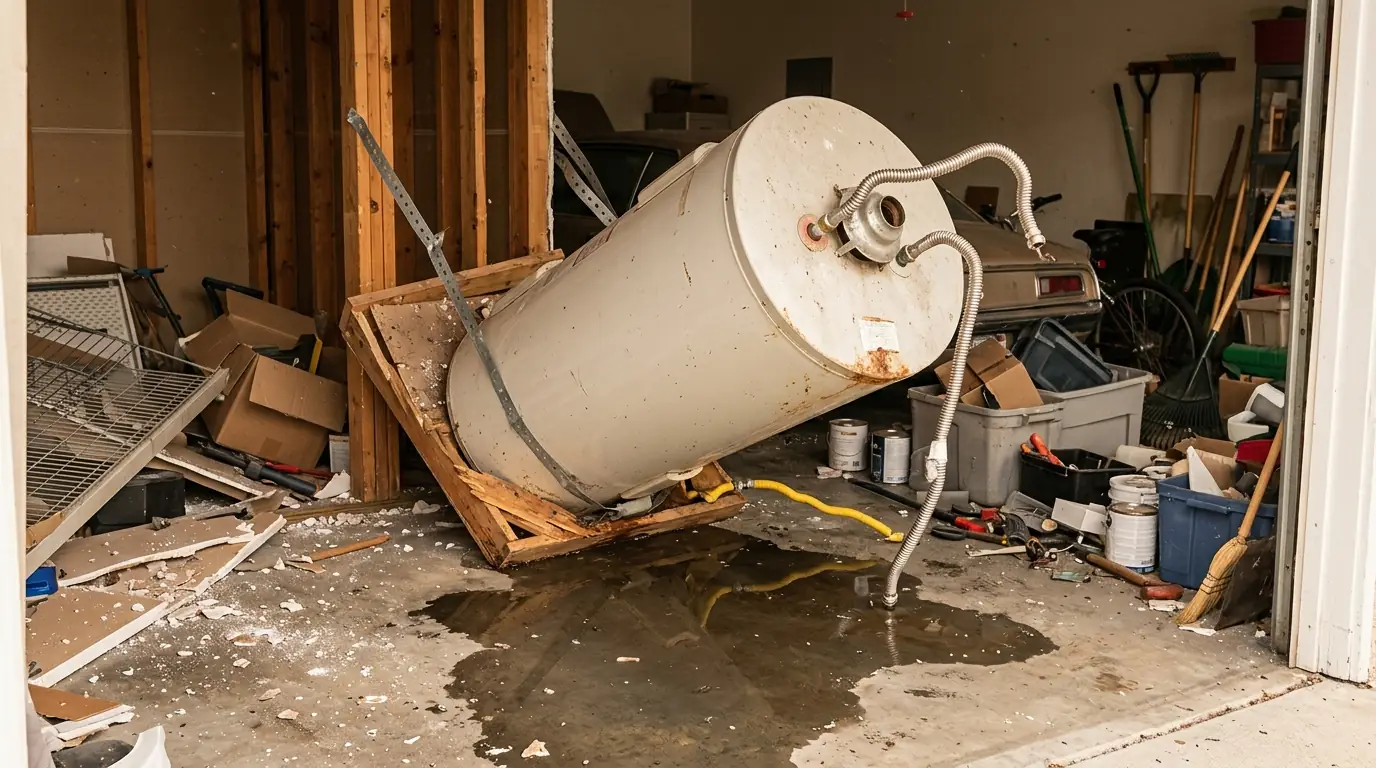
Water heater and pipe breaks are the first priority after a quake. An unstrapped tank heater can walk or tip, tearing its water and gas connections, and rigid lines can crack where they pass through walls. Once the gas and water are off, we extract standing water, pull wet baseboard and pad, read the walls for water that ran inside, and set drying equipment. The plumber and the gas utility handle the connections; we handle the water damage and photograph the heater for your claim.
Cracked walls and ceilings
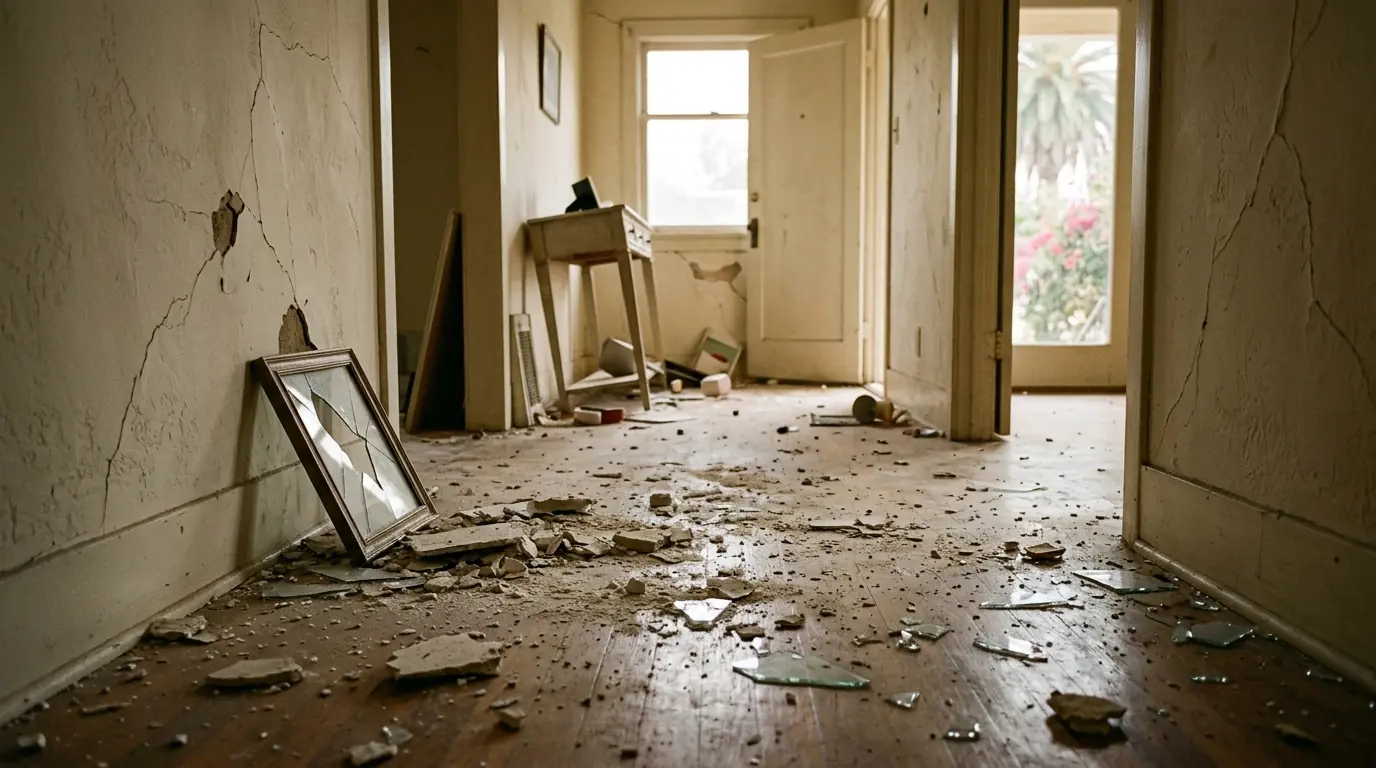
Cracked walls and ceilings are common and usually cosmetic, but they need to be read for what they are. Diagonal cracks at door and window corners, and cracks in plaster ceilings, are normal after shaking; wide cracks, doors that no longer close or floors that suddenly slope can signal structural movement. We document the cracks, remove loose plaster or drywall safely, and tell you plainly when an engineer or building inspector should look before repairs start. Nothing structural gets covered up until it has been looked at.
Broken contents and debris
Broken contents and debris make a house unsafe to walk through. Glass, ceramics, fallen shelving and toppled furniture cover floors, and spilled liquids from kitchens and garages mix into it. We photograph everything in place for the claim, clear broken glass and debris, set aside items that can be cleaned or repaired, and list what cannot. Anything that could hide sharp edges, like rugs and soft furniture, is checked before it goes back into use. Nothing gets thrown out without your say.
Los Angeles conditions
Raised floors and unstrapped heaters
A lot of older Los Angeles houses sit on raised wood floors over a crawl space, which is exactly the construction the city's Earthquake Brace + Bolt program targets for houses built before 1979. The same program covers strapping water heaters, because a heater that moves in a quake can break its lines and cause water and fire damage. That combination is why post-quake calls here are so often water calls first.
Do it yourself or call
What to do yourself, and what to leave
The first steps are about safety, not cleanup.
| What you can do | What we handle | |
|---|---|---|
| Smell of gas | Leave, call the gas utility and 911 | Nothing until it is cleared |
| Water running | Close the main valve | Extract, dry and document |
| Broken glass everywhere | Wear shoes, keep kids and pets out | Clear debris safely |
| Big cracks or sloping floors | Stay out of that area | Document; call for an inspection |
What is included
What an earthquake cleanup includes
- Walkthrough for gas, water and hazards
- Photos of damage and contents in place
- Board-up of broken openings
- Extraction of released water
- Removal of wet materials
- Broken glass and debris cleared
- Loose plaster and drywall taken down
- Drying with daily readings
- Records for an earthquake claim
Cost factors
What decides the cost of earthquake cleanup
We have not found a published range for earthquake cleanup that we trust enough to print. Earthquake damage is usually covered only by a separate earthquake policy, so check yours; we document the loss either way.
Water released
How much ran before shutoff.
Rooms affected
Water, cracks and debris by room.
Materials removed
Wet pad, drywall and loose plaster.
Openings secured
Windows and doors boarded.
Contents
Items cleaned, listed or discarded.
Drying days
Equipment until readings are dry.
FAQ
Earthquake cleanup questions
Check for gas. If you smell it, leave and call the utility and 911. Then shut off water if lines broke.
Usually not. It typically needs a separate earthquake policy; water damage from a quake may be treated differently.
Most are cosmetic. Wide cracks, sticking doors or sloping floors need an inspection.
We clean up and rebuild finishes. Structural concerns need an engineer or building inspector first.
Yes, as part of securing the house the same visit.
Strap it to the wall studs with a proper kit and use flexible connectors.
Related work
Where this job usually goes next
Flood Cleanup
Rain intrusion
Flood CleanupSewage Backup Cleanup
Main line backup
Sewage Backup CleanupStorm and Mudslide Cleanup
Mud and debris removal
Storm and Mudslide CleanupMold Inspection and Testing
Air sampling
Mold Inspection and TestingMold Remediation
Bathroom mold
Mold RemediationQuake left water or glass everywhere?
Once the gas is safe and the water is off, call. We will secure it and start the cleanup.
24/7 emergency line
(323) 709-0141