Guide: insurance and documentation
Filing a water damage insurance claim in Los Angeles
Most claim trouble is really documentation trouble. Knowing what the adjuster will ask for makes the process shorter and the result fairer.
By June Calloway, Restoration Guides Editor Updated September 2026
24/7 emergency line
(323) 709-0141- 1Document firstPhotos before cleanup.
- 2Stop further damageYour policy expects it.
- 3Keep every recordReadings, photos, receipts.
Quick answer
For a water damage claim in Los Angeles, photograph the damage and the source before cleanup, stop further damage right away, then report the loss to your insurer. Standard homeowner policies usually cover sudden, accidental water like a burst pipe, while slow leaks, outside flood water and sewage backup often need separate coverage.
Coverage basics
What homeowner policies usually cover
Standard homeowner policies generally cover water damage that is sudden and accidental: a pipe that bursts, a water heater that fails, an overflow, or storm water coming through a damaged roof. They usually exclude damage from gradual leaks, wear and maintenance problems, and they generally do not cover flooding from outside without a separate flood policy.
Sewage backup is its own category. Many policies exclude it unless a sewage or water backup endorsement was added. Every policy is different, so read yours or ask your agent before assuming either way. We are not your insurer or your attorney; this guide is about the practical side.
Step one
Document the damage before anything is moved
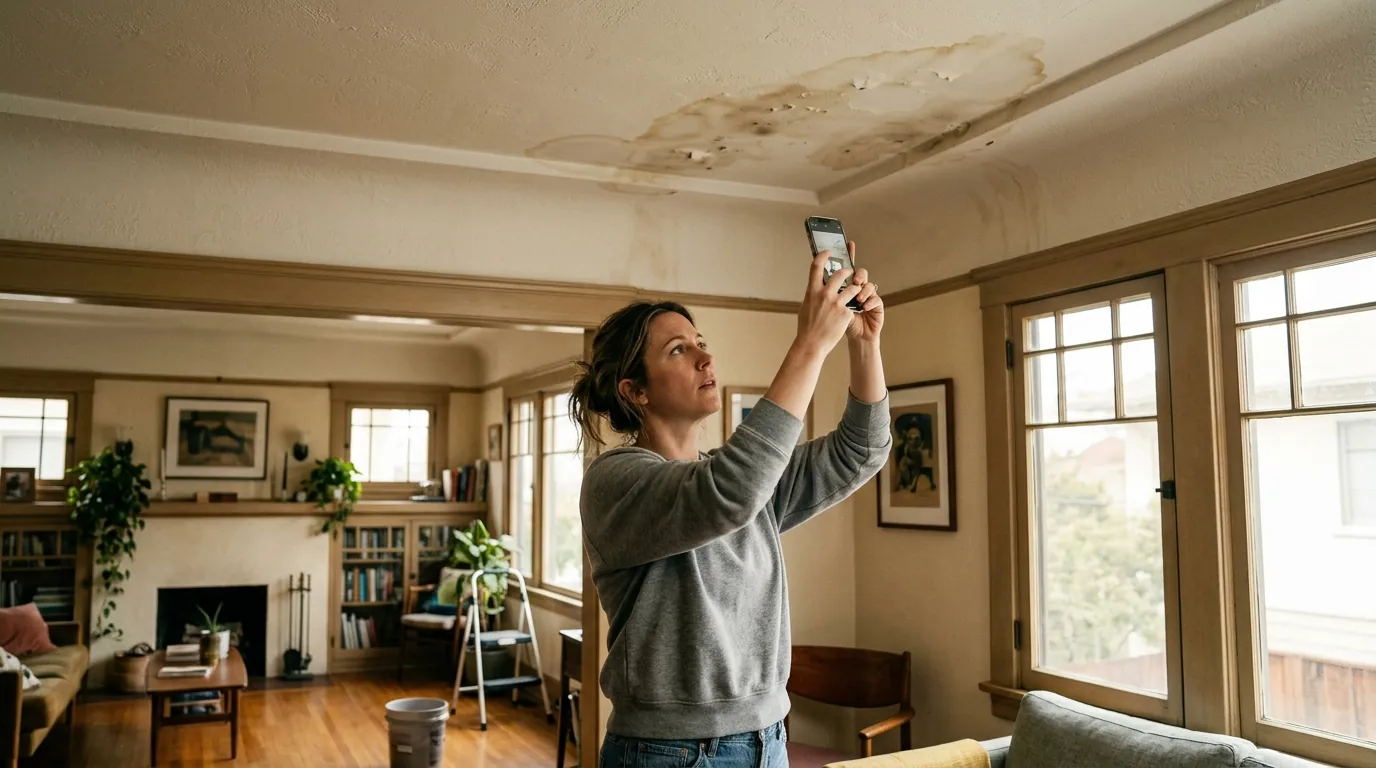
Take wide photos of every affected room, then close photos of the source, the water line on walls and furniture, damaged flooring and anything you will want replaced. A slow video walkthrough is useful too. Note the date and time you found the water and when you stopped it.
Keep the failed part if you can: the burst hose, the cracked fitting, the leaking valve. It shows the loss was sudden. Do not throw out damaged belongings until they have been photographed and listed, and ideally until the adjuster has seen them or agreed they can go.
Step two
Stop further damage, and do it quickly
Policies expect you to take reasonable steps to prevent the damage from getting worse. That means shutting off the water, getting standing water out and starting drying. Waiting days for an adjuster before doing anything can actually hurt a claim, because the insurer can argue the extra damage came from the delay.
Mitigation work, such as extraction and drying, is usually part of the claim when the loss is covered. A restoration company that logs moisture readings daily gives you the proof that drying was done properly. Our emergency water damage page covers what that first visit involves.
Need the damage documented properly from day one? Call and we will start with photos and readings.
Call (323) 709-0141Step three
Reporting the claim and what to ask
Report the loss to your insurer as soon as the house is safe, using the phone line or app on your policy. Write down the claim number, the adjuster's name and how to reach them. Ask what your deductible is, whether your policy covers additional living expenses if you need to leave the house, and whether there are limits on mold.
Ask whether they want you to use a particular company or whether you can choose your own. You can usually choose. Either way, keep copies of everything you send them.
Step four
The adjuster visit and the repair scope
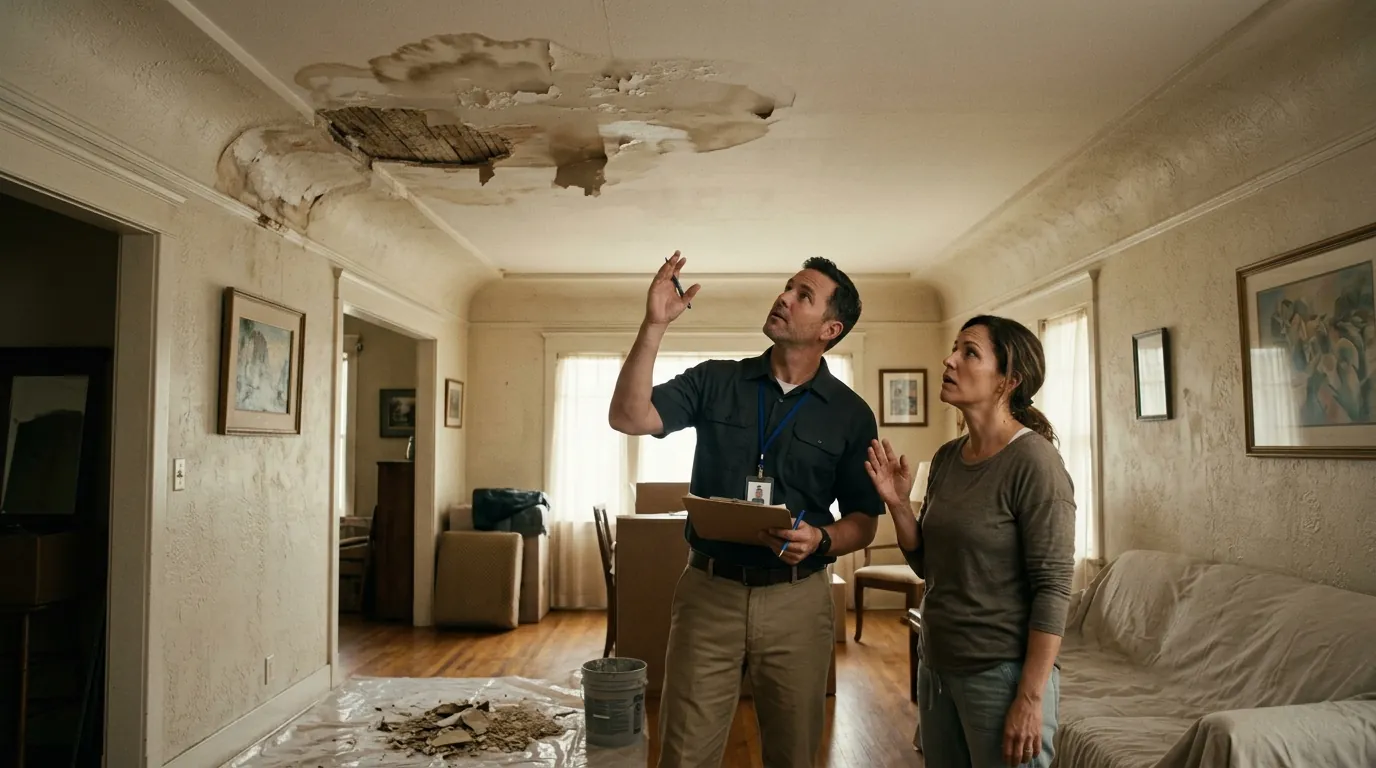
The adjuster inspects the damage and writes a scope: the list of work and materials the insurer agrees to pay for. Walk the house with them and point out everything, including rooms where the damage is hidden, like the ceiling below a bathroom or cabinets that swelled at the base.
Compare that scope with what the restoration company found. Moisture maps and daily readings matter here, because they show where materials were wet even when nothing looked damaged. Most disagreements are about what was wet and what was not, and dated readings settle them.
Common problems
Where claims usually get stuck
The most common disputes are gradual versus sudden damage, mold limits, and matching. A slow leak that went on for months is often excluded even if the final failure was sudden. Mold coverage may be capped. And when flooring or cabinets cannot be matched, the question becomes how much of the continuous area gets replaced.
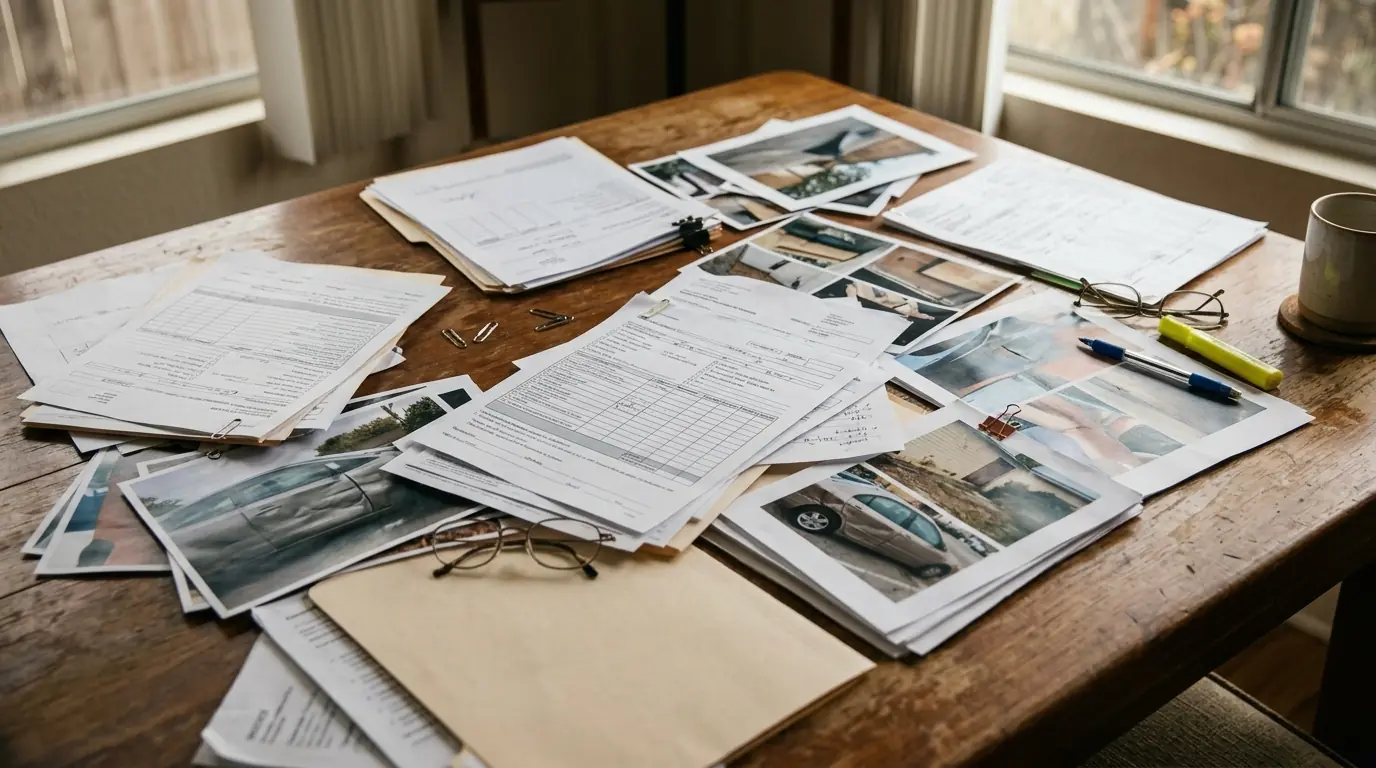
Clear records help with all three: when the leak was found, when drying started, what the readings showed, and photos of what could not be matched. If you rent, the split between landlord and tenant coverage is covered in our guide to water damage in an LA rental.
Living elsewhere
If the house is not livable during repairs
Some losses leave you without a kitchen, a bathroom or a safe place to sleep, especially with sewage, contaminated water or major rebuilds. Many policies include additional living expenses for that situation, covering reasonable hotel or rental costs and extra meals while the home is repaired.
Ask your insurer early whether you have this coverage and what they need from you. Keep every receipt, and keep a simple log of dates you were out of the house. Tell the restoration company too, because it affects how the work is scheduled.
Costs
What the numbers usually look like
National 2026 cost guides put water damage restoration at an average of about $3,867, with most losses between $1,384 and $6,387, and a water damage inspection with documentation at $200 to $500. Your deductible is subtracted from whatever the insurer approves.
These are planning ranges, not quotes. The scope for your house depends on the water category, how far it spread and how quickly drying started.
FAQ
Questions readers ask
Sudden, accidental water usually is. Gradual leaks, outside flooding and sewage backup often are not without extra coverage.
Usually yes. Check your policy and tell your insurer who you are using.
No. Photograph first, then prevent further damage; delay can hurt the claim.
Dated photos, the failed part, moisture readings and receipts for anything you paid.
Often only when caused by a covered sudden loss, and sometimes with a cap.
Share moisture readings and photos showing it, and ask for the scope to be revised.
Keep reading
More from our restoration guides
Water Damage Categories and Classes, Explained for LA Homes
Water categories and classes.
More on water categories and classesWater Damage in an LA Rental: Who Handles What
Water damage in a rental.
More on water damage in a rentalChoosing a Water Damage Restoration Company in LA
Choosing a restoration company.
Read: choosing a restoration companyStarting a water damage claim?
Call and we will document the damage the way adjusters expect, from the first visit.
24/7 emergency line
(323) 709-0141