Find it before you pay to remove it
Mold inspection and testing for Los Angeles homes
Mold follows moisture. An inspection that only swabs a stain misses the point; the question is where the water is and how far growth has gone.
- Answered 24/7
- Air and surface sampling
- Moisture mapping
Updated September 2026
24/7 emergency line
(323) 709-0141- 1Tell us what you noticeSmell, stain, or recent leak.
- 2We inspect and mapMeters and thermal imaging.
- 3Samples to a labResults with a plain summary.
Quick answer
A mold inspection in Los Angeles looks for the moisture source first, then for growth: moisture mapping with meters and a thermal camera, a visual check of hidden spots, and air or surface samples sent to a lab when they answer a real question. The result tells you whether remediation is needed and how big it is.
What is included
What the inspection includes
- History of leaks and symptoms
- Visual check of hidden spots
- Moisture meter readings
- Thermal imaging scan
- Outdoor baseline air sample
- Indoor air or surface samples
- Independent lab analysis
- Moisture map of wet areas
- Plain summary of next steps
The job
What an inspection is for
Mold spores are everywhere, indoors and out. What matters is whether mold is actively growing somewhere inside, and growth only happens where materials stay damp.
So an inspection is really a moisture investigation with sampling where it helps, not a swab and a scary number.
Variations of this job
Air sampling
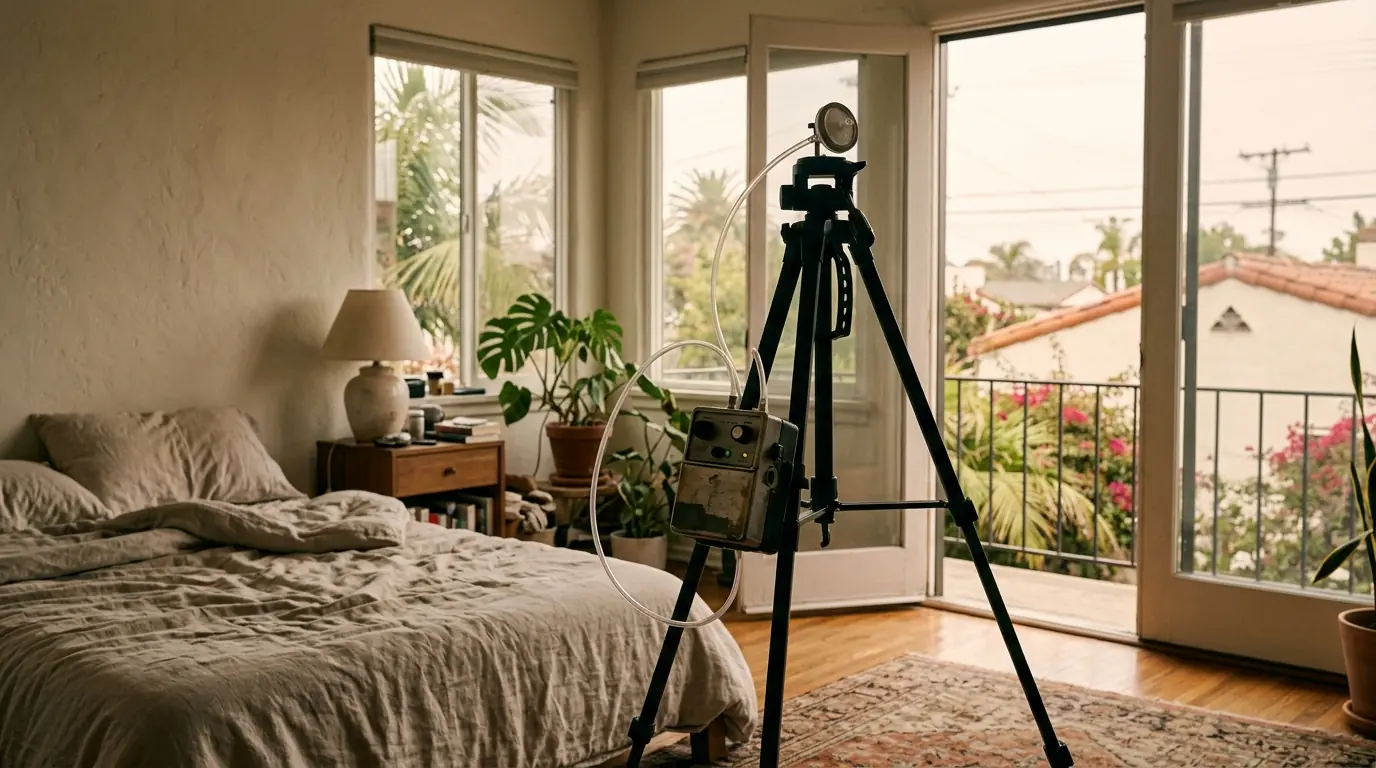
Air sampling draws a measured volume of indoor air through a cassette that a lab counts under a microscope, compared with an outdoor sample taken the same visit. It tells you whether spore levels inside are higher than outside, and which types dominate. It is most useful when you smell mold but cannot see it, or after remediation to confirm the air is back to normal. One indoor number without an outdoor comparison means very little, which is why we always take both.
Surface sampling
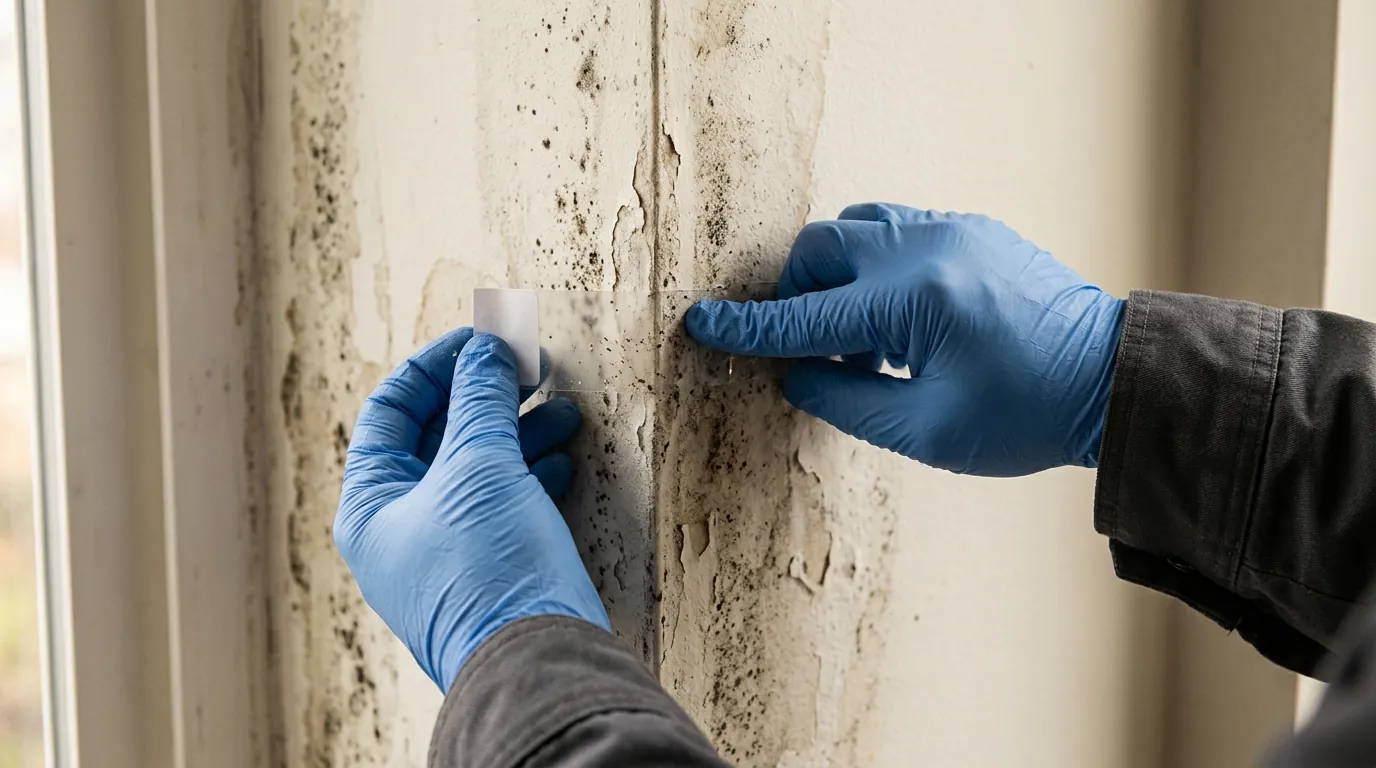
Surface sampling uses a tape lift or swab on a visible stain to confirm whether it is mold and what kind. It is quick and useful when a spot might be dirt, soot or staining rather than growth, or when an insurer or landlord wants lab confirmation. If growth is obvious and extensive, sampling the surface adds little; the moisture source and the extent behind the wall matter more than the species name. We say so rather than selling you samples.
Moisture mapping
Moisture mapping is the core of the inspection. We read walls, floors and ceilings with pin and pinless meters, scan with a thermal camera for cool damp patches, and mark the readings on a simple floor plan. That map shows where the water is, how far it spread and where mold is likely hiding behind finishes. It also tells a remediation crew exactly what to open, which keeps the scope honest and the tear-out as small as it can be.
How the job runs
How an inspection visit runs
WetDry and signed off
- 1
Talk through the history
Leaks, smells, stains and when they started.
- 2
Visual inspection
Under sinks, around tubs, attic and crawl space.
- 3
Moisture mapping
Meters and thermal camera across suspect areas.
- 4
Outdoor air sample
The baseline indoor results are compared to.
- 5
Targeted samples
Air or surface where they answer a question.
- 6
Lab analysis
Samples sent to an independent lab.
- 7
Plain-language results
What was found and whether it needs removal.
Los Angeles conditions
Dry climate, wet winters, hidden leaks
Los Angeles averages about 14.25 inches of rain a year, mostly in winter, so outdoor humidity is rarely what grows mold here. It is almost always a leak: a slow drip under a sink, a shower pan, a roof that failed in the first big storm. On wet porous material, mold can start within 24 to 48 hours, which is why the inspections we do in spring often trace back to a February leak.
Cost factors
What a mold inspection costs
2026 guides put a mold inspection at $300 to $650 on average, and a water damage inspection with documentation at $200 to $500. Lab fees scale with the number of samples.
Home size
Square footage and number of rooms.
Sample count
Each air or surface sample is a lab fee.
Access
Attics and crawl spaces add time.
Report type
Summary versus full written report.
Urgency
Rush lab turnaround costs more.
Post-remediation check
Clearance testing after cleanup.
What you might notice
Signs worth an inspection
Musty smell
Strongest in one room or closet.
Stains after a leak
Spots that grow or darken.
Peeling paint
On bathroom ceilings or walls.
Warped baseboard
Near tubs, sinks or exterior walls.
Allergy-like symptoms
That ease when you leave home.
Past water damage
Never professionally dried.
Buying an older home
Before closing, not after.
FAQ
Mold inspection questions
Often not. Visible growth needs removal and the moisture source fixed; testing mainly helps when it is hidden.
Color does not tell you the species or risk. Any active growth indoors should be removed.
Spores are always outside. Indoor results only mean something next to that baseline.
If there is a musty smell, past water damage or an older crawl space, yes.
Yes, as a separate job, scoped from what the inspection finds.
Usually a few business days, faster with rush processing.
Related work
What else the same leak can lead to
Mold Remediation
Bathroom mold
How we handle mold RemediationOdor Removal
Musty water odor
How we handle odor RemovalContents Pack-Out and Cleaning
Furniture and electronics
Contents Pack-Out and Cleaning in Los AngelesFire Damage Restoration
Kitchen fire
How we handle fire Damage RestorationSmoke and Soot Cleanup
Dry soot
Smoke and Soot Cleanup in Los AngelesSmell something musty?
Call and we will find the moisture before anyone quotes you a removal.
24/7 emergency line
(323) 709-0141