Drying and repairing original plaster
Plaster wall and ceiling water damage repair in Los Angeles
Plaster is not drywall. It holds far more water, dries slower and is repaired differently, and in an older house it is usually worth saving.
- Answered 24/7
- Lath and plaster
- Walls and ceilings
Updated September 2026
24/7 emergency line
(323) 709-0141- 1We read the wallPlaster holds more water.
- 2Dry it in placeSlower, but saves it.
- 3Repair to matchPatch and skim coat.
Quick answer
Water-damaged plaster in Los Angeles can often be dried in place and repaired rather than torn out. Plaster holds more water than drywall and dries slower, so it needs longer drying and more reading points. Sound plaster stays; loose or crumbling sections are cut back to firm keys, patched and skim coated to match.
The job
How plaster reacts to water
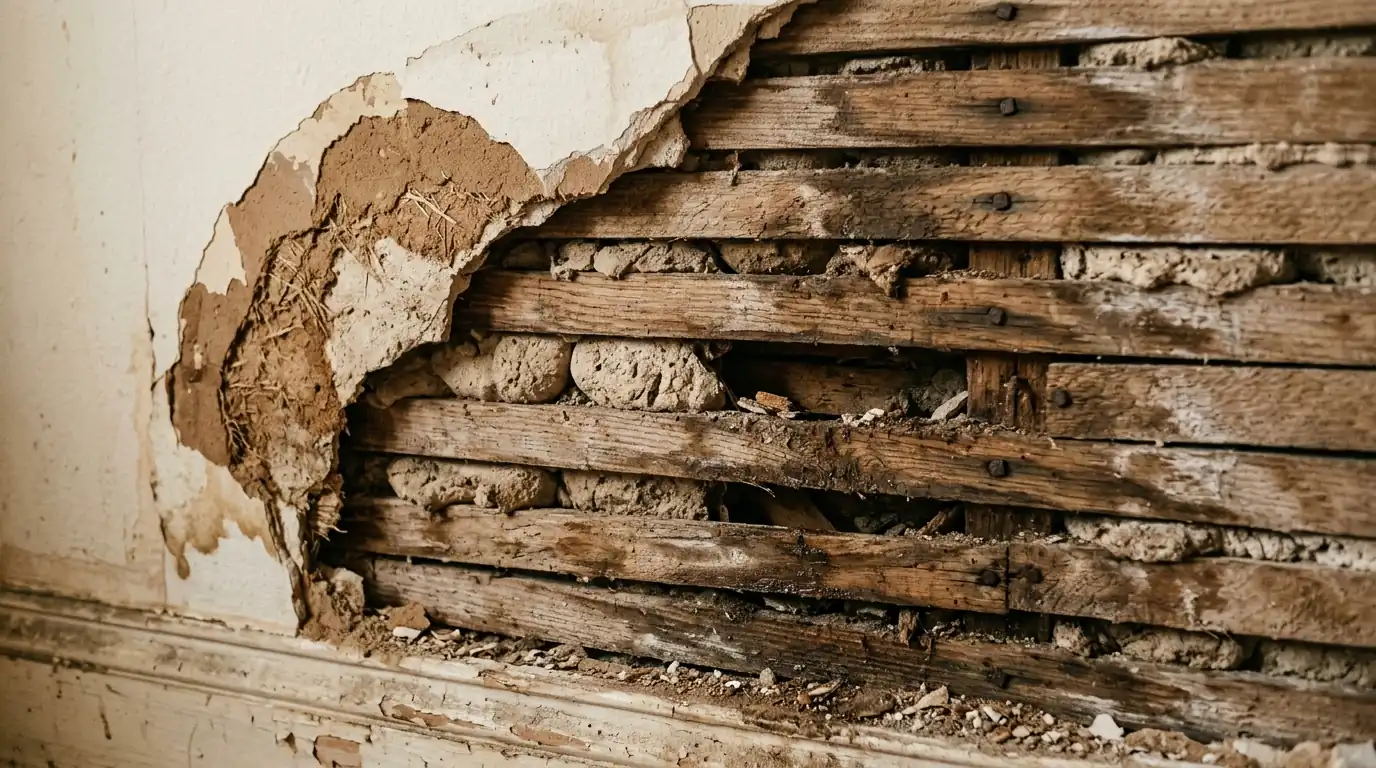
Lath and plaster is thick, dense and heavy. It soaks water and gives it up slowly, but it does not swell and crumble the way drywall does after a short soak.
The danger is the bond: water can loosen the plaster keys that grip the lath, and loose plaster can fall.
Cost factors
What plaster repair costs
2026 guides put plaster repair after gray water damage at $6 to $19 per square foot, and extraction and drying at $4 to $12 per square foot. Drying plaster in place is usually cheaper than replacing it. Planning ranges only.
Area affected
Square feet of wet plaster.
Loose sections
Keys lost, plaster cut back.
Wall or ceiling
Ceilings need support and care.
Drying days
Plaster dries slower than drywall.
Finish match
Smooth, sand or textured finish.
Paint scope
Patch or whole wall.
Your options
Save the plaster or replace it with drywall?
Most of the time plaster can stay. Here is when it cannot.
| Condition | Usual outcome | Why |
|---|---|---|
| Wet but firmly keyed | Dry in place | Sound plaster recovers well |
| Small loose areas | Cut back and patch | Keeps the rest of the wall |
| Sagging ceiling | Support, reattach or replace section | Safety first |
| Contaminated water | Remove affected section | Cannot be cleaned inside |
| Large failed areas | Section replaced, skimmed to match | Patch would be larger than the wall |
Variations of this job
Lath and plaster drying
Lath and plaster drying takes longer than drywall because the plaster layer is thick and the wood lath behind it holds water too. We read the wall at several heights and compare against a dry plaster wall in the same house, then dry with air movers, a dehumidifier and, where the cavity is wet, dry air pushed in behind. Expect five to seven days rather than three. Rushing it with heat can crack the surface, so the room is kept warm, not hot, and readings are taken each visit.
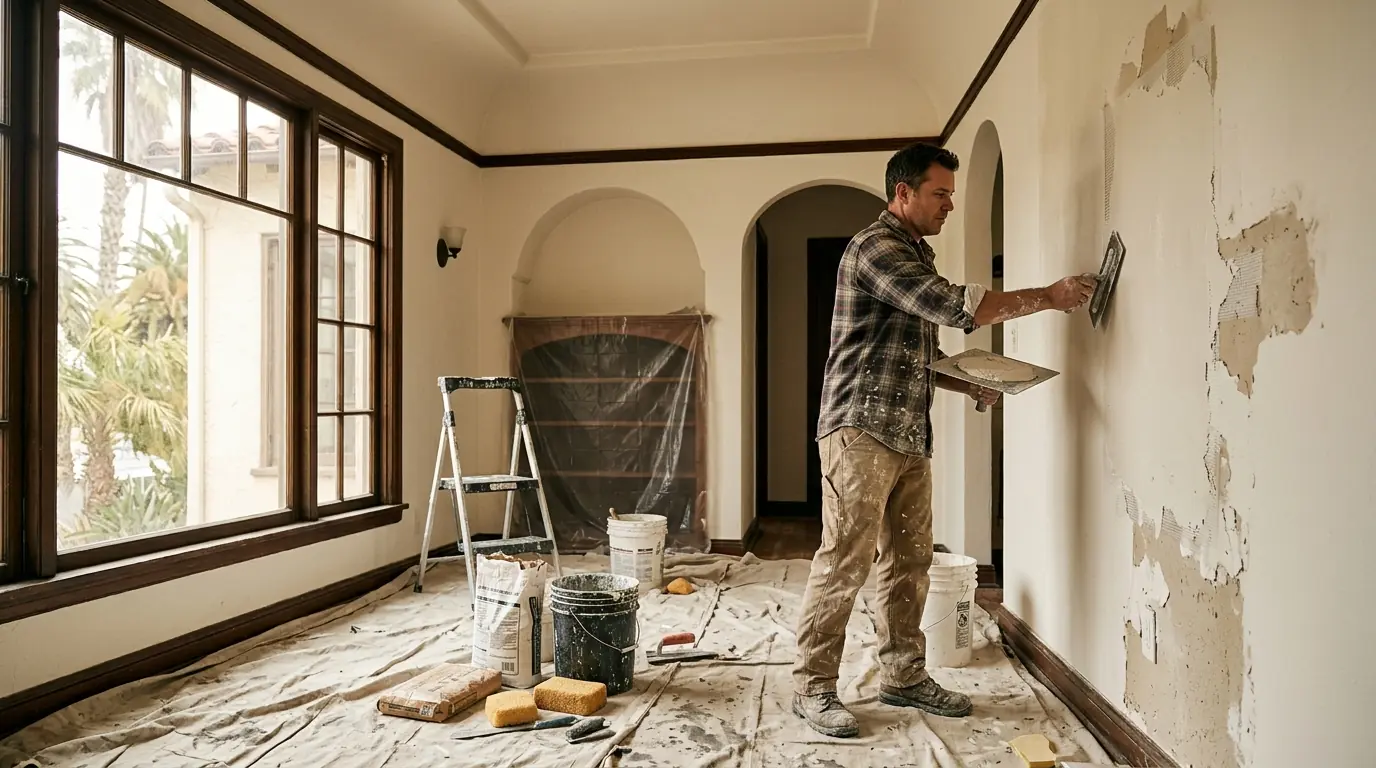
Plaster patching and skim coat
Plaster patching and skim coating repair the sections that lost their grip on the lath. We tap and press the wall to find loose areas, cut back to plaster that is still keyed, and rebuild the patch in layers so it matches the thickness of the wall around it. A thin skim coat over the repaired area blends the surface. Using drywall patches in a plaster wall usually shows as a step or crack later, especially where the house moves with the seasons.
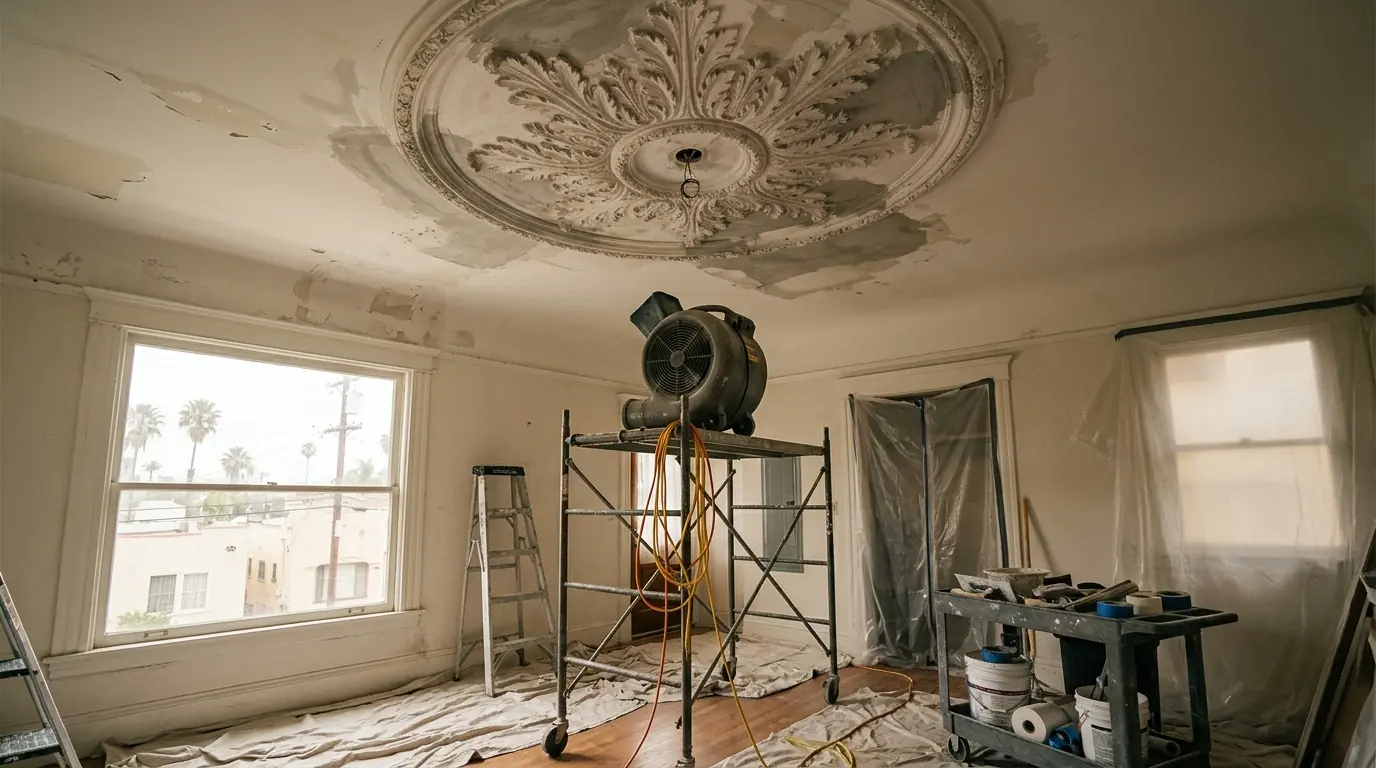
Plaster ceiling repair
Plaster ceiling repair needs extra care because a plaster ceiling that has lost its keys can come down in heavy pieces. If a stained ceiling sags, sounds hollow or has a bulge, keep people out from under it. We support or remove the loose section safely, dry the joists and remaining plaster, reattach sound plaster with washers where possible, and patch and skim the rest to match the original texture. Light fixtures in the affected area are disconnected before work begins.
Los Angeles conditions
A city of older walls
Most of Los Angeles was built long before drywall became standard; outside Downtown, Chinatown and Playa Vista, very little housing has been added in 20 years. That leaves a lot of lath and plaster in older homes, sometimes patched with drywall from earlier repairs. We check what each wall is made of before planning the drying, because plaster and drywall need different approaches.
Time
How long plaster takes
Drying usually runs five to seven days. Patching goes on in layers that each need time to set, so repair and skim coat add a few more days.
How the job runs
How a plaster repair runs
WetDry and signed off
- 1
Confirm the material
Plaster, drywall or a mix.
- 2
Read and mark
Multiple heights, dry reference.
- 3
Secure loose plaster
Support ceilings, check keys.
- 4
Dry in place
Longer drying, cavity air if needed.
- 5
Cut back loose areas
To firmly keyed plaster.
- 6
Patch in layers
Built up to match thickness.
- 7
Skim and finish
Blended surface, primed for paint.
FAQ
Plaster water damage questions
Usually, if it is still firmly attached to the lath. It needs longer drying.
Drywall patches in plaster often show as steps or cracks; plaster repair blends better.
Yes. Keep people out from under it and call right away.
Plaster feels hard and cold, sounds solid and is thicker than drywall at outlets.
Less easily than drywall paper, but the wood lath behind it can.
When the water damage is covered, repair in the original material usually is too.
Related work
Where this job usually goes next
Structural Drying and Dehumidification
Wall cavity drying
What structural Drying and Dehumidification involvesHardwood Floor Water Damage
Cupped hardwood
Hardwood Floor Water Damage in Los AngelesCarpet and Pad Water Damage
Carpet extraction
Carpet and Pad Water Damage in Los AngelesDrywall Water Damage Repair
Flood cut
What drywall Water Damage Repair involvesWater Damage Reconstruction
Flooring replacement
Water Damage ReconstructionWater in an old plaster wall?
Call and we will read it and dry it before anything is torn out.
24/7 emergency line
(323) 709-0141