After the storm, answered 24/7
Storm, mud and debris cleanup for Los Angeles homes
Hillside storms bring mud, rock and water at once. The mud has to come out before anything can dry, and everything it touched gets cleaned.
- Answered 24/7
- Mud and debris removal
- Wind and roof damage
Updated September 2026
24/7 emergency line
(323) 709-0141- 1Stay clear of slopesUntil officials say it is safe.
- 2We clear and pumpMud first, then water.
- 3Clean, dry, secureOpenings tarped or boarded.
Quick answer
Storm and mudslide cleanup in Los Angeles starts once the slope is safe: remove mud and debris from inside, pump standing water, cut out soaked drywall and flooring, disinfect every surface the mud touched, then dry. Openings from wind or falling trees get tarped or boarded first so the next storm does not add to it.
How the job runs
How a storm cleanup runs
WetDry and signed off
- 1
Wait for a safe slope
Officials clear the area first.
- 2
Secure openings
Tarp the roof, board broken windows.
- 3
Photograph everything
Mud, water lines and contents in place.
- 4
Remove mud and debris
Shoveled, hauled, residue washed.
- 5
Pump and extract
Standing water out.
- 6
Cut out and disinfect
Soaked materials out, surfaces treated.
- 7
Dry and document
Readings to dry, records for the claim.
The job
What a storm leaves inside a house
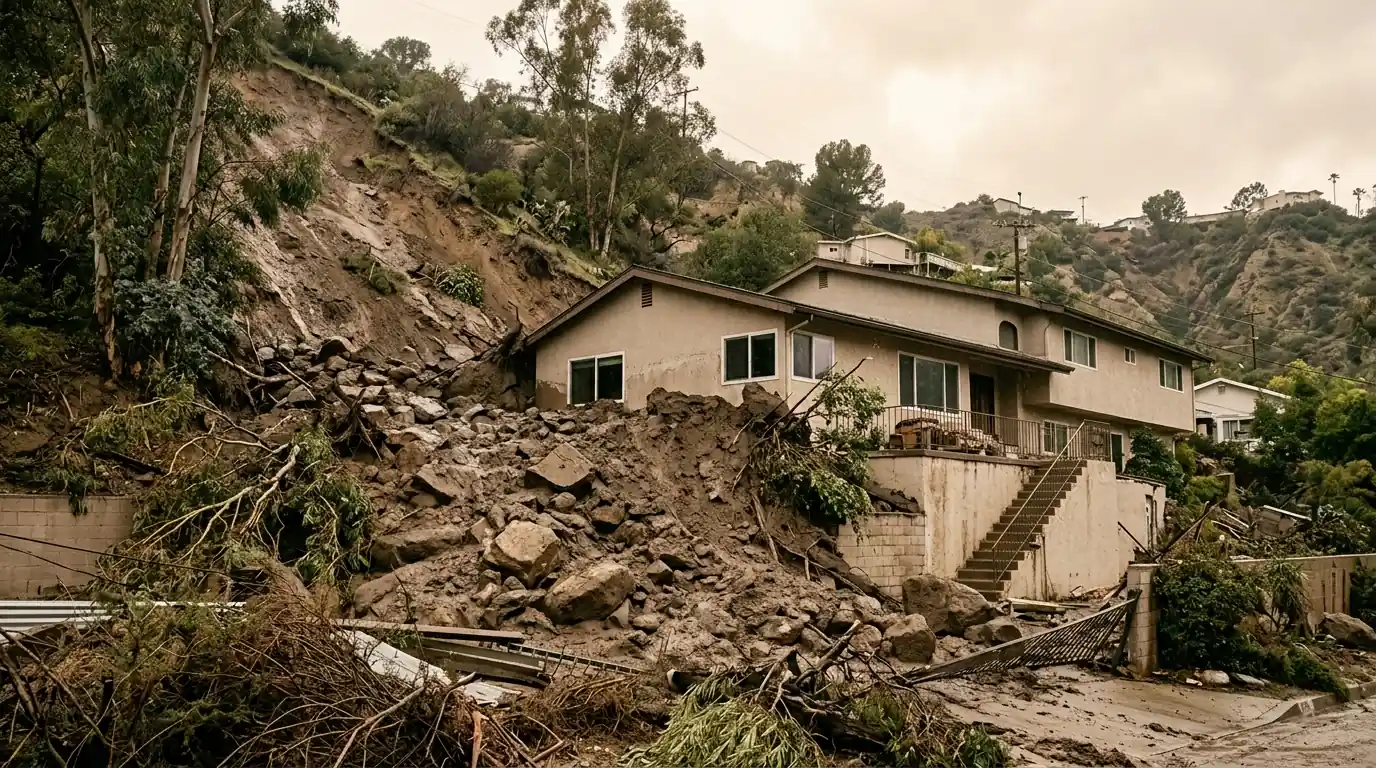
Mudflow carries soil, rock, vegetation and whatever it picked up on the way down. Inside a house or garage, it is heavy, wet and contaminated.
Wind and falling branches add roof and window openings. The cleanup order is always secure, remove, clean, then dry. Runoff that gets under a raised floor needs crawl space water removal.
Variations of this job
Mud and debris removal
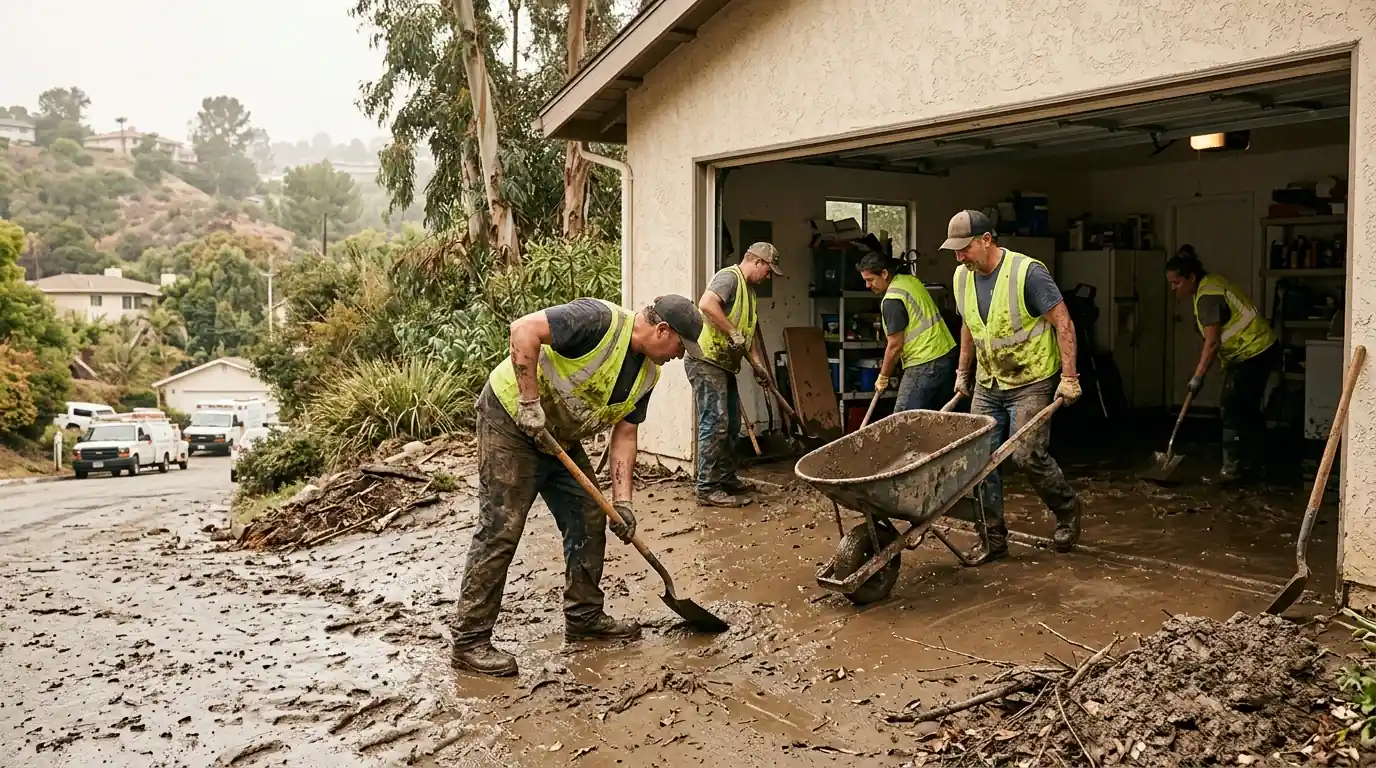
Mud and debris removal is shovel and wheelbarrow work before it is anything else. We clear mud from floors, garages and crawl space openings, haul it out, and hose or squeegee the residue once the bulk is gone. Mud holds water, so drying cannot start until it is out. Belongings buried in mud are photographed where they sit for the claim, then sorted into cleanable and not. Nothing is shoveled out before the photos are taken, because mud damage is hard to prove afterwards.
Wind and roof damage cleanup
Wind and roof damage cleanup covers torn roofing, broken windows and the water that came in through them. We tarp the roof and board broken glass first, then extract and dry the rooms below. Branches that came through the roof are cut back from the opening so the tarp can seal. Attic insulation soaked by rain is removed, and ceilings are read to find how far the water spread before anything is closed up again. Gutters packed with debris get cleared so the tarp can drain.
Hillside drainage failure
Hillside drainage failure is when a clogged or broken drain, swale or retaining wall sends runoff toward the house instead of away from it. Water pools against the foundation, pours into the garage or finds its way under a raised floor. We pump and dry the areas it reached, then point out where the water came from, because the same path will carry the next storm in. The drainage repair itself goes to a grading or drainage contractor, and our notes show them the path.
Los Angeles conditions
Canyons and hillsides take the worst of it
The February 2024 atmospheric river dropped more than a foot of rain on Topanga Canyon and Sepulveda Canyon in four days, and set off 475 mudslides across the area. Hillside streets in Beverly Crest were evacuated as slopes failed, and 16 people were rescued from floodwater in Studio City. Homes at the base of a slope or a canyon road are where our storm calls cluster.
Do it yourself or call
What to leave to the crew
Some of this is safe for you. Some is not.
| What you can do | What we handle | |
|---|---|---|
| Mud against the house | Stay back from the slope | Remove once area is cleared |
| Mud inside | Photograph it, move dry items up | Shovel, haul and disinfect |
| Fallen tree on the roof | Stay out of the rooms below | Tarp once the tree is off |
| Water in the garage | Power off to the garage if safe | Pump, extract and dry |
What is included
What a storm cleanup includes
- Safety check before entry
- Roof tarping and board-up
- Photos of mud and contents in place
- Mud and debris removal
- Pumping of standing water
- Soaked materials cut out
- Disinfection of touched surfaces
- Drying with daily readings
- Notes on where the water came in
Cost factors
What storm cleanup costs
2026 guides put black water mitigation at $7 to $7.50 per square foot, with contaminated water jobs typically at $3,000 to $10,000 or more. Mud hauling and roof tarping are added. Outside flood water is often excluded from homeowner policies.
Mud volume
Shoveling and hauling by the load.
Areas reached
Garage, living space, crawl space.
Materials removed
Drywall, flooring, insulation.
Roof and openings
Tarping and board-up.
Disinfection
Every surface the mud touched.
Drying days
Equipment until dry.
FAQ
Storm cleanup questions
Once officials say the slope and street are safe. Until then, stay back.
Yes. Treat it like flood water: gloves, boots, and no bare skin contact.
Mudflow is often excluded without special coverage. Check your policy; we document either way.
We work around them. A tree crew removes the tree; we tarp and dry after.
We point out where water entered. Drainage fixes go to a specialist.
Usually longer than a clean leak, often five to seven days.
Related work
Where this job usually goes next
Flood Cleanup
Rain intrusion
Flood Cleanup in Los AngelesSewage Backup Cleanup
Main line backup
More on sewage Backup CleanupEarthquake Damage Cleanup
Water heater and pipe breaks
More on earthquake Damage CleanupFire Damage Restoration
Kitchen fire
Fire Damage Restoration in Los AngelesSmoke and Soot Cleanup
Dry soot
What smoke and Soot Cleanup involvesMud or storm water inside?
Stay clear of the slope and call. We will secure it and start the cleanup.
24/7 emergency line
(323) 709-0141