Carpet saved when it can be
Wet carpet and pad cleanup for Los Angeles homes
Carpet often survives a clean-water leak. The pad under it usually does not, and the slab or subfloor under that is what decides the drying time.
- Answered 24/7
- Carpet and pad
- Slab and wood subfloors
Updated September 2026
24/7 emergency line
(323) 709-0141- 1Tell us what leakedClean line, appliance or outside.
- 2We extract hardWeighted wand through the pile.
- 3Pad out, carpet driedRelaid when it reads dry.
Quick answer
Wet carpet in Los Angeles can usually be saved if the water was clean and extraction starts within a day. The pad under it soaks up far more water and is normally replaced. We extract, pull the pad, dry the subfloor and carpet, then relay it on new pad once readings are dry.
The job
What happens to carpet when it gets soaked
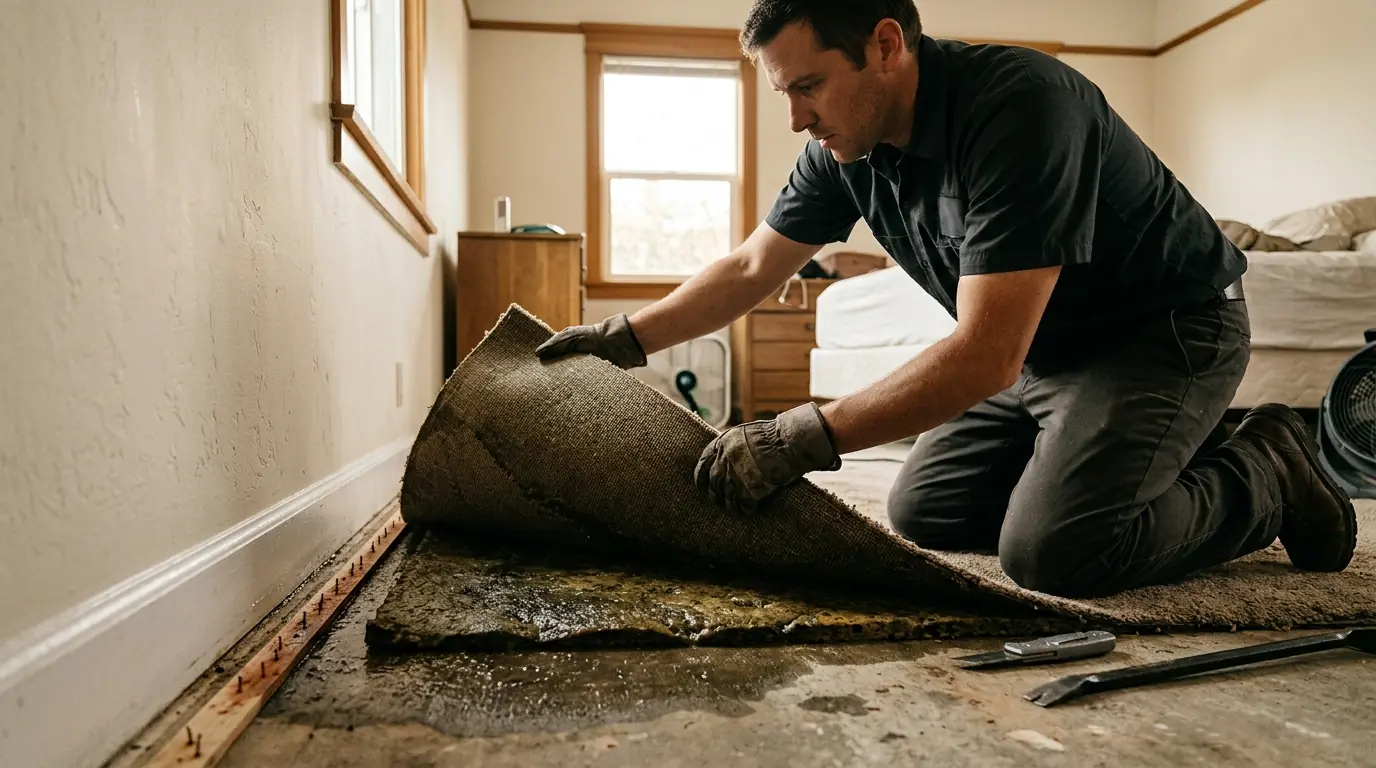
Carpet fibers hold water on the surface. The pad underneath is foam, and it acts like a sponge that stays wet for days and starts to smell. Under that, a concrete slab or plywood subfloor holds the rest.
Drying carpet with the wet pad still under it rarely works. The pad keeps feeding moisture back up.
Cost factors
What wet carpet cleanup costs
2026 guides put water damage restoration at $3 to $7.50 per square foot, and professional extraction on its own at $300 to $1,500 depending on volume. New pad and relaying are part of the rebuild. Planning ranges only.
Wet area
Square footage of carpet and pad affected.
Water category
Contaminated water means carpet goes too.
Pad replacement
New pad at the same thickness.
Subfloor type
Slab dries slower than plywood.
Furniture moving
Heavy rooms take longer to clear.
Restretching
Relaying and seaming after drying.
Your options
Save the carpet or replace it?
The water type and time decide it more than the carpet's age.
| Situation | Carpet | Pad |
|---|---|---|
| Clean water, under a day | Usually saved | Usually replaced |
| Clean water, two to three days | Often saved, check backing | Replaced |
| Appliance or gray water | Case by case | Replaced |
| Sewage or outside flood water | Replaced | Replaced |
| Backing rippled or separating | Replaced | Replaced |
Variations of this job
Carpet extraction
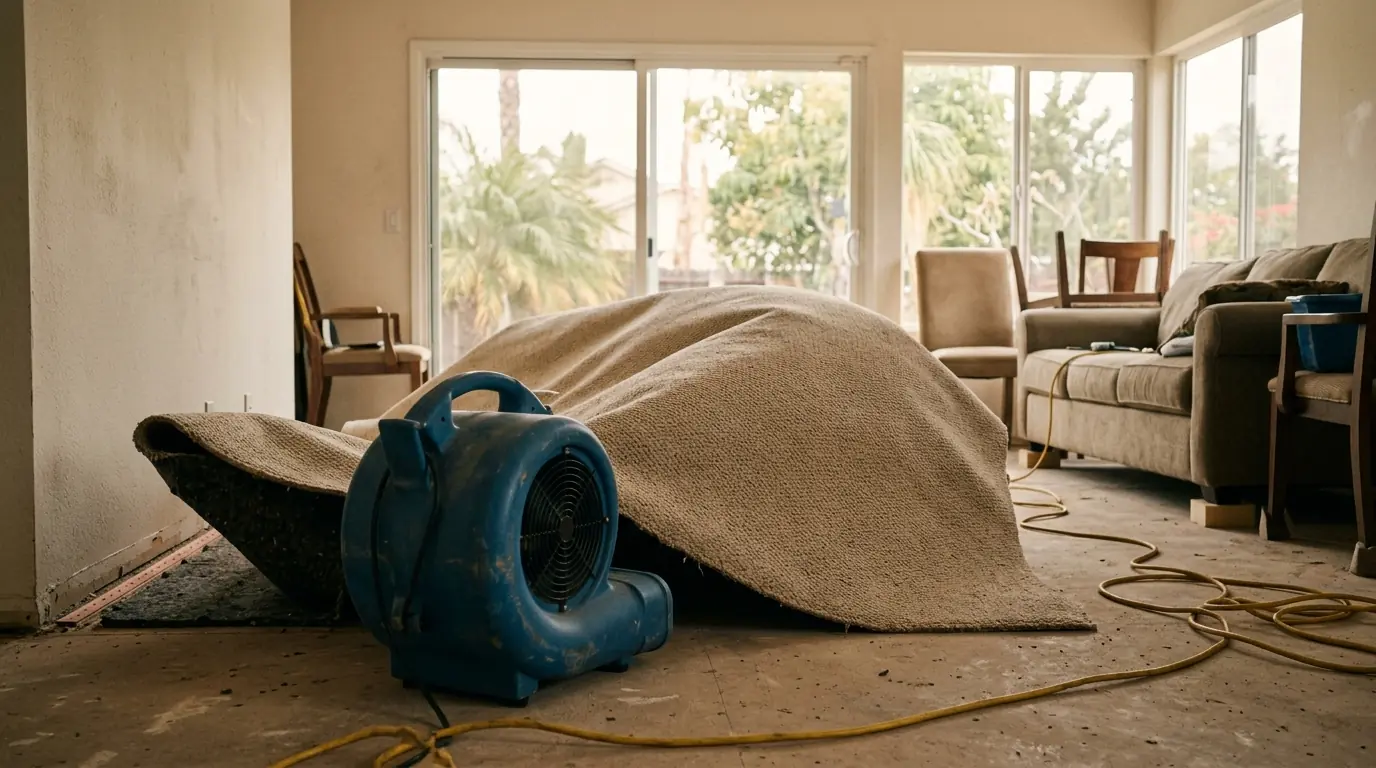
Carpet extraction is the first and most important step, because every gallon pulled out is a gallon the air movers do not have to evaporate. We use a weighted extraction tool that the technician stands on, which squeezes water out of the pile and the pad in one pass, then go over the area in overlapping strips. Surface wands alone leave most of the water behind. Readings after extraction tell us how much is left in the subfloor, and that sets the drying plan.
Pad replacement
Pad replacement is the normal outcome after a soak. Foam pad is cheap compared to carpet, holds water for days, and is hard to dry or sanitize once wet. We pull the carpet back from the tack strip, cut out the wet pad, and bag it. The subfloor gets dried directly, then new pad of the same thickness goes down before the carpet is restretched. If the water was contaminated, pad is never kept, and the carpet usually goes with it.
Carpet delamination
Carpet delamination is when the backing layers separate after water sits too long or the carpet is dried with too much heat. You see ripples, bubbles or seams that open up after it looks dry. Delaminated carpet cannot be glued back together in place, so it is replaced. Catching the water early and drying at a controlled temperature is how we avoid it, and we tell you straight away if the backing is already failing, so you are not paying to dry carpet that will be replaced anyway.
Los Angeles conditions
Carpet over slab in Valley tract homes
Much of the carpet we dry sits straight on concrete. Burbank's median home dates to 1952 and Canoga Park's to 1960, and many of those tract houses were built slab-on-grade with carpet and pad laid directly on the slab. A slab soaks water in and gives it back slowly, so these jobs rely on a dehumidifier and slab readings more than on fans blowing across the carpet.
Time
How long the room is out of use
Most carpeted rooms take two to four days of drying once the pad is out, a little longer over a slab. Relaying on new pad is usually a half-day visit after that.
How the job runs
How we dry a soaked carpet
WetDry and signed off
- 1
Confirm the source is off
No drying until the leak has stopped.
- 2
Move furniture
Blocks under legs that must stay.
- 3
Weighted extraction
Overlapping passes through pile and pad.
- 4
Pull back and remove pad
Wet pad cut out and bagged.
- 5
Dry subfloor and carpet
Carpet floated with air under it.
- 6
Confirm dry
Slab or subfloor readings against dry.
- 7
New pad and relay
Restretched onto new pad, seams closed.
FAQ
Wet carpet questions
It pulls surface water, not what the pad holds. Without extraction and pad removal, the subfloor stays wet.
Foam pad holds water for days and is hard to sanitize. It is cheap compared to carpet, so we replace it.
Carpet dried at a controlled temperature and restretched rarely has problems. High heat is what causes shrinking and delamination.
Not if the pad is out and the subfloor is dried. A lingering musty smell usually means moisture was left.
Yes, carefully. Stay off areas where the carpet is floated with air under it.
If the leak was sudden and covered, carpet that cannot be saved is usually part of the claim.
Related work
Related work from the same call
Structural Drying and Dehumidification
Wall cavity drying
Structural Drying and DehumidificationHardwood Floor Water Damage
Cupped hardwood
Hardwood Floor Water DamageDrywall Water Damage Repair
Flood cut
Drywall Water Damage RepairWater Damage Reconstruction
Flooring replacement
Water Damage ReconstructionContents Pack-Out and Cleaning
Furniture and electronics
Contents Pack-Out and CleaningCarpet soaked right now?
Call and we will get extraction going before the pad starts to smell.
24/7 emergency line
(323) 709-0141