Remove the source, not just the smell
Odor removal after water, smoke and sewage damage in Los Angeles
Odor is residue in the air. Air fresheners cover it for an hour; real removal means finding what holds the smell and cleaning, removing or sealing it.
- Answered 24/7
- Musty, smoke and sewage odor
- Source found first
Updated September 2026
24/7 emergency line
(323) 709-0141- 1Tell us the smellMusty, smoky or sewer.
- 2We find the sourceReadings and inspection.
- 3Remove, then treatDeodorize and seal.
Quick answer
Odor removal in Los Angeles starts with finding the source: wet material still holding water, soot residue, or sewage in a subfloor or crawl space. We remove or clean that source, then treat what is left with deodorizers, hydroxyl or thermal fogging, and seal surfaces that absorbed odor. Treating the air without removing the source brings the smell back.
The job
Why smells come back
A smell that returns on warm days or after the house is closed up means the source is still there: damp wood, a pad that was never removed, soot in the ducts, or sewage under the floor.
Masking products fade. Removal lasts because the residue itself is gone. If the smell is musty and the source is hidden, a mold inspection comes first.
Cost factors
What decides the cost of odor removal
We have not found a published regional range for odor removal alone that we trust enough to print. The biggest factor is whether the source is removed or only treated.
Odor source
Water, smoke or sewage residue.
Source removal
Pad, drywall or insulation out.
Treatment method
Hydroxyl, fogging or sealing.
Area size
Rooms and square footage.
Ducts
Cleaning if odor rides the HVAC.
Sealing and paint
Odor-blocking primer after.
Your options
Which odor treatment fits?
Methods are chosen for the source, and none replaces removing it.
| Method | Best for | Notes |
|---|---|---|
| Hydroxyl generator | Smoke and musty odor | Safe to run with people nearby |
| Thermal fogging | Smoke in cavities and fabrics | Area vacated during treatment |
| Ozone | Severe odor in empty spaces | Never with people or pets inside |
| Odor-blocking primer | Walls and framing that hold odor | Applied before paint |
| Antimicrobial | Musty and sewage sources | After removal and drying |
Variations of this job
Musty water odor
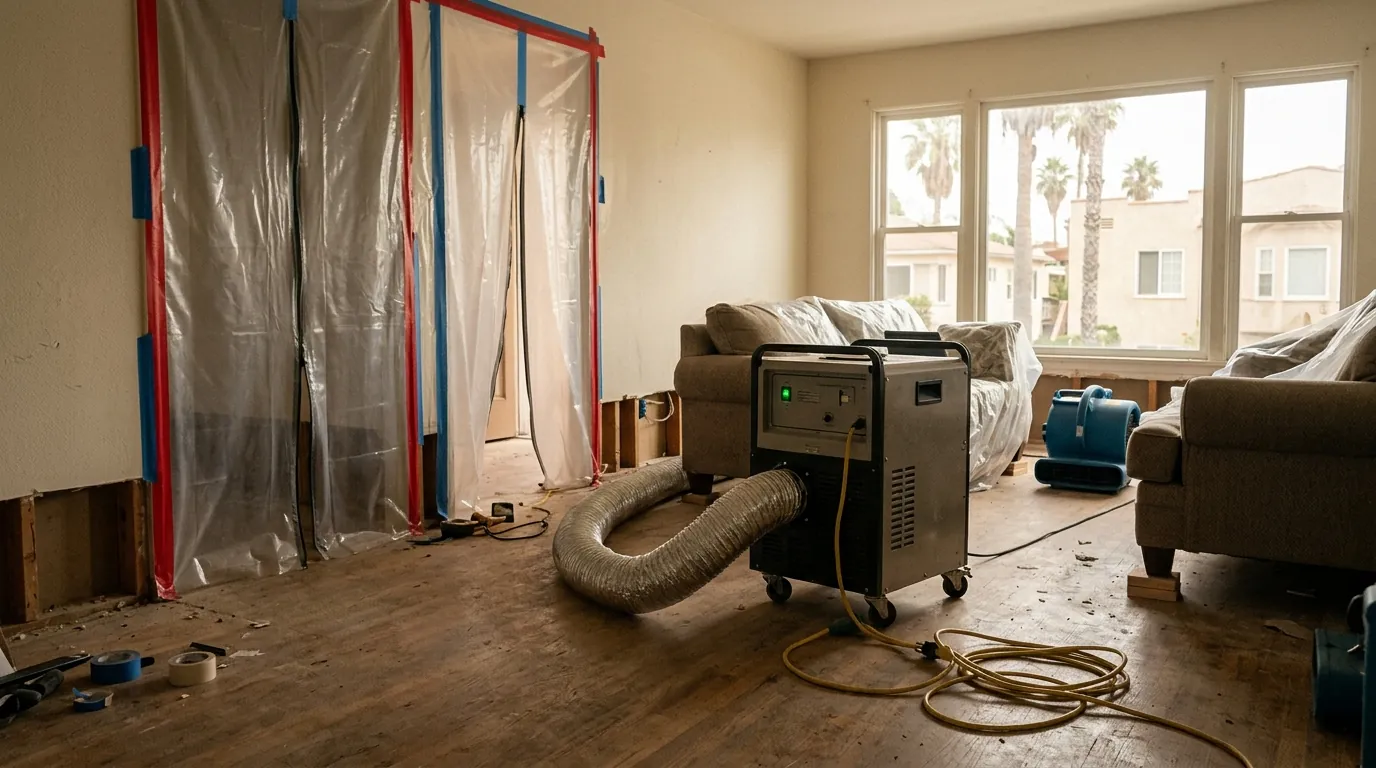
Musty water odor comes from materials that stayed damp long enough for bacteria and mold to grow: pad under carpet, the bottom of drywall, subfloor, a crawl space. We read the house to find anything still wet, remove what cannot be dried, dry the rest, then treat the area with an antimicrobial and a deodorizer. If the smell is strongest near the floor, the source is usually below it. It rarely clears until the moisture is gone, whatever gets sprayed on it.
Smoke odor
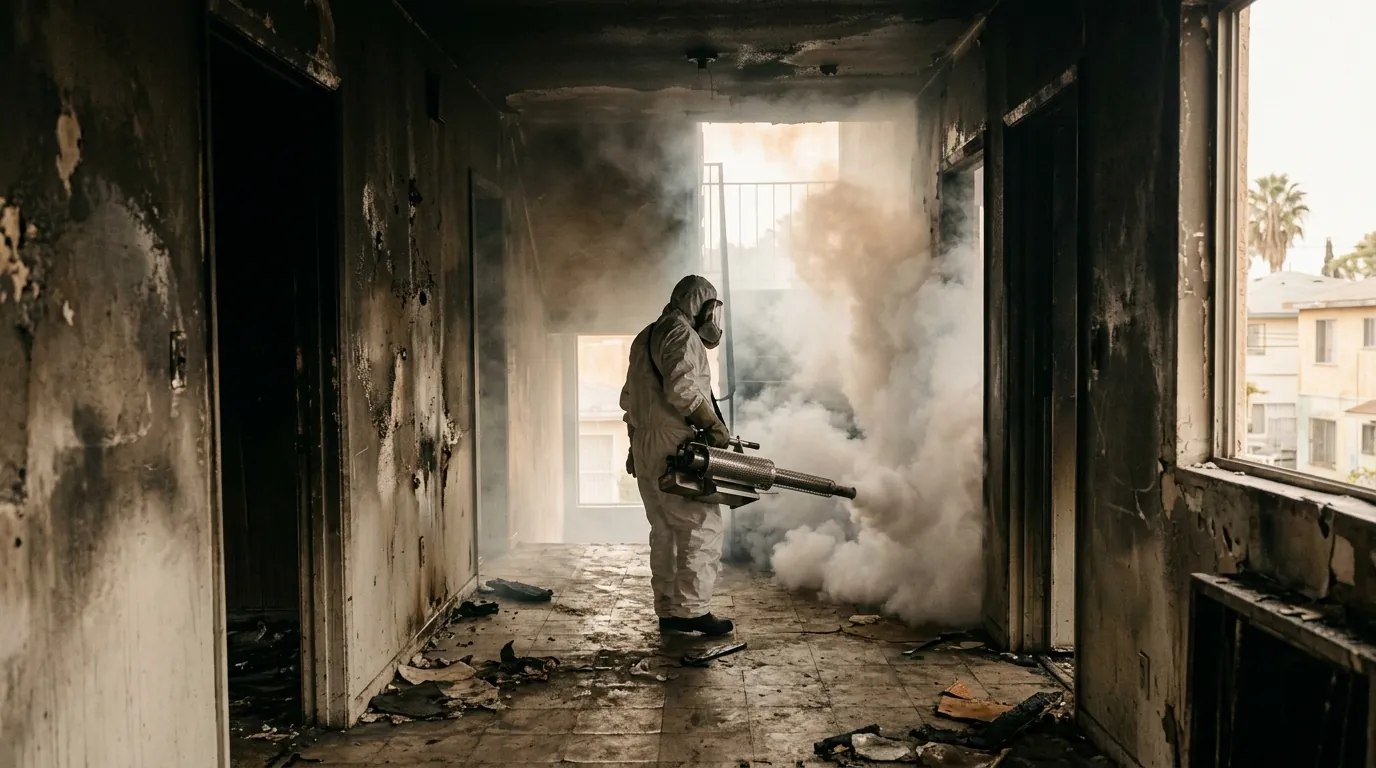
Smoke odor lingers after a fire because smoke residue coats surfaces, soaks into fabrics and settles in ducts and attic insulation. We clean the residue first, then deodorize with hydroxyl generators or thermal fogging, which reaches the same places smoke did. Surfaces that still hold odor after cleaning are sealed with an odor-blocking primer before painting. Ducts are cleaned so the system stops spreading smoke smell every time it runs. Closets and drawers are opened during treatment, because they trap odor.
Sewage odor
Sewage odor after a backup means contaminated material or residue is still present, often in a subfloor, wall base or crawl space. We remove the contaminated material, clean and disinfect the structure, dry it, then deodorize. A sewer smell with no backup can also come from a dry drain trap or a failed wax ring under a toilet, which a plumber fixes. We tell you which it is before treating anything, so you are not paying to deodorize a plumbing problem.
Los Angeles conditions
Shared walls carry smells
Only about half the homes in the Los Angeles and Long Beach metro are detached houses; the rest share walls, floors or ceilings with neighbors. In attached housing, an odor from a leak or a backup in one unit can travel through shared cavities, plumbing chases and hallways. When we trace a smell in a building, we check the units on either side as well as the one reporting it.
How the job runs
How odor removal works
WetDry and signed off
- 1
Identify the odor
Musty, smoke, sewage or chemical.
- 2
Find the source
Readings and inspection, not guessing.
- 3
Remove or clean it
The residue has to go first.
- 4
Dry the structure
No moisture left to feed bacteria.
- 5
Deodorize
Hydroxyl, fogging or both.
- 6
Seal if needed
Odor-blocking primer on stubborn surfaces.
- 7
Recheck
Smell test after the house is closed up.
What you might notice
Signs the odor source is still there
Worse on warm days
Heat releases trapped odor.
Worse when closed up
Builds overnight or after trips.
Strongest near the floor
Source is usually below.
Returns after cleaning
Surface cleaning missed it.
Stronger with AC on
Residue in the ducts.
Damp feel to carpet
Moisture still in the pad.
Smell in one closet
Leak or residue behind it.
FAQ
Odor removal questions
The source is still there. Treatment only lasts once the residue or moisture is gone.
Only in empty spaces. People, pets and plants must be out during treatment.
Regular paint cannot. Odor-blocking primer can, after cleaning.
Usually a few days after the source is removed and the area is dry.
When it follows a covered water or fire loss, usually yes.
A dry trap or a failed toilet seal needs a plumber. We will say so.
Related work
What else the same leak can lead to
Mold Inspection and Testing
Air sampling
More on mold Inspection and TestingMold Remediation
Bathroom mold
More on mold RemediationBurst Pipe Cleanup
Supply line failure
More on burst Pipe CleanupCeiling and Roof Leak Water Damage
Sagging ceiling
More on ceiling and Roof Leak Water DamageSlab Leak Water Damage
Hot spot on floor
Slab Leak Water Damage in Los AngelesSmell that will not go away?
Call and we will find what is holding it before treating anything.
24/7 emergency line
(323) 709-0141