Ceiling leaks, answered 24/7
Ceiling and roof leak water damage repair in Los Angeles
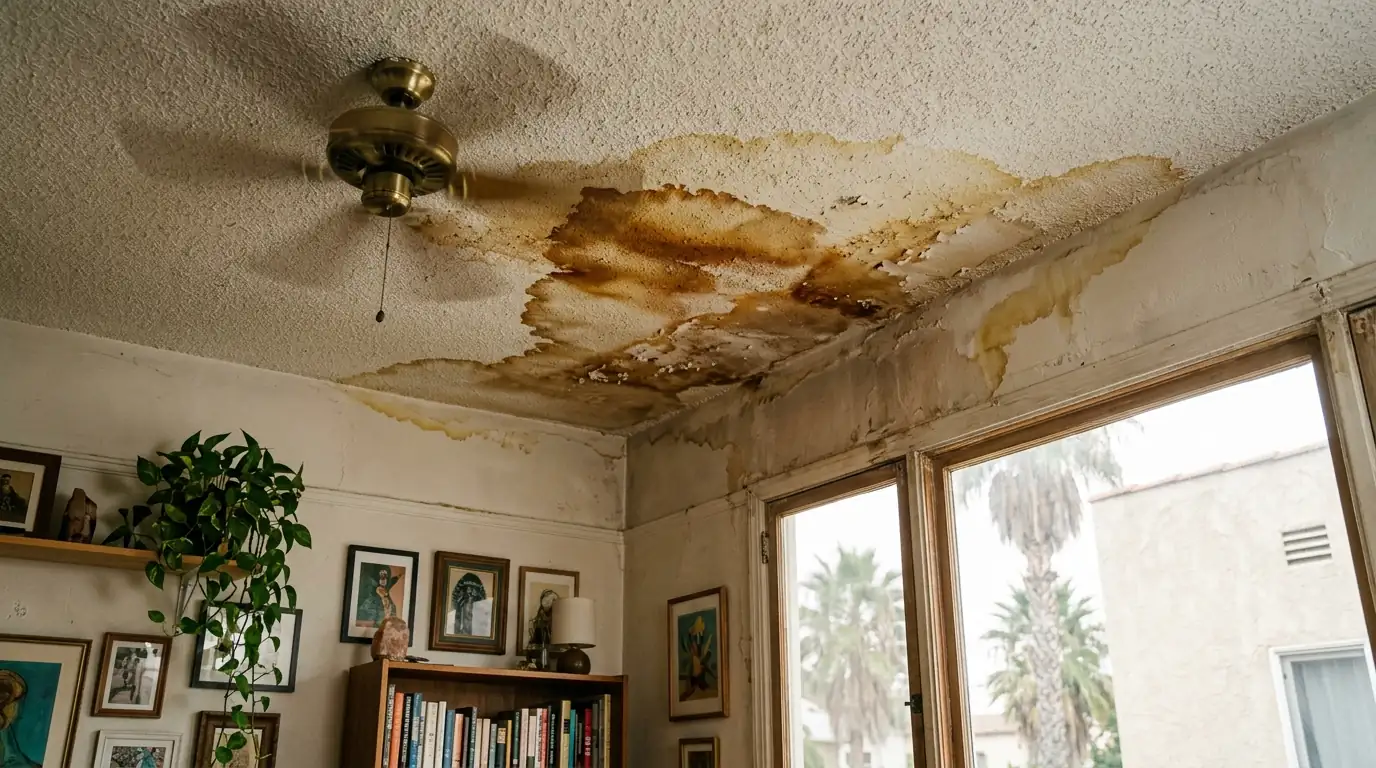
A ceiling stain is usually not where the leak is. Water runs along rafters and the top of drywall before it shows, so the wet area is bigger than it looks.
- Answered 24/7
- Sagging and stained ceilings
- Attic and insulation
Updated September 2026
24/7 emergency line
(323) 709-0141- 1Put a bucket downAnd turn off that light circuit.
- 2We trace the waterAttic, cavity and drywall.
- 3Dry, then repairPatch, texture and paint.
Quick answer
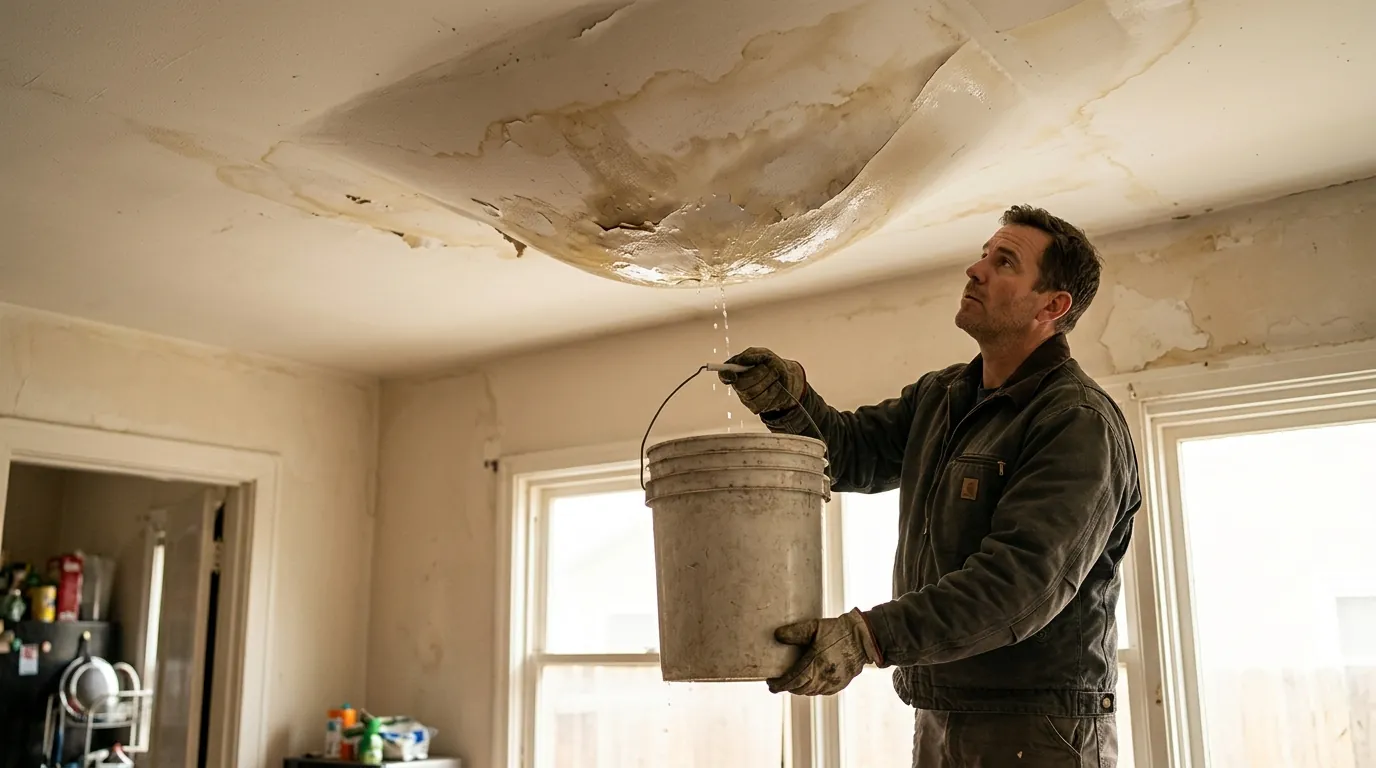
For ceiling water damage in Los Angeles, move belongings, set a bucket under the drip and switch off any light fixture in the wet area. The stain is only the visible edge; we trace the water through the attic and cavity with meters and a thermal camera, dry it, and replace only the drywall that is too wet to save.
What you might notice
Signs the ceiling is holding water
A spreading stain
Brown rings that grow after rain.
Sag or bulge
Drywall dipping between joists.
Drip at a light
Water leaving through a fixture.
Bubbling paint
Blisters along a seam or corner.
Nail pops
Rust-colored dots in a line.
Musty attic smell
Damp odor from the hatch.
Soft drywall
A spot that gives when pressed.
How the job runs
From a dripping ceiling to a finished one
WetDry and signed off
- 1
Protect the room
Belongings moved, floor covered, circuit off.
- 2
Relieve trapped water
A controlled drain on a bulging ceiling.
- 3
Trace the path
Attic, rafters and cavity with meters and imaging.
- 4
Remove saturated material
Drywall and insulation that cannot dry.
- 5
Dry attic and cavity
Air movers and a dehumidifier above and below.
- 6
Confirm dry
Readings logged against a dry reference.
- 7
Rebuild the ceiling
Drywall, matching texture and paint.
The job
What happens inside a leaking ceiling
Water from a roof, an upstairs bathroom or an AC drain pan lands on the top of the drywall and spreads. Drywall soaks it up, sags and eventually drips at a seam, a nail or a light. By then the insulation above it is usually soaked too.
Most ceilings are saved if the water stopped and drying starts within a day. Sagging ones are opened. If the drip sits under an attic air handler, an AC condensate overflow is the likelier source.
Time
How long until the ceiling is back
Drying usually takes three to five days once the leak is stopped. The ceiling rebuild takes another couple of days for drywall, texture and paint to cure.
Variations of this job
Sagging ceiling
A sagging ceiling is drywall holding more water than it can carry, and it can come down without warning. Keep people and pets out from under it. We relieve the water safely with a controlled drain into a bucket, then open the saturated section so the cavity can dry. Cutting at the framing makes the patch clean. Trying to push the bulge back up, or waiting to see if it dries, is how whole rooms of ceiling end up on the floor.
Attic leak
An attic leak soaks insulation first, and wet insulation holds water against the ceiling for days after the rain stops. We go into the attic, find the entry point on the roof deck, and pull out insulation that is wet. The deck and rafters are dried in place with air movers and a dehumidifier. Once the roof itself is repaired, new insulation goes back, because dried fiberglass rarely returns to its original thickness. We photograph the entry point for the roofer.
Window and stucco intrusion
Window and stucco intrusion shows up at the ceiling edge or top of a wall, usually in the corner nearest a window, after wind-driven rain. Water gets behind the stucco at a failed window flashing or a crack and runs down inside the wall. We confirm the path with a thermal camera, dry the wall cavity, and note the entry point for the window or stucco contractor, because the stain comes back every storm until the outside is fixed. Painting over it first only hides the evidence.
Los Angeles conditions
A short rainy season with heavy days
Downtown Los Angeles averages about 14.25 inches of rain a year, most of it between December and March, so roofs go months without being tested. Then a single storm arrives: in February 2024 more than 8 inches fell downtown in three days. Small flashing gaps that stayed dry all summer suddenly carry real water, which is why our ceiling calls cluster in the first big storm of the season.
Do it yourself or call
What to do before we arrive
A few minutes of the right moves limits the damage.
| What you can do | What we handle | |
|---|---|---|
| Dripping ceiling | Bucket down, belongings moved | Trace and dry the cavity |
| Drip at a light | Breaker off for that circuit | Open and dry the area |
| Bulging ceiling | Keep everyone out from under it | Controlled drain and cut-out |
| Roof still leaking | Stay off the roof | Tarp, then dry inside |
Cost factors
What ceiling water damage costs to fix
2026 guides put most water damage restoration between $1,384 and $6,387, and rebuild work like drywall, texture and paint at $20 to $37 per square foot. Planning ranges only; the attic decides a lot.
Area of ceiling
Square footage of wet and removed drywall.
Insulation
Wet attic insulation removed and replaced.
Texture match
Popcorn and knockdown take extra work.
Height and access
Stairwells and vaulted ceilings need staging.
Source repair
Roof or window repair is separate work.
Drying days
Attic and cavity equipment by the day.
FAQ
Ceiling leak questions
Only if you cannot reach us and it is about to fail. Keep people clear; a controlled drain is safer.
Water travels along rafters and the drywall surface before it soaks through. The source can be feet away.
Only once it is confirmed dry and sound. Painting a wet ceiling traps moisture and the stain returns.
We tarp it and dry the damage. The roof repair goes to a roofer, and our notes show where the water entered.
Yes, if it stays wet past a day or two. The attic side is where it usually starts.
Sudden storm damage often is; long slow leaks often are not. We document the cause for your claim.
Related work
Where this job usually goes next
Emergency Water Damage Restoration
24 hour water damage cleanup
Emergency Water Damage Restoration in Los AngelesBurst Pipe Cleanup
Supply line failure
More on burst Pipe CleanupSlab Leak Water Damage
Hot spot on floor
Slab Leak Water Damage in Los AngelesAppliance Leak Cleanup
Water heater leak
More on appliance Leak CleanupToilet Overflow Cleanup
Clean water overflow
Toilet Overflow Cleanup in Los AngelesWater coming through the ceiling now?
Bucket down, circuit off, then call. We will trace it and stop the spread.
24/7 emergency line
(323) 709-0141