Save the floor when it can be saved
Wet hardwood floor drying and repair in Los Angeles
Wet hardwood cups within a day or two, and a lot of homeowners assume it is ruined. Much of it flattens back out if it is dried properly and not rushed.
- Answered 24/7
- Solid and engineered floors
- Floor drying mats
Updated September 2026
24/7 emergency line
(323) 709-0141- 1Wipe up what you canThen keep off the wet boards.
- 2We read the boardsTop and underside readings.
- 3Dry, then decideSave, sand or replace.
Quick answer
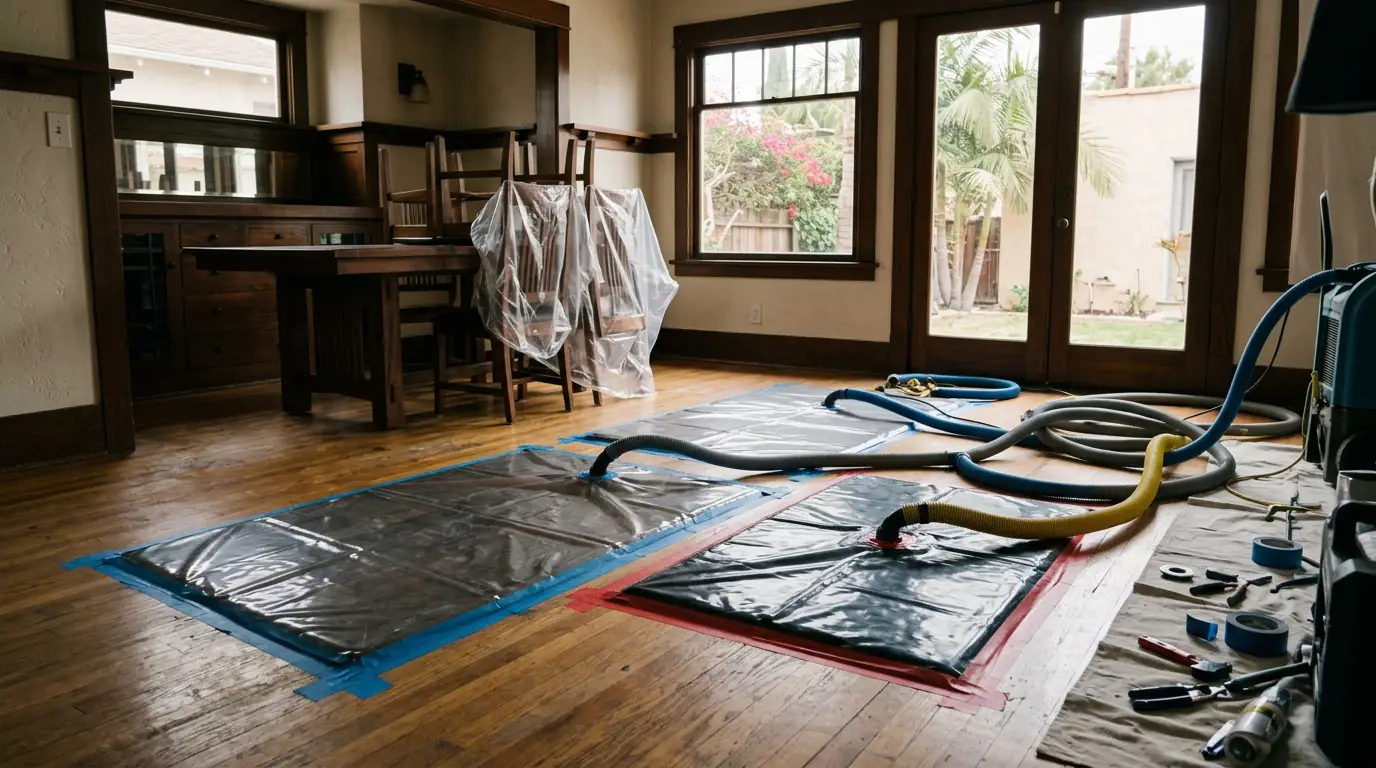
Wet hardwood in Los Angeles can often be saved if drying starts quickly. We read the boards and subfloor, then pull moisture out from the top with vacuum floor drying mats and from below with dehumidification. Cupping often flattens as the boards dry; buckled or delaminated boards are replaced, and any sanding waits until readings are dry.
The job
How water changes a hardwood floor
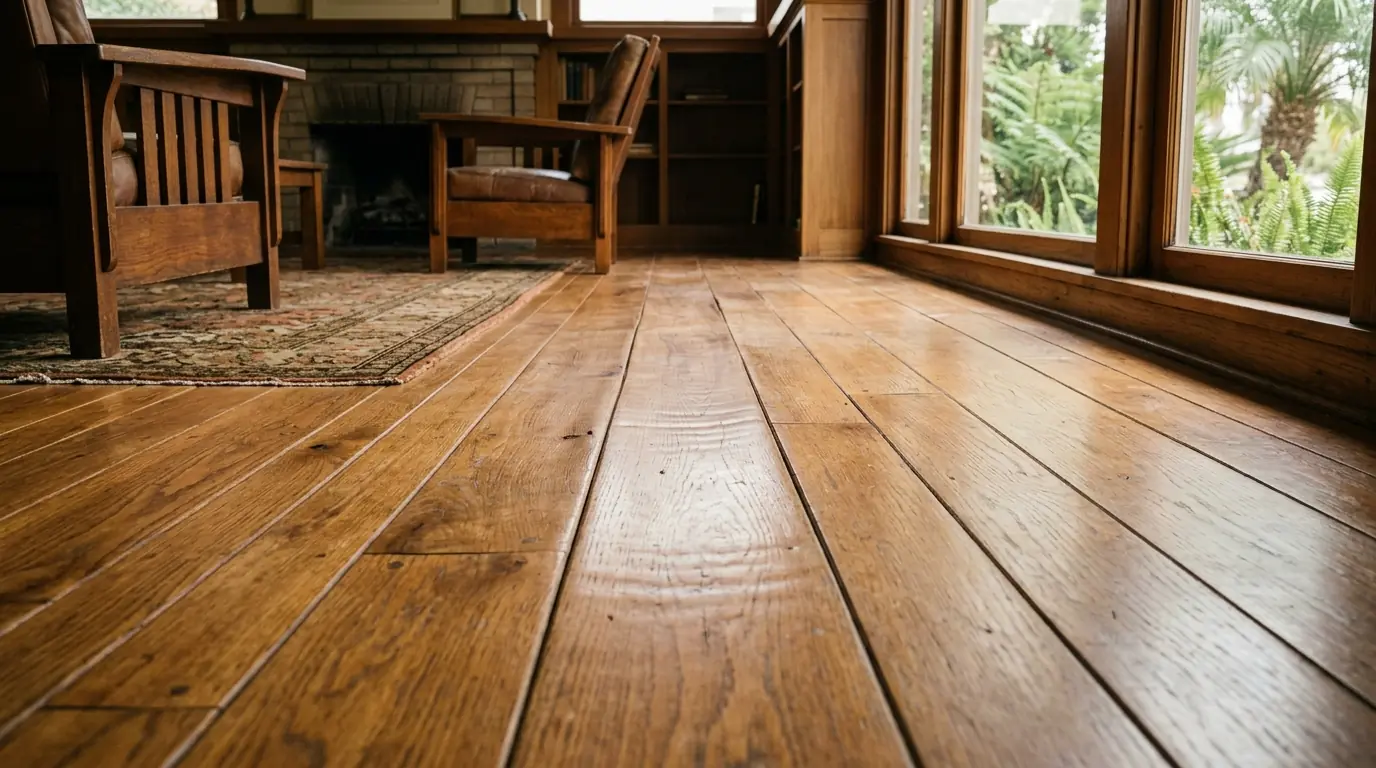
Wood swells when it absorbs water from below, so the edges of each board rise and the floor cups. If the swelling has nowhere to go, boards push up off the subfloor and buckle.
Cupping is often reversible. Buckling, crowning after early sanding, and engineered wood that delaminated are not. If the wood underneath went soft, rotted subfloor replacement comes first.
Cost factors
What wet hardwood repair costs
2026 guides put hardwood repair after water damage at $10 to $15 per square foot, and rebuild work including flooring at $20 to $37 per square foot. Drying in place costs less than either. Planning ranges only.
Area affected
Square footage of wet boards.
Floor type
Solid, engineered or laminate.
Drying method
Mats and dehumidification days.
Boards replaced
Buckled sections woven in.
Matching
Species, width and finish.
Refinishing
Section or whole room.
Your options
Dry, sand or replace?
What the boards do as they dry decides the outcome.
| Condition | Likely outcome | Timing |
|---|---|---|
| Light cupping | Dries flat, maybe a screen and recoat | After readings are dry |
| Heavy cupping | Dries, then sand and refinish | Weeks after drying |
| Buckled boards | Section replaced and woven in | After subfloor dries |
| Engineered delaminated | Replaced | After subfloor dries |
| Laminate swollen at joints | Replaced | After slab or subfloor dries |
Variations of this job
Cupped hardwood
Cupped hardwood has edges higher than the middle of each board because the underside absorbed more water than the top. It looks alarming, but it is often the most recoverable condition. We dry from both sides, with mats drawing moisture up through the finish and a dehumidifier lowering humidity in the room. As the boards dry, most cupping settles back. Sanding a cupped floor before it is dry is the common mistake, because the edges sand off and the floor then crowns.
Buckled planks
Buckled planks have lifted clear of the subfloor, sometimes by inches, because the swelling had nowhere to go. The fasteners have usually pulled free, so these boards rarely lie flat again. We remove the buckled section, dry the subfloor underneath, and replace boards to match, weaving new boards into the existing floor so there is no straight seam. A matching stain and finish on the repaired area, or a full refinish of the room, completes it. We save sound boards from the removed section where we can.
Engineered and laminate floors
Engineered and laminate floors behave differently from solid hardwood. Engineered boards have a thin wood layer over plywood, which can delaminate when wet; laminate has a fiberboard core that swells at the edges and does not shrink back. Engineered flooring can often be dried if caught quickly. Laminate that has swelled at the joints is usually replaced, and floating floors are lifted so the slab or subfloor below can dry. The underlayment beneath them usually has to be replaced as well.
Los Angeles conditions
Original floors in older homes
In Los Feliz and Echo Park, less than a fifth of the houses were built in the last 50 years, and many still have their original narrow-strip oak floors laid over plank subfloors. That old-growth oak is worth saving and hard to match, so on these floors we lean toward drying in place and patching with reclaimed boards rather than replacing whole rooms.
Time
How long hardwood takes to dry
Hardwood dries slower than drywall: usually five to ten days with mats. Refinishing should wait until the moisture has settled, sometimes a few weeks.
How the job runs
How we dry a hardwood floor
WetDry and signed off
- 1
Stop the water
Source off before anything else.
- 2
Read the floor
Boards and subfloor, wet versus dry reference.
- 3
Extract surface water
Hard-surface wand, gentle passes.
- 4
Set floor mats
Vacuum mats sealed to the boards.
- 5
Dehumidify the room
Lowers moisture from below and around.
- 6
Track readings daily
Until boards match the dry reference.
- 7
Repair or refinish
Only after the floor reads dry.
FAQ
Wet hardwood questions
Usually not. Most cupping settles as the boards dry, if nobody sands them too early.
Sanding wet cupped boards removes the raised edges; when they dry, the floor crowns.
Often, if caught fast. Delaminated boards are replaced.
We match species, width and stain, and weave boards in so no straight seam shows.
Around the mats, yes. Keep heavy furniture off it.
When the water was sudden and covered, yes, including matching where needed.
Related work
Related work from the same call
Structural Drying and Dehumidification
Wall cavity drying
Structural Drying and Dehumidification in Los AngelesCarpet and Pad Water Damage
Carpet extraction
More on carpet and Pad Water DamageDrywall Water Damage Repair
Flood cut
More on drywall Water Damage RepairWater Damage Reconstruction
Flooring replacement
Water Damage Reconstruction in Los AngelesContents Pack-Out and Cleaning
Furniture and electronics
More on contents Pack-Out and CleaningHardwood cupping after a leak?
Call before anyone sands it. We will read the boards and start drying.
24/7 emergency line
(323) 709-0141