Cut, dry, rebuild, match
Water-damaged drywall repair across Los Angeles
Drywall is paper and gypsum. Once it has soaked and swelled it does not go back, but a wall caught early can often be dried with only the bottom cut out.
- Answered 24/7
- Walls and ceilings
- Texture matched
Updated September 2026
24/7 emergency line
(323) 709-0141- 1We read the wallHow high the water climbed.
- 2Cut only what is wetClean line above the wet mark.
- 3Hang, tape, texturePaint-ready and matched.
Quick answer
Water-damaged drywall in Los Angeles is repaired by cutting out the section that soaked or swelled, drying the wall cavity behind it, then hanging new board, taping and matching the texture. Drywall wicks water upward, so we cut a clean line above the highest wet reading, not at the visible stain.
The job
Why wet drywall is usually cut out
Gypsum softens when it soaks, the paper facing peels, and the back of the board becomes a surface mold likes. A stain that looks small often sits over a wall that is wet a foot higher.
Board that got wet briefly with clean water and dried fast can stay. Board that swelled or crumbles cannot. Older walls are often lath and plaster, which is repaired differently.
Cost factors
What drywall water damage repair costs
2026 guides put rebuild work such as drywall, flooring and trim at $20 to $37 per square foot, and plaster repair after gray water at $6 to $19 per square foot. Planning ranges, not a quote.
Area removed
Square feet of board cut out.
Wall or ceiling
Ceilings take more labor.
Texture type
Knockdown and hand trowel take longer.
Insulation
Wet batts replaced behind the board.
Paint scope
Patch only or the whole wall.
Drying first
Cavity drying before closing up.
Variations of this job
Flood cut
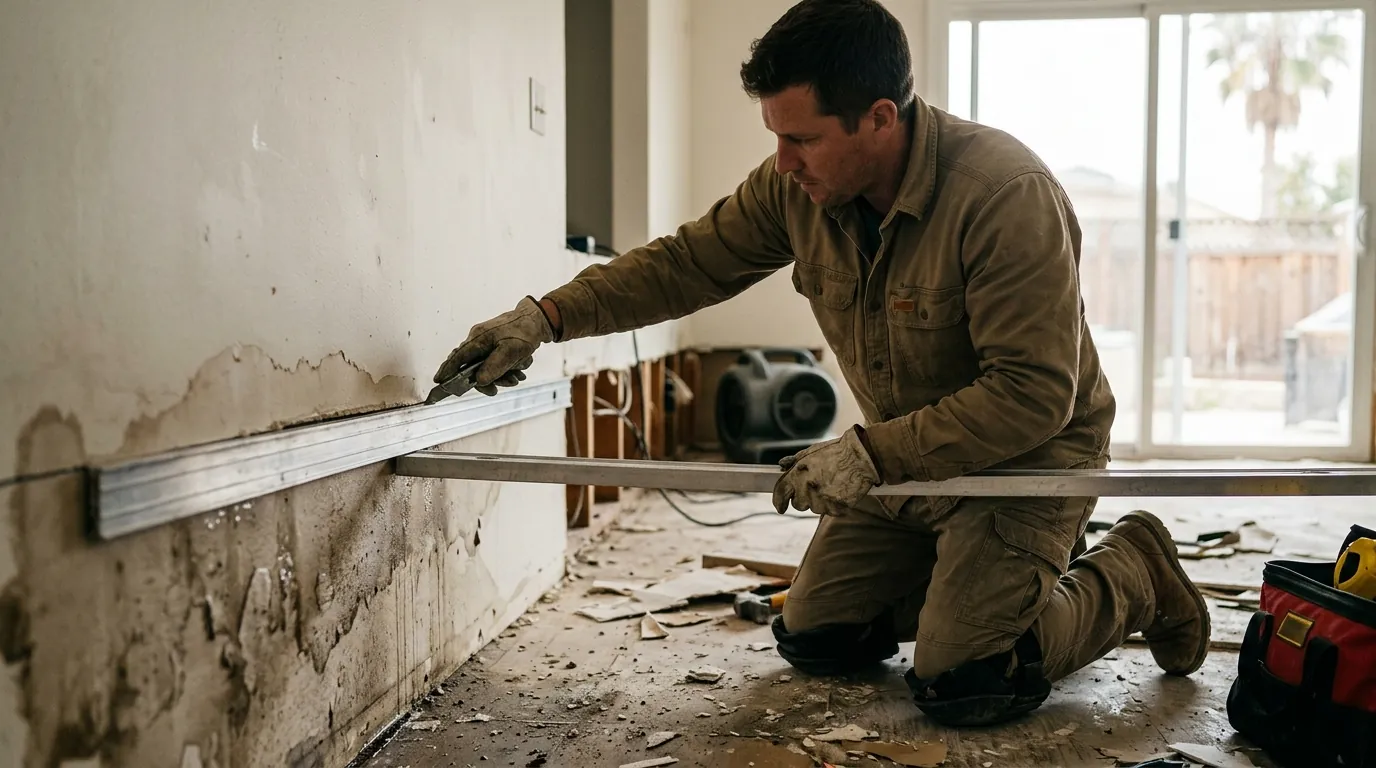
A flood cut is a straight horizontal cut along the bottom of a wall, usually 12 to 24 inches up, made above the highest point the moisture meter reads wet. It removes the soaked board, exposes the bottom plate and insulation, and lets the cavity dry quickly. A straight line is easier to patch cleanly than a ragged hole. After contaminated water, the flood cut is standard, because that drywall cannot be cleaned. Baseboard comes off first and usually goes back on after.
Ceiling drywall replacement
Ceiling drywall replacement is needed when a ceiling sagged, soaked through, or stayed wet long enough to stain the back. We cut back to the nearest joists so the new piece has solid framing on every edge, remove wet insulation above, and dry the joists before closing it up. Ceilings are heavier work than walls because of the overhead lifting, and they need a board rated for ceilings so it does not sag later. Light fixtures in the cut area are disconnected before we start.
Texture matching
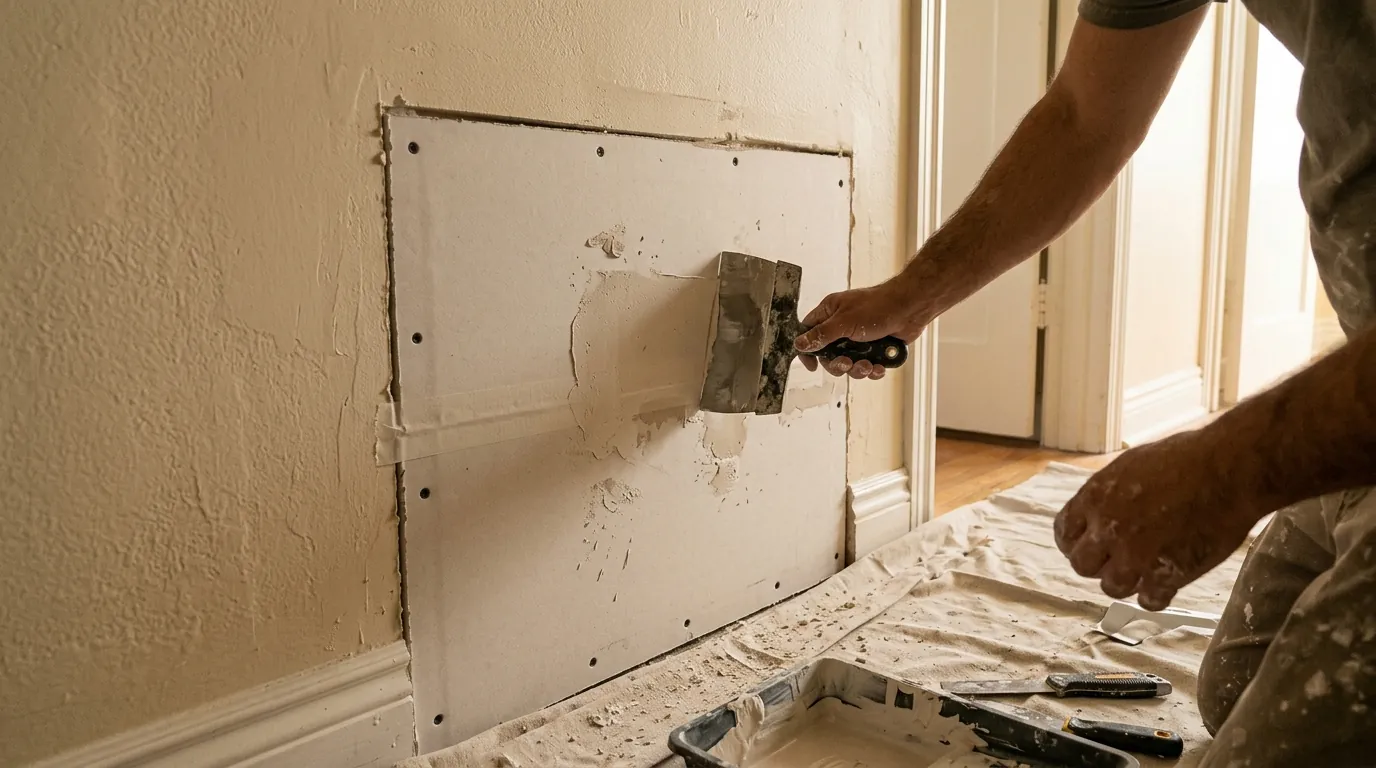
Texture matching is what makes a repair disappear or stand out. Most Los Angeles homes carry orange peel, knockdown or a smooth finish, and many older rooms have a hand-troweled look. We test the texture on a scrap piece before spraying the wall, feather it past the patch edge, then prime so the new section takes paint at the same rate. A perfect patch with the wrong texture still looks like a patch, so this step gets the most time.
What is included
What a drywall repair includes
- Moisture readings to find the wet line
- Dust protection for the room
- Straight flood cut or ceiling cut
- Wet insulation removed
- Cavity dried before closing
- New board hung to framing
- Tape, mud and sanding
- Texture matched to the room
- Primer on the repaired area
Los Angeles conditions
Old walls are not always drywall
Across Los Angeles County, 56 percent of homes were built before 1970 and only about 8 percent after 2000. That spread matters on wall repairs. Post-war houses mostly have drywall, but a lot of pre-war rooms are lath and plaster, sometimes with drywall patches from earlier repairs. We check what the wall is made of before cutting, because plaster is repaired and dried differently.
How the job runs
How a drywall repair runs
WetDry and signed off
- 1
Map the moisture
Meter readings up the wall to find the top.
- 2
Mark and cut
Straight line above the highest wet reading.
- 3
Remove and inspect
Board and wet insulation out, framing checked.
- 4
Dry the cavity
Air movers and a dehumidifier until dry.
- 5
Hang new board
Screwed to framing, seams staggered.
- 6
Tape and texture
Mud, sand and texture matched to the room.
- 7
Prime for paint
Primed so paint takes evenly.
What you might notice
Signs drywall took on water
Swelling at the bottom
Board flaring behind the baseboard.
Bubbling paint
Blisters along the lower wall.
Soft when pressed
A spot that gives under a thumb.
Tide-line stain
A brown line where water stopped.
Peeling tape seams
Joint tape lifting at the seam.
Musty smell
Strongest near the floor.
Dark spots
Speckling low on the wall.
FAQ
Drywall repair questions
Above the highest wet reading, usually 12 to 24 inches. The stain line is not a reliable guide.
Sometimes, if clean water got it briefly and it has not swelled. Soft or crumbling board has to go.
Not when the texture is matched and the patch is primed. Texture is the step that decides it.
We prime the repair. Painting the whole wall usually gives the best color match.
Cutting makes some. We protect the room and clean up before we leave.
Usually a day or two after texture, once the mud has fully cured.
Related work
Related work from the same call
Structural Drying and Dehumidification
Wall cavity drying
More on structural Drying and DehumidificationHardwood Floor Water Damage
Cupped hardwood
More on hardwood Floor Water DamageCarpet and Pad Water Damage
Carpet extraction
How we handle carpet and Pad Water DamageWater Damage Reconstruction
Flooring replacement
More on water Damage ReconstructionContents Pack-Out and Cleaning
Furniture and electronics
How we handle contents Pack-Out and CleaningWall swelling or stained after a leak?
Call and we will read the wall and tell you honestly how much has to come out.
24/7 emergency line
(323) 709-0141