One leak, several units, one file
Apartment and multi-unit water damage in Los Angeles
In a building, water rarely stays in one unit. It moves down through ceilings and sideways through shared walls, and every owner, tenant and insurer needs the same facts.
- Answered 24/7
- Tenants, owners and HOAs
- Stacked and side-by-side units
Updated September 2026
24/7 emergency line
(323) 709-0141- 1Tell us which unitsWhere it shows, and above it.
- 2We trace the sourceUnit, riser or common line.
- 3One record for everyonePhotos and readings per unit.
Quick answer
For apartment water damage in Los Angeles, start by finding the source unit or line and shutting it off, which often means reaching the unit above or the building manager. We then read every unit the water could have reached, dry each one, and give owners, tenants and the association the same dated photos and moisture readings.
How the job runs
How we run a building water job
WetDry and signed off
- 1
Find and stop the source
Unit above, riser or common line.
- 2
Map every unit reached
Above, below and beside the leak.
- 3
Extract and protect
Standing water out, belongings moved.
- 4
Remove what cannot dry
Ceiling drywall, pad, swollen trim.
- 5
Dry unit by unit
Equipment set per unit, cords safe.
- 6
Log readings per unit
Dated and located for each record.
- 7
Hand over the file
Master log plus one record per unit.
The job
What makes building leaks different
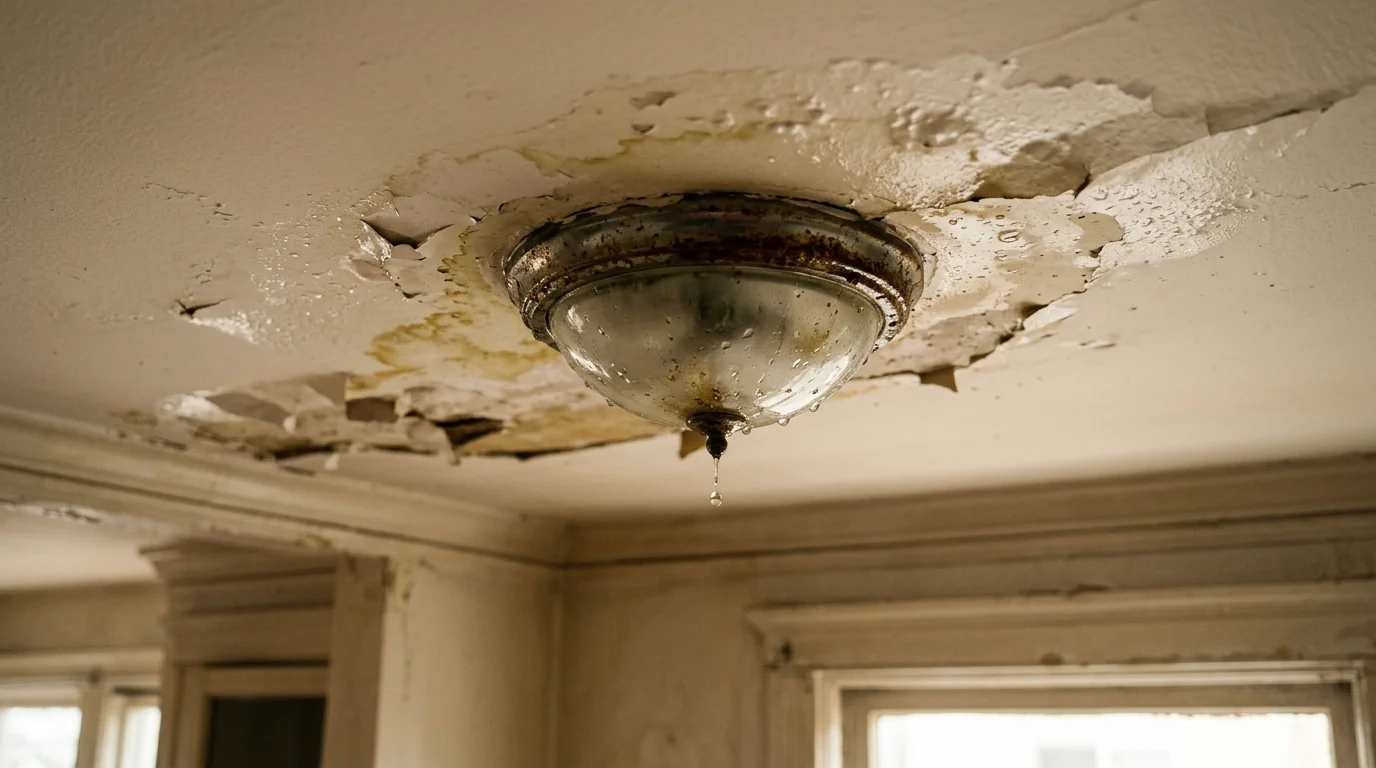
A leak in one unit becomes a stained ceiling in the unit below and a damp wall in the unit next door. The source might be a tenant's washer, a shared riser or a roof drain.
Responsibility splits between owners, the association and tenants. Clear records per unit keep that from turning into an argument.
Time
How long residents are affected
Most units dry in three to five days with residents staying, if the rooms are usable. Ceiling replacement below the source is usually a day or two after drying.
Variations of this job
Unit-to-unit leaks
Unit-to-unit leaks are the classic building call: water shows up in a ceiling, and the cause is a toilet, tub, washer or dishwasher in the unit above. We need access to that unit to stop the water and confirm the source, so we coordinate with the occupant or manager first. Then we read the ceiling and walls in both units, dry each one, and photograph them separately so each owner's claim shows only their own damage. Tenants get a copy of what applies to them.
Common area and hallway
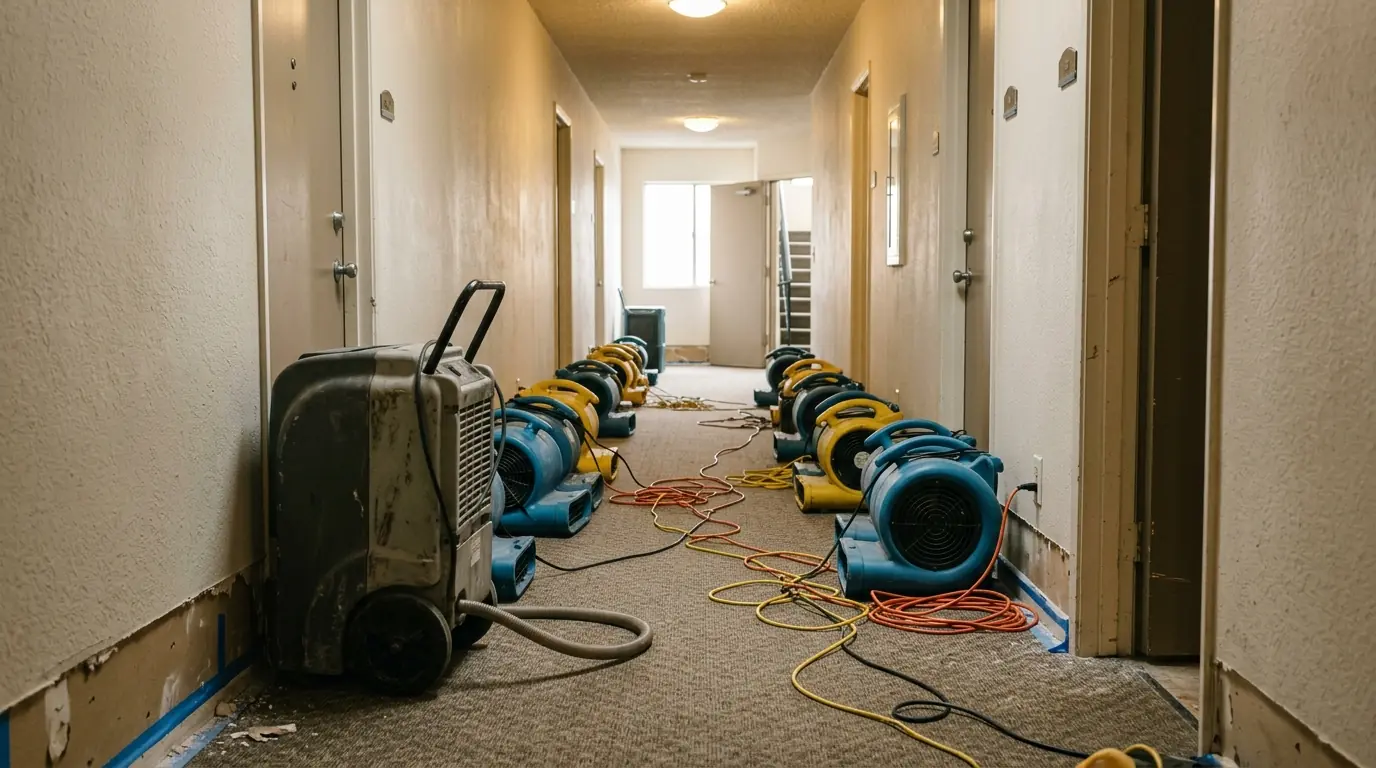
Common area and hallway water usually comes from a shared line, a fire sprinkler, a roof drain or a laundry room. Hallways carry foot traffic, so we set equipment with cords taped down and clear paths, and put up signage. Carpeted corridors are extracted and dried in sections so residents can still get in and out. Walls shared with units get read from both sides, because water in a corridor wall often reaches the closet behind it. Elevator pits and stairwells get checked too.
HOA and property manager coordination
HOA and property manager coordination is half the job on multi-unit losses. The association usually covers common elements and the structure, while owners and tenants cover their own interiors and contents, depending on the governing documents. We keep one master log for the building plus a separate record per unit, so the manager, each owner and each insurer see the same readings and photos, and nobody has to take anyone's word for what happened. That record usually settles questions before they become disputes.
Los Angeles conditions
Downtown's stacked buildings
Downtown Los Angeles, a few blocks from our Little Tokyo office and the Japanese Village Plaza that opened there in 1978, is full of loft conversions and newer towers. Downtown's homes average about 42 years old, younger than most of the city because so much of it is new construction and converted buildings. Stacked units like these send one leak through several ceilings, so we read above and below every time.
What is included
What each unit's record includes
- Unit number and access notes
- Before photos of every affected room
- Source location and cause
- Moisture map for the unit
- Materials removed and why
- Equipment placed and dates
- Daily readings to dry
- After photos
- Summary for owner and insurer
Cost factors
What multi-unit water damage costs
2026 guides put water damage restoration at $3 to $7.50 per square foot, with a national average around $3,867 per loss. In buildings the cost is set per unit affected. Planning ranges only.
Units affected
Each unit read, dried and recorded.
Source access
Reaching the unit or riser that leaked.
Ceilings
Drywall ceilings below the source.
Common areas
Hallways, laundry rooms, stairwells.
Occupied units
Working around residents takes longer.
Documentation
Separate records per owner and insurer.
The leaks we dry out come from every brand
FAQ
Apartment water damage questions
It depends on the cause, the lease and the HOA documents. We document the source clearly so the right party pays.
We coordinate access through the occupant or manager. Stopping the source comes first.
Usually not, unless a room is unsafe or contaminated water is involved.
Either, and we keep records that serve everyone involved.
Your contents are usually a renters policy matter. We list what was damaged.
Yes, with cords taped, clear paths and signage for residents.
Related work
Jobs that often come with this one
Commercial Water Damage Restoration
Office and retail
Commercial Water Damage RestorationWater Damage Inspection and Moisture Testing
Thermal imaging
Water Damage Inspection and Moisture TestingFire Sprinkler Water Damage
Accidental sprinkler discharge
Fire Sprinkler Water DamageToilet Overflow Cleanup
Clean water overflow
Toilet Overflow CleanupCrawl Space Water Removal
Standing water under the house
Crawl Space Water RemovalWater coming through from another unit?
Call and we will find the source and read every unit it could have reached.
24/7 emergency line
(323) 709-0141