Guide: floors after water
Wet hardwood floors in Los Angeles: when to save them and when to replace
Cupped hardwood looks ruined and often is not. The mistakes that ruin it usually happen in the week after the leak.
By June Calloway, Restoration Guides Editor Updated September 2026
24/7 emergency line
(323) 709-0141- 1Do not sand yetWet boards crown later.
- 2Dry from both sidesMats plus dehumidifier.
- 3Decide when dryNot before.
Quick answer
Wet hardwood in Los Angeles can often be saved. Cupped boards usually flatten as they dry, if the floor is dried from both sides and nobody sands it early. Buckled boards, delaminated engineered flooring and swollen laminate are usually replaced. The decision is made after readings show the floor is dry, not in the first week.
How it happens
What water does to a wood floor
Wood absorbs water and swells. When a leak wets the underside of a floor more than the top, the bottom of each board swells more and the edges rise above the center. That is cupping. If the boards swell so much that they have nowhere to go, they push up off the subfloor. That is buckling.
Crowning is the opposite shape, with the center higher than the edges. It usually happens after a cupped floor was sanded flat while still wet, then dried, leaving the middle of each board proud.
Floor types
Solid, engineered and laminate are not the same
Solid hardwood is one piece of wood through its thickness and tolerates water best; it can often be dried and refinished. Engineered flooring is a thin wood layer glued to plywood; it can dry well if caught early, but the layers can separate, and once they do, the board is finished.
Laminate is a photo layer over a fiberboard core. When water reaches the joints, the core swells and does not shrink back. Swollen laminate is almost always replaced, and the underlayment under a floating floor usually goes with it.
Right away
The first hour on a wet wood floor
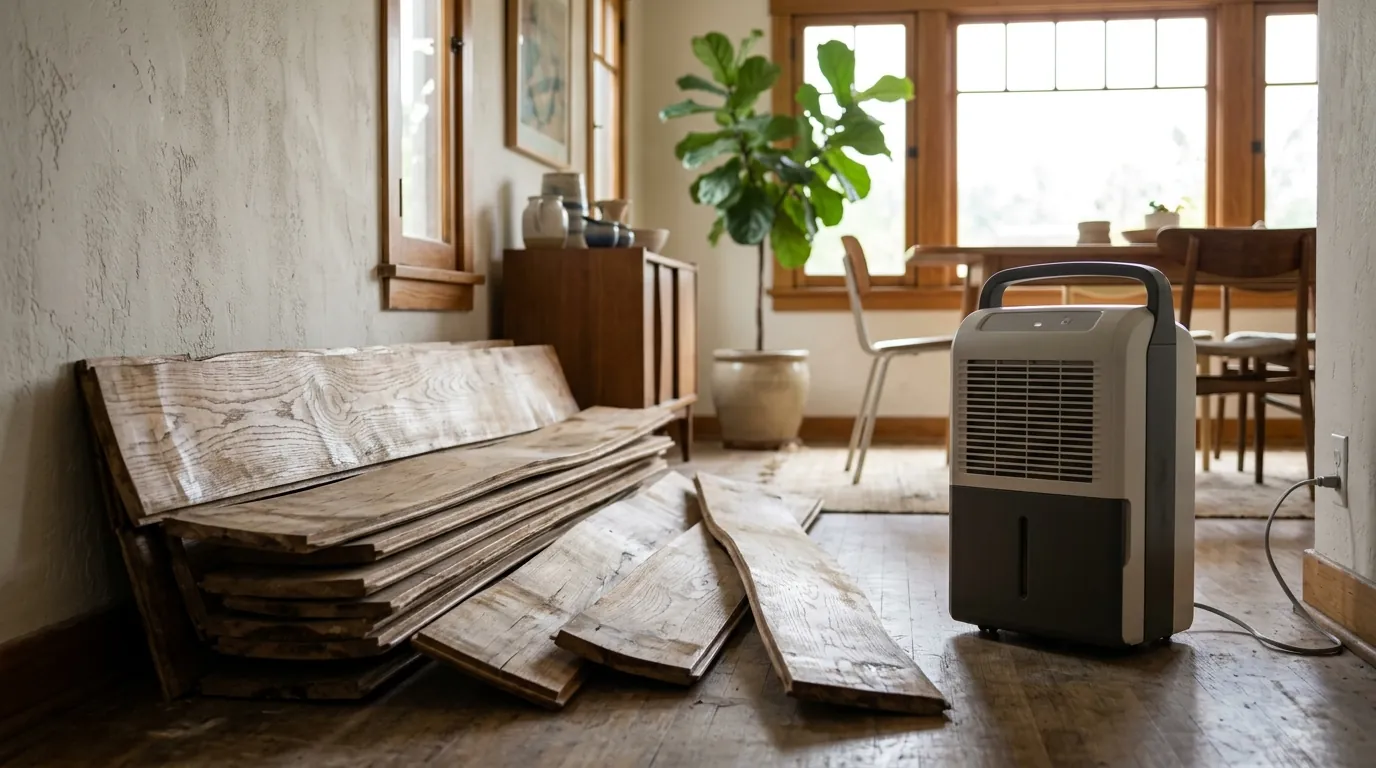
Stop the water, then get standing water off the wood as fast as you can with towels or a wet mop wrung out often. Lift area rugs off the floor, because a wet rug holds water against the boards and traps it. Move furniture off the wet area or put foil under the legs.
Do not use a steam mop or a hair dryer on the boards, and do not cover the floor with plastic or rugs to hide it. Keep the room ventilated and call for extraction and drying the same day; the longer the underside stays wet, the more the boards cup.
Hardwood cupping after a leak? Call before anyone sands it; we will start drying today.
Call (323) 709-0141The process
How wet hardwood is actually dried
Proper drying pulls water from both sides. Vacuum drying mats sealed to the surface draw moisture up through the boards, while a dehumidifier lowers humidity in the room and dries the subfloor from below. On raised floors, air under the house helps too.
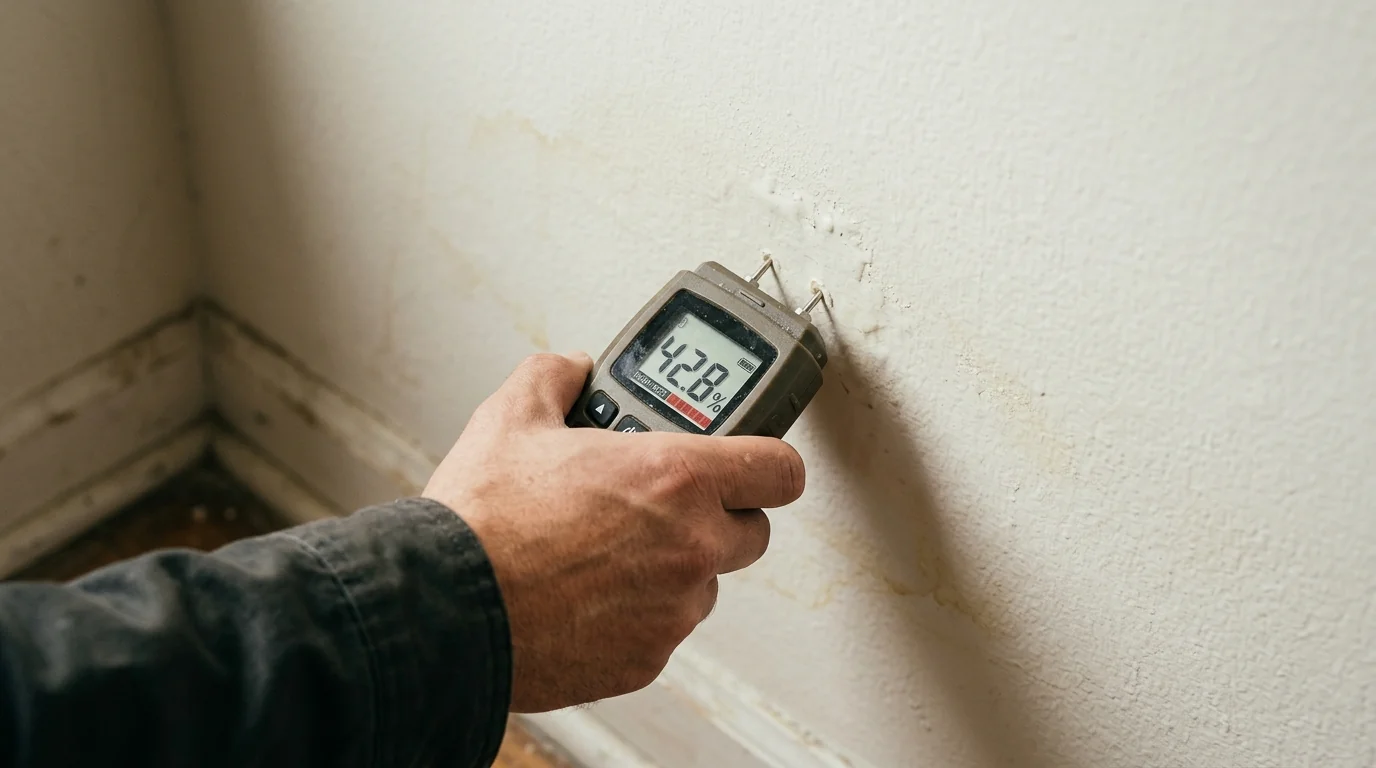
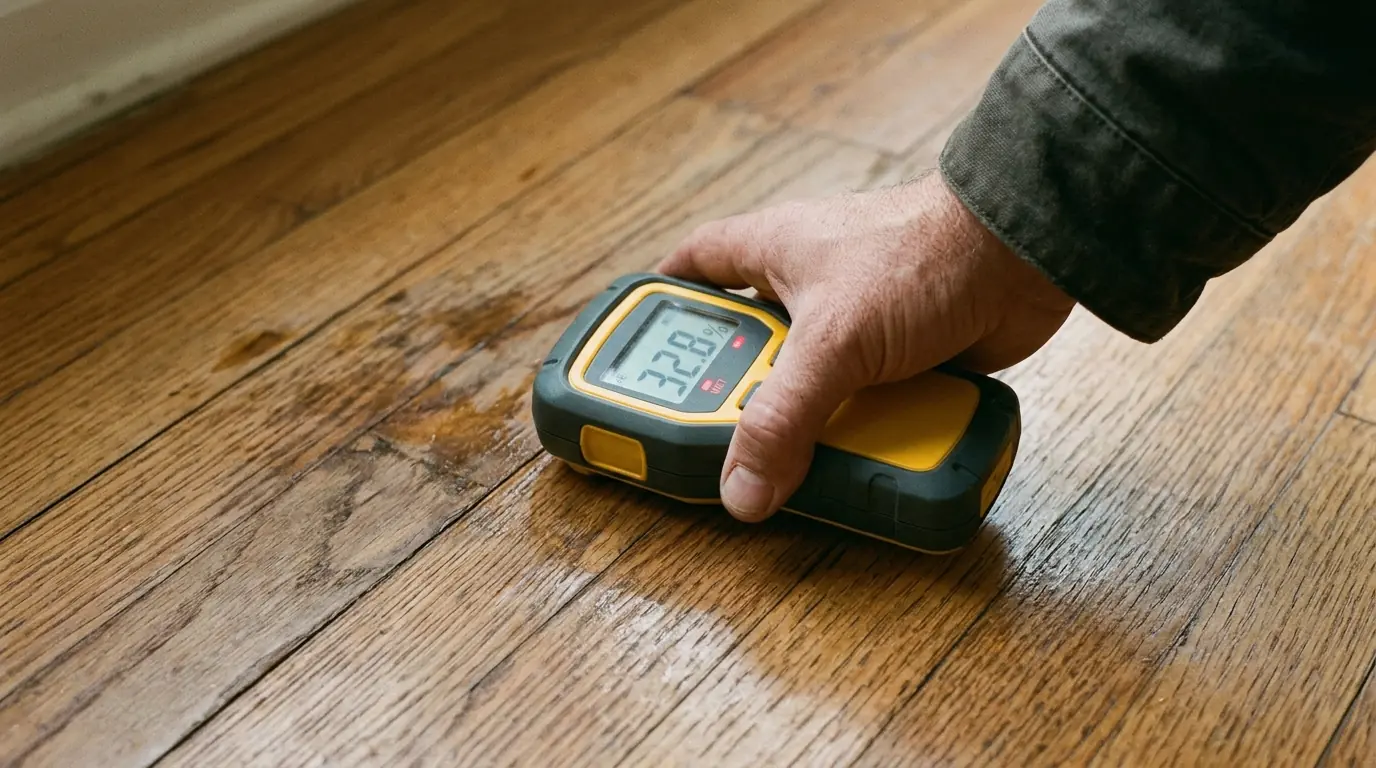
Progress is tracked with readings on the wet boards and on a dry reference floor in the same house. The floor is dry when they match. Our hardwood floor water damage page describes the setup, and structural drying covers the equipment.
Avoid this
The mistake that ruins good floors
The most common way to ruin a recoverable floor is sanding it too soon. A cupped floor looks uneven, so someone sands it flat while the boards are still wet. When they finish drying, the edges shrink back down and the floor crowns permanently.
The other mistake is drying too fast with heat, which can crack boards or separate engineered layers. Patience is cheaper: dry it properly, wait for the readings, then decide what it needs.
Good signs
When saving the floor is realistic
Light to moderate cupping from clean water, caught within a day or two, on solid hardwood, is the best case. Many of those floors settle flat as they dry and need only a screen and recoat, or no refinishing at all.
Heavier cupping often dries back enough to sand and refinish once the moisture has settled. That usually means waiting some weeks after drying, which is normal and worth it on a floor that would be expensive or impossible to match.
Hard truths
When replacement is the honest answer
Boards that buckled off the subfloor, engineered boards that delaminated, laminate that swelled at the joints, and any floor soaked by sewage or outside flood water are usually replaced. So is a floor that stays soft or smells after drying.
When only part of a floor is replaced, new boards are woven into the old ones so there is no straight seam. Where the original is no longer made, the continuous area is often replaced so the room matches.
Local note
Old floors in older Los Angeles houses
In Los Feliz and Echo Park, less than a fifth of the houses were built in the last 50 years, and many still have original narrow oak floors over plank subfloors. That wood is dense, dries well and is hard to match, which is a strong reason to dry it in place and patch with reclaimed boards rather than replace whole rooms.
2026 cost guides put hardwood repair after water damage at $10 to $15 per square foot, while full rebuild work including flooring runs $20 to $37. Drying in place usually costs less than either.
FAQ
Questions readers ask
Often, yes, if it is dried properly from both sides and not sanded early.
Usually five to ten days with drying mats, sometimes longer on plank subfloors.
If caught quickly and the layers have not separated, often yes.
Rarely once the joints have swollen. It is usually replaced.
After the readings are dry and the boards have settled, sometimes a few weeks later.
They can be matched and woven in, or the continuous area replaced if not.
Keep reading
More from our restoration guides
How Long Structural Drying Takes in Los Angeles, CA
How long drying takes.
Our guide to how long drying takesWater Leak in Los Angeles: What to Do in the First Hour
First hour after a leak.
Read: first hour after a leakSigns of a Slab Leak in a Los Angeles Home
Signs of a slab leak.
More on signs of a slab leakHardwood floor soaked?
Call before anyone sands it. We will read the boards and start drying.
24/7 emergency line
(323) 709-0141