Guide: hidden leaks
Signs of a slab leak in a Los Angeles home, and how to check
A slab leak is a water line breaking inside or under the concrete floor. It hides well, and by the time a floor lifts, water has usually spread well beyond it.
By June Calloway, Restoration Guides Editor Updated September 2026
24/7 emergency line
(323) 709-0141- 1Watch the meterAll water off, meter still?
- 2Feel the floorWarm spots mean hot lines.
- 3Call two tradesPlumber and restoration.
Quick answer
Common signs of a slab leak in a Los Angeles home are a warm spot on the floor, the sound of running water with every tap off, a water meter that keeps moving, a sudden bill increase, and damp carpet or lifting flooring in a room with no plumbing. A meter test at home confirms a leak somewhere on the property.
The basics
What a slab leak is
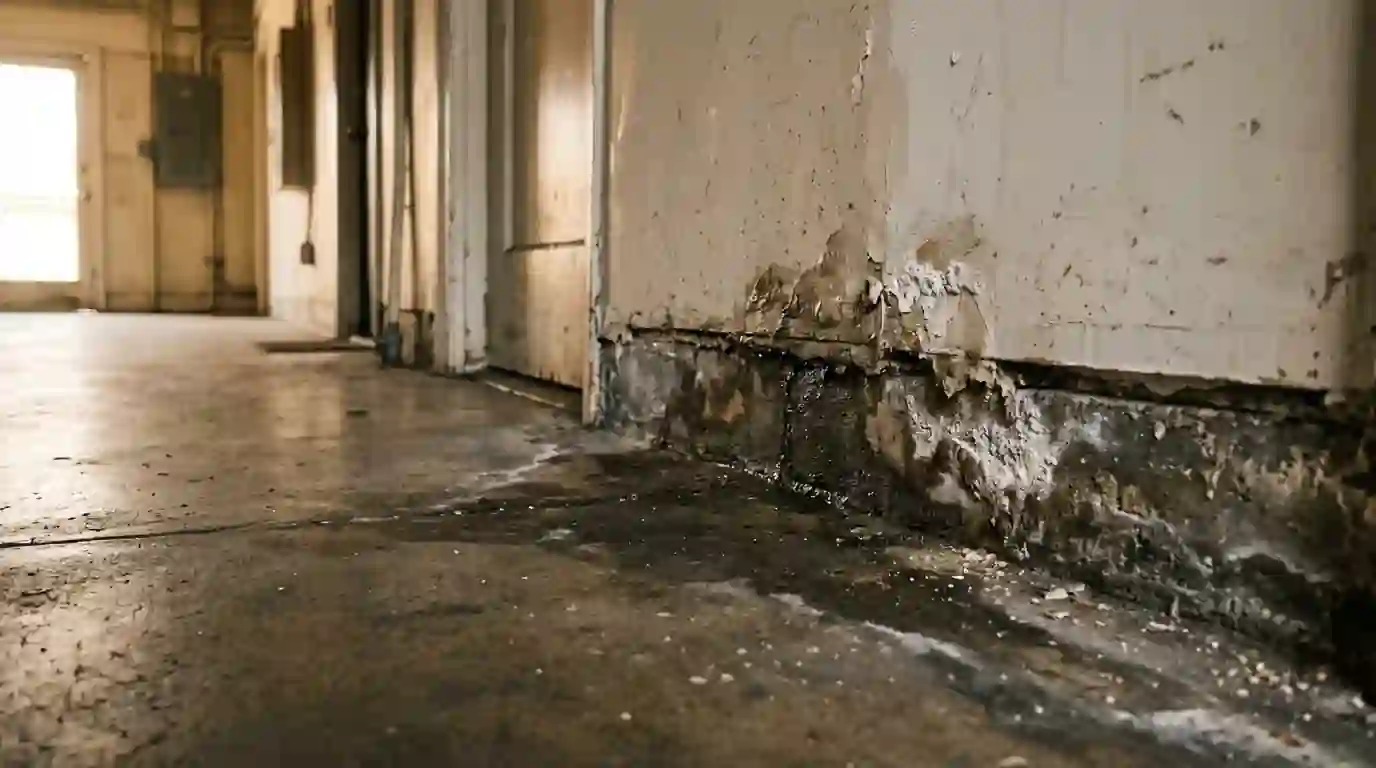
In many single-story houses, water lines run through or under the concrete slab the house sits on. When one of those lines develops a pinhole or a crack, water pushes up into the slab and spreads under the flooring. Hot water lines are the most common culprits, because heat and pressure wear them faster.
Much of the San Fernando Valley was built slab-on-grade in the mid-century; Canoga Park's median home dates to 1960 and Burbank's to 1952. Copper lines that old, carrying Los Angeles water at roughly 7 to 16 grains per gallon of hardness, are a common setup for pinhole leaks.
Sign one
The warm spot on the floor
A leaking hot water line warms the concrete above it. You feel it barefoot on tile, or you notice the dog always lies in the same spot. A thermal camera shows it clearly as a warm streak or patch.
The warm spot marks roughly where the line is leaking, but the water itself has usually traveled further under the flooring. Cold water leaks give no warm spot at all, which is why the other signs matter.
Signs two and three
Sounds, bills and the meter test
If you hear running water with every fixture off, or your water bill jumps with no change in use, suspect a hidden leak. The water meter test confirms it: turn off every faucet, appliance and irrigation line, then look at the meter's small leak indicator or note the reading and check again after an hour.
If the meter moved with everything off, water is leaking somewhere on the property. It could be the slab, a wall, the irrigation or the line from the street; a plumber's leak detection narrows it down.

Warm spot or wet floor with no leak in sight? Shut off the main and call; we will map it first.
Call (323) 709-0141Sign four
Flooring that lifts or carpet that stays damp
Floating floors like laminate and engineered wood lift and separate at the joints when water rises from below. Tile can crack or sound hollow. Carpet feels damp at the edge of a room, often a room with no plumbing, because water travels along the slab under the pad until it shows up somewhere unexpected.
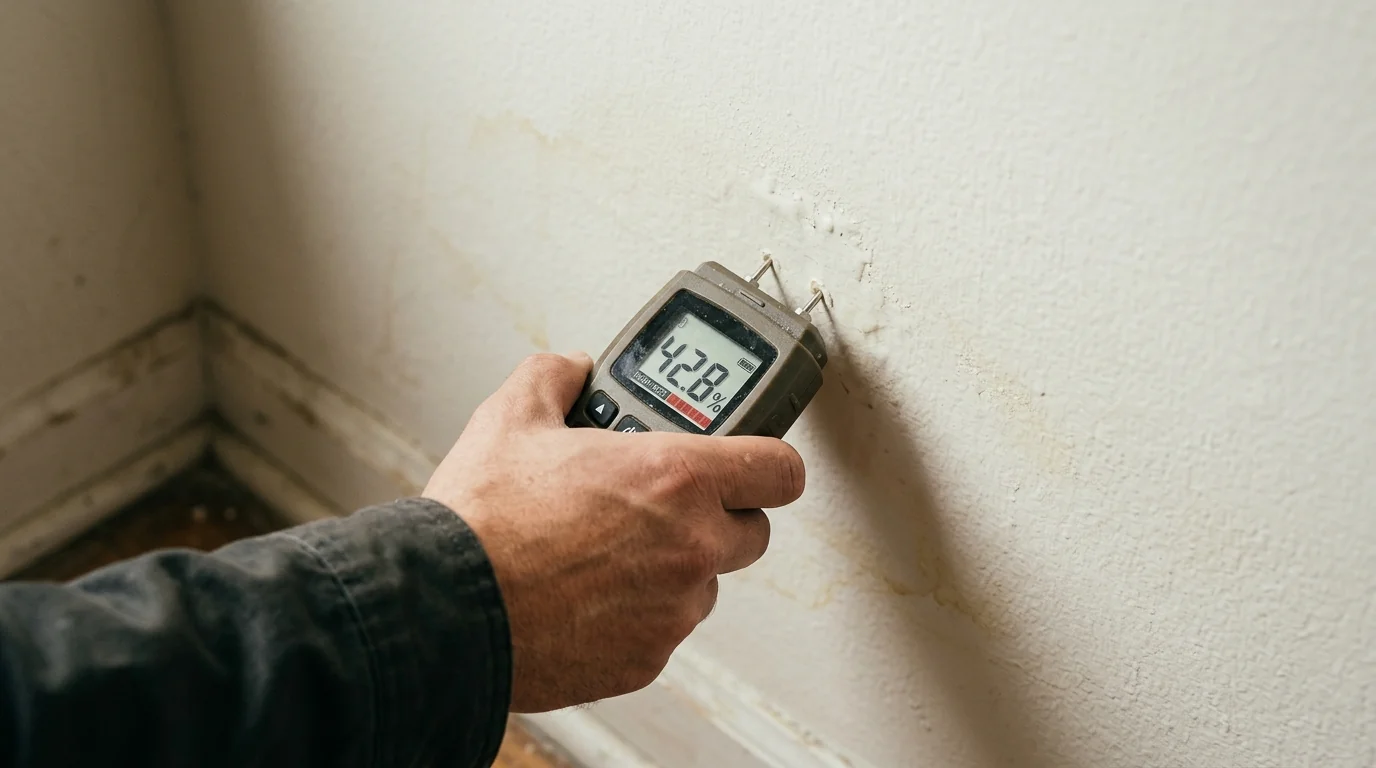
A musty smell near the floor, mildew on the tack strip or baseboards that swell along one wall are the same story. Moisture readings across the slab show where it is wettest.
Ruling things out
Slab leak or something else?
A moving meter does not always mean a slab leak. Irrigation lines, a running toilet, the supply line from the street to the house, and pipes inside walls all leak too. Check toilets first with a few drops of food coloring in the tank; if color shows in the bowl without flushing, the flapper is leaking.
Shutting off irrigation at its own valve and rechecking the meter narrows it further. If the meter still moves with toilets and irrigation ruled out, and a floor is warm or damp, the slab becomes the likely suspect.
Next steps
What to do if you suspect one
Shut off the main water valve if the leak seems active, to stop more water going under the floor. Take photos of any damage and a photo of the meter reading. Then call a plumber for leak detection and repair of the line, and a restoration company for the water already under the floor.
Those are separate jobs. The plumber fixes the pipe; we find how far the water spread, open the flooring only as far as the wet edge, and dry the slab. Our slab leak water damage page explains how that is done.
The plumbing fix
Spot repair, reroute or repipe
A plumber has a few options: break the slab at the leak and repair that section, reroute the line through walls or the attic and abandon the old one, or repipe the house. The choice changes how much of the floor gets opened.
A reroute or repipe often means no slab opening for the line at all, only drywall access in walls. The water damage still has to be dried either way, and the old line cannot leak again once it is abandoned.
After the repair
Drying the slab and restoring the floor
Concrete gives up water slowly, and covered by flooring it can stay wet for weeks. Once the line is fixed, wet flooring and underlayment come up so the slab can breathe, then drying mats and a dehumidifier bring it down to a dry reading. New flooring goes down only after that.
2026 cost guides put pipe repair at about $150 to $250 per linear foot, and water damage restoration at $3 to $7.50 per square foot. The plumbing and the damage are usually separate lines on a claim.
FAQ
Questions readers ask
Warm floor spots, running water sounds, a moving meter with all water off, and damp flooring are the usual signs.
An active leak is. Shut off the main to stop more water going under the floor.
A plumber repairs the line; a restoration company dries the water damage.
Only as far as the wet edge, unless matching needs a continuous area.
Usually several days to a couple of weeks after the flooring is off.
The water damage often is; access and pipe repair vary by policy.
Keep reading
More from our restoration guides
Old Pipes and Water Damage Risk in LA Homes
Old pipes and leak risk.
More on old pipes and leak riskWet Hardwood Floors in LA: Save or Replace?
Wet hardwood: save or replace.
Our guide to wet hardwood: save or replaceHow Long Structural Drying Takes in Los Angeles, CA
How long drying takes.
More on how long drying takesThink you have a slab leak?
Call and we will map the moisture before anything is torn up.
24/7 emergency line
(323) 709-0141