Guide: plumbing and prevention
Old pipes and water damage risk in Los Angeles homes
Most Los Angeles houses were built before 1970, and a lot of them still carry original pipes. Knowing what is in your walls tells you what is likely to fail.
By June Calloway, Restoration Guides Editor Updated September 2026
24/7 emergency line
(323) 709-0141- 1Know your pipe typeGalvanized, copper or PEX.
- 2Watch the warning signsRust, pressure, stains.
- 3Fit cheap protectionHoses, pans, sensors.
Quick answer
Older Los Angeles homes often have galvanized steel or aging copper supply lines, and more than half of LA County homes were built before 1970. Galvanized pipe rusts from the inside and fails at joints; copper can pinhole after decades of hard water. Rusty water, falling pressure and small stains are the early warnings.
The housing stock
How old the plumbing really is
Across Los Angeles County, 56 percent of homes were built before 1970 and only about 8 percent after 2000. Outside Downtown, Chinatown and Playa Vista, almost no neighborhood has added much housing in the last 20 years. So most homes run on plumbing that was installed decades ago, sometimes with later repairs mixed in.
That is not a reason to panic. It is a reason to know what you have, because different pipe materials fail in different ways and give different warnings.
Pipe type one
Galvanized steel: the one to watch
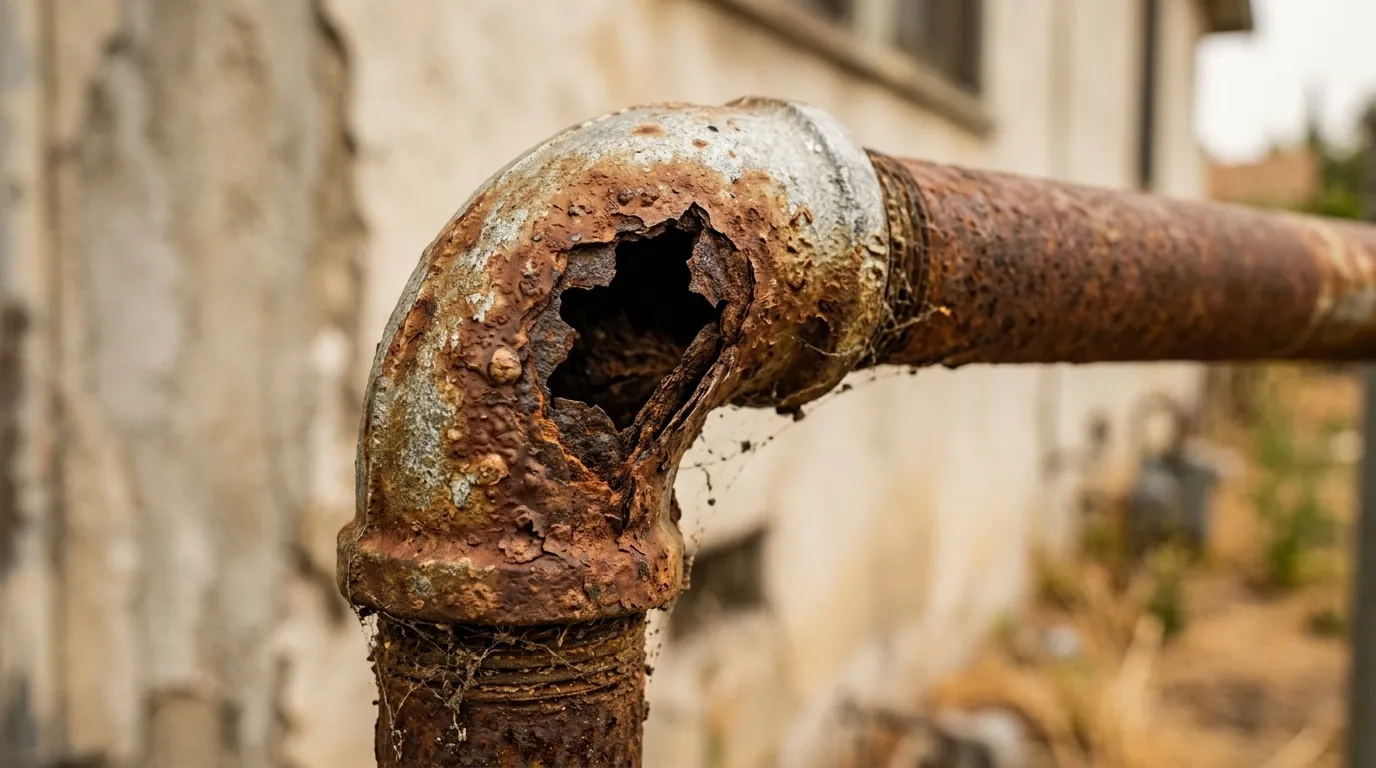
Galvanized steel supply pipe was common in homes built before the 1960s. It corrodes from the inside, which narrows the pipe and eventually thins the walls until a joint or a section gives way. The first sign is usually rust-colored water, especially after the house sits unused, and weak pressure at some fixtures.
Galvanized lines tend to fail more than once, so a plumber may suggest replacing sections or repiping. When walls are opened for that, the drywall work is the same scope as the water damage, which our cleanup after a burst pipe page covers.
Pipe type two
Copper and hard water
Copper lasts well, but not forever. Los Angeles water runs moderately hard to hard, around 7 to 16 grains per gallon depending on the neighborhood, and decades of that plus water chemistry can wear pinholes through the pipe wall. A pinhole sprays a fine jet inside a wall or under a slab for days before anyone notices.
Under a slab, that becomes a slab leak; our guide to slab leak signs explains what to watch for.
Pipe already leaking? Call now and we will talk you through the shutoff while a crew is on its way.
Call (323) 709-0141The weak points
Supply hoses and fittings fail first
In practice, the most common burst in any house is not the pipe in the wall but the flexible hose connecting it to a fixture: the washer hoses, the toilet supply, the lines under sinks, the connector on the water heater. Rubber hoses age and split, and plastic nuts crack.
Braided steel hoses are an inexpensive upgrade, and an aging shower valve is worth a look too, since shower valve leaks hide inside the wall. Replace washer hoses every few years, and look at the supply lines under sinks when you are under there for anything else.
Water heaters
The water heater is a ticking clock
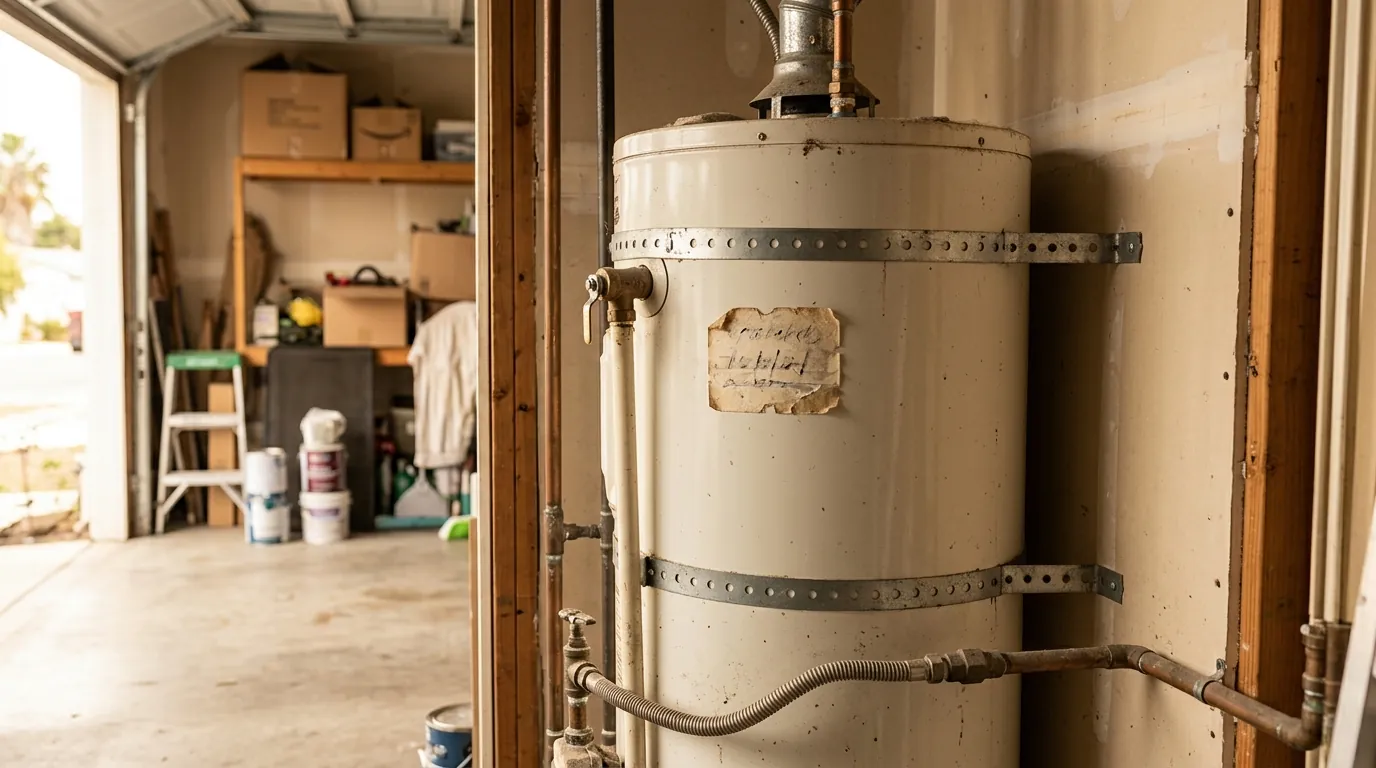
Tank water heaters fail near the end of their life by rusting through at the bottom. Hard water leaves scale inside the tank that speeds this up. The date is usually on the label or encoded in the serial number; a tank in its second decade is worth watching closely.
A drain pan with a leak alarm under the heater, and a heater in the garage rather than an interior closet, both limit the damage when it finally goes. Our appliance leak cleanup page covers what happens when it does.
Early signs
Warning signs worth acting on
Rusty or discolored water, pressure that drops at one fixture, a water bill that climbs without a reason, the sound of water with every tap off, a small stain or bubble in paint below a bathroom, and a musty smell in one closet all point to a leak somewhere.
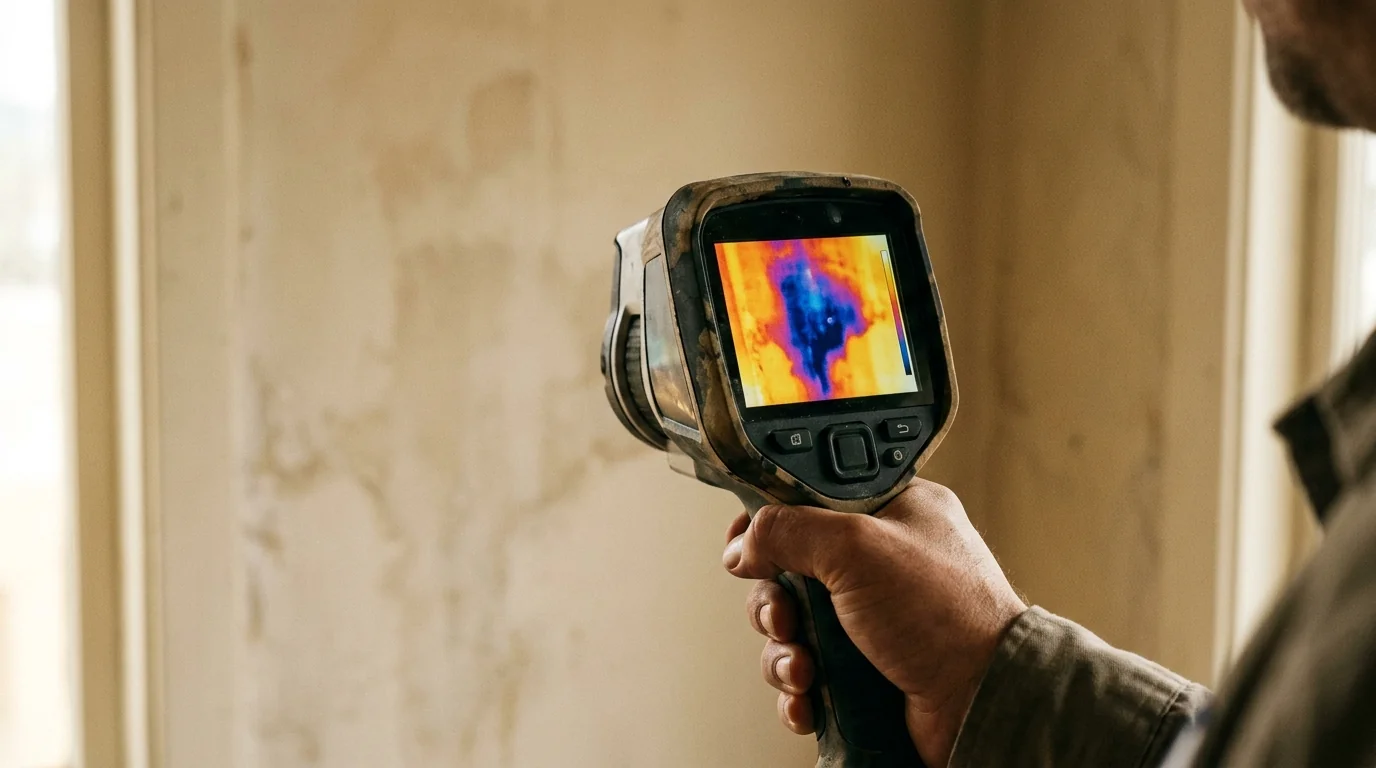
The water meter test is free: turn everything off and see whether the meter still moves. If it does, a plumber can find the leak, and a moisture inspection shows whether it has already wet the walls or floors.
Before you close
Buying an older house? What to check
Ask the seller for any record of repiping, water heater replacement and past leak repairs, and look at the pipe where the main enters the house. Run every faucet and shower for a minute to check for rusty water and weak pressure, and look under every sink and around the water heater for stains or swelling. A soft spot by a toilet or tub can mean rotted wood under the floor.
If a general inspector flags a stain or a musty smell, a focused moisture inspection shows whether an old leak dried or is still wet inside a wall. That answer is worth having before you own the problem, not after.
Prevention
Cheap protection that pays for itself
Fit braided steel hoses on washers and toilets, put a pan and leak alarm under the water heater, and place a few battery leak sensors under sinks, behind the dishwasher and next to the fridge. Know where your main shutoff is and make sure it turns.
When you go away for more than a few days, consider shutting off the main. A slow leak in an empty house is how a small repair becomes a whole-floor claim.
FAQ
Questions readers ask
Look where the line enters the house or at the water heater. Galvanized is dull gray steel with threaded fittings.
If galvanized lines are rusting or copper keeps pinholing, ask a plumber; it often costs less than repeated leaks.
Tank heaters commonly last around a decade; hard water can shorten that.
Yes. They are inexpensive and far less likely to split than rubber hoses.
They catch slow leaks early, which is when the damage is smallest.
Sudden bursts often are; damage from long slow leaks or wear often is not.
Keep reading
More from our restoration guides
Signs of a Slab Leak in a Los Angeles Home
Signs of a slab leak.
Our guide to signs of a slab leakWater Leak in Los Angeles: What to Do in the First Hour
First hour after a leak.
More on first hour after a leakEarthquake Prep for LA Water Heaters and Pipes
Earthquake prep for water heaters.
Read: earthquake prep for water heatersOld pipe finally let go?
Close the main and call. We will dry it out and tell you what we saw.
24/7 emergency line
(323) 709-0141