Under the house, answered 24/7
Water removal and drying for Los Angeles crawl spaces
Water under a raised house stays out of sight until the floor smells, softens or the insulation falls. By then the joists have been wet for a while.
- Answered 24/7
- Standing water and damp soil
- Insulation and vapor barrier
Updated September 2026
24/7 emergency line
(323) 709-0141- 1Tell us what you noticeSmell, soft floor, sound of water.
- 2We go underPump, readings and photos.
- 3Dry and resetFraming dried, barrier replaced.
Quick answer
Crawl space water removal in Los Angeles means pumping standing water from under a raised house, removing soaked insulation and vapor barrier, drying the joists and subfloor with air movers and a dehumidifier, and resetting a new barrier. The source, usually a broken pipe, a drain line or storm runoff, has to be stopped first.
What you might notice
Signs of water under the house
Musty smell upstairs
Worse on warm afternoons.
Soft or bouncy floor
Especially near bathrooms.
Cupped floorboards
Edges higher than the centers.
Sagging insulation
Visible through the foundation vents.
Higher water bill
With no leak you can see.
Sound of running water
When every tap is off.
Damp soil at vents
After storms or irrigation.
How the job runs
How we clear a wet crawl space
WetDry and signed off
- 1
Find and stop the source
Pipe, drain line or runoff at the vents.
- 2
Pump standing water
Submersible pump to a safe discharge.
- 3
Photograph and read
Water line, framing and subfloor readings.
- 4
Remove wet materials
Insulation and vapor barrier bagged out.
- 5
Disinfect if needed
Antimicrobial for sewage or runoff.
- 6
Dry the framing
Air movers and a dehumidifier under the floor.
- 7
Reset the space
New barrier and insulation once dry.
The job
Why crawl space water is easy to miss
Most people never look under the house. A supply line can drip into the soil for months, and storm water can pool against the foundation vents after every heavy rain.
The damage shows upstairs: a musty smell, cupped floorboards, a soft spot near a bathroom, or sagging insulation seen through a vent. Where joists or sill plates have rotted, framing repair follows the drying.
Variations of this job
Standing water under the house
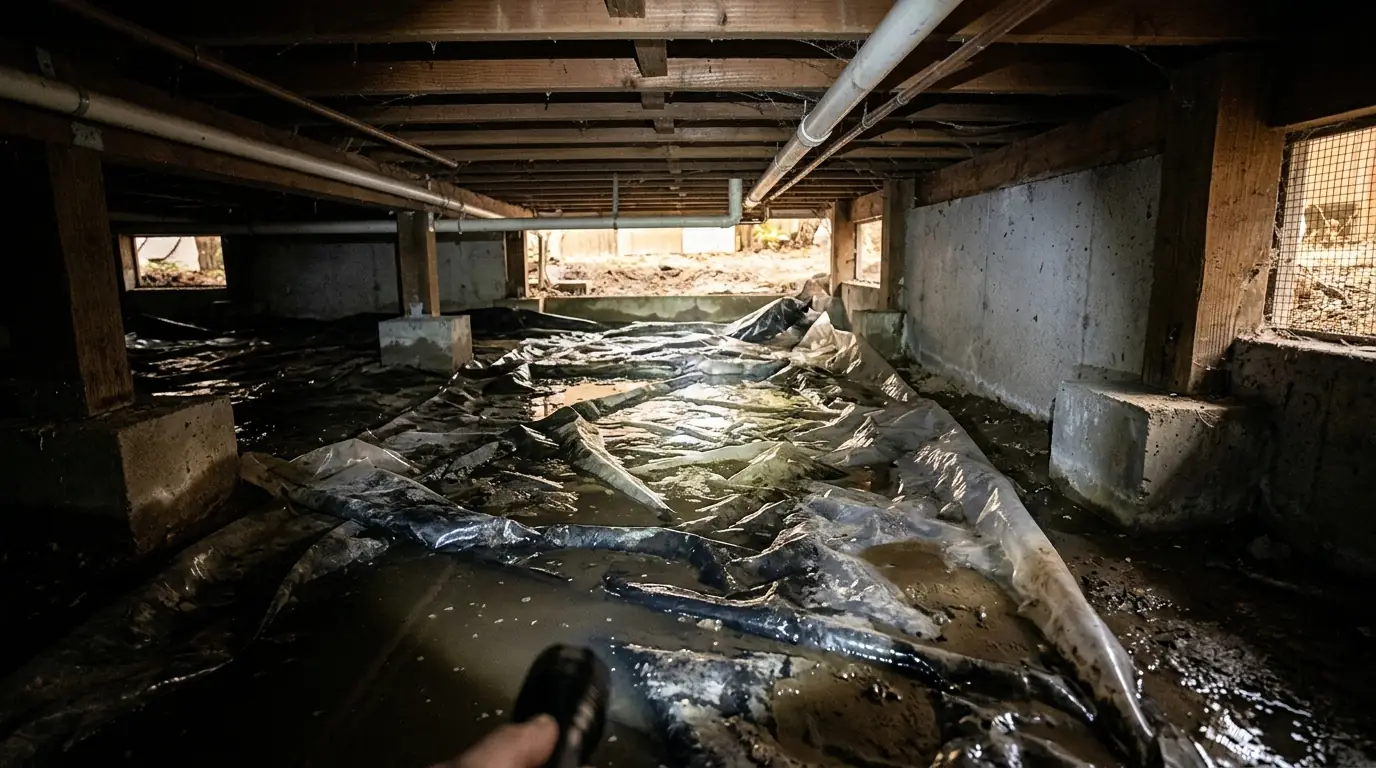
Standing water under the house is pumped out first, with a submersible pump and a hose run to a safe discharge point outside. We photograph the water level and the source before and after, because that record matters for the claim. Mud and silt left behind are raked out where they cover the vapor barrier or pile against framing. Once the soil is visible again, we can see where the water came in and whether it will come back in the next storm.
Wet insulation and vapor barrier
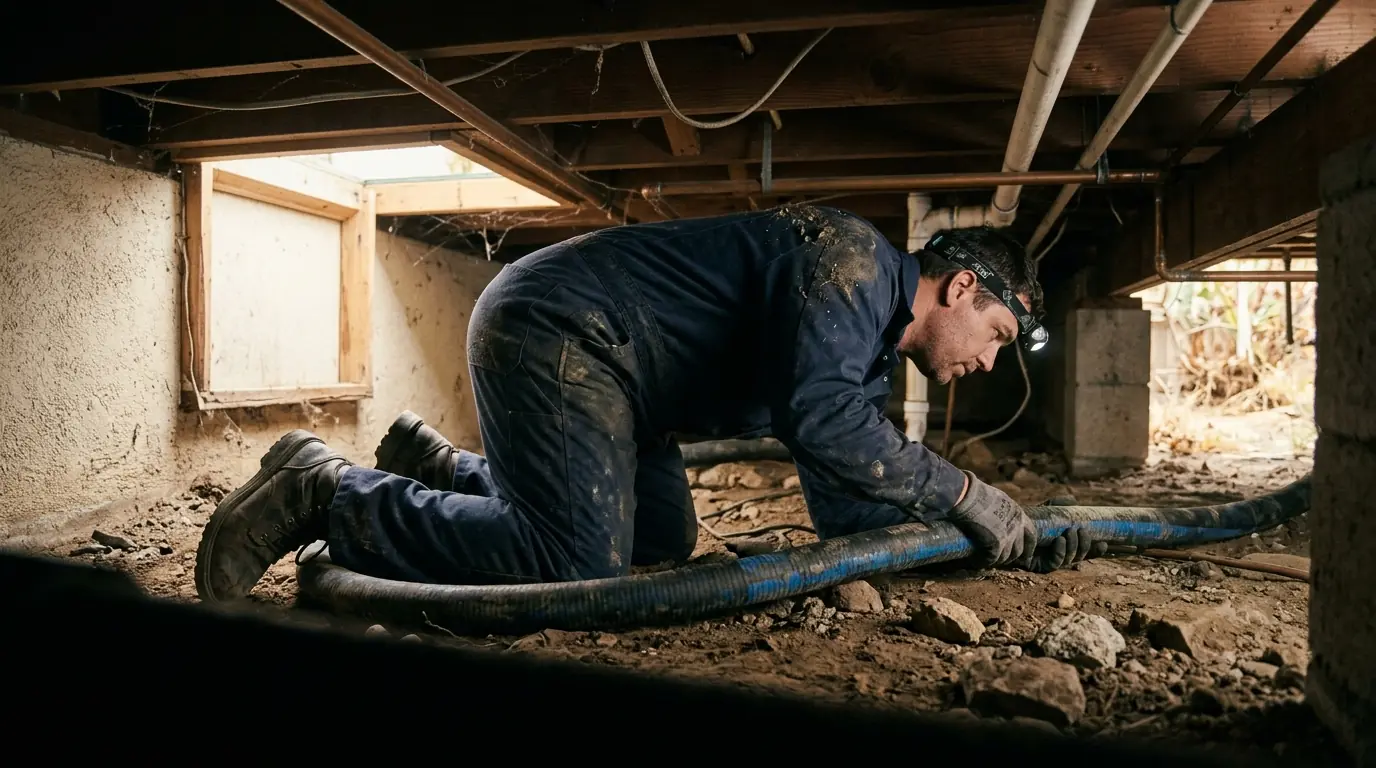
Wet insulation and vapor barrier are almost always replaced. Fiberglass batts between the joists soak up water, sag and hold moisture against the subfloor for weeks, and a torn or water-filled plastic barrier traps water rather than keeping it out. We bag and remove both, which opens up the joists so they can dry. New insulation and a new barrier go in only after the framing reads dry, not on the same day as the pump-out. Ducts that run under the floor get checked for water too.
Crawl space mold
Crawl space mold grows on joists, subfloor and sill plates after water sits for a few days, usually as white fuzz or dark spotting on the wood. It is often the reason a house smells musty upstairs. We treat light surface growth on framing with an antimicrobial after drying, and scope removal separately when it is heavy. Fixing the water and keeping the space dry matters more than any treatment, so we point out vents, grading or leaks that need attention.
Los Angeles conditions
Raised floors in the oldest neighborhoods
The oldest houses in the city are in Boyle Heights and South Los Angeles, where average home ages of 80 to 95 years are common, and many of them sit on raised wood floors over a crawl space rather than a slab. Storms reach these spaces too: in February 2024 mudflow forced its way into a home in Baldwin Hills. Old supply lines plus winter runoff is why we check under the house on older homes.
Do it yourself or call
Should you go under yourself?
A quick look through the access hatch is fine. Crawling into standing water is not.
| What you can do | What we handle | |
|---|---|---|
| Checking for water | Flashlight from the hatch | Full inspection with readings |
| Standing water | Stay out; wiring may be wet | Pump and extract |
| Broken pipe | Shut the main valve | Water removal and drying |
| Sewage smell | Stop using drains, stay out | Contaminated cleanup |
Cost factors
What crawl space water removal costs
2026 guides put extraction and drying at $4 to $12 per square foot, and professional water extraction alone at $300 to $1,500 depending on volume. Insulation and barrier replacement are added. Planning ranges only.
Water depth
Inches of standing water to pump.
Access
Clearance and entry size under the house.
Insulation
Square feet of batts removed and replaced.
Vapor barrier
New barrier after drying.
Water type
Sewage or runoff needs disinfection.
Drying days
Equipment until framing reads dry.
FAQ
Crawl space questions
A musty smell, soft floors or sagging insulation through the vents. A look through the hatch confirms it.
It can hide live wiring and contamination. Do not crawl into standing water.
Only the wet sections. Dry batts in unaffected areas stay.
We note the source, grading or vents that let it in. The fix depends on the cause.
Cupped boards often flatten once the subfloor dries. We check before replacing anything.
A sudden pipe break often is; groundwater and long-term seepage often are not.
Related work
Where this job usually goes next
Emergency Water Damage Restoration
24 hour water damage cleanup
What emergency Water Damage Restoration involvesBurst Pipe Cleanup
Supply line failure
Burst Pipe Cleanup in Los AngelesCeiling and Roof Leak Water Damage
Sagging ceiling
What ceiling and Roof Leak Water Damage involvesSlab Leak Water Damage
Hot spot on floor
Slab Leak Water DamageAppliance Leak Cleanup
Water heater leak
Appliance Leak Cleanup in Los AngelesSomething wet under the house?
Call and we will go under, pump it out and dry the framing.
24/7 emergency line
(323) 709-0141