The right method for the soot you have
Smoke and soot cleanup for Los Angeles homes
Soot is not dust. Wiping it with a wet rag smears it into paint for good, and each kind of soot needs a different method.
- Answered 24/7
- Walls, ceilings, ducts
- Odor treated at the source
Updated September 2026
24/7 emergency line
(323) 709-0141- 1Do not wipe itWet cloths smear soot in.
- 2We test the sootDry, wet or protein.
- 3Clean, then sealAnd treat the odor.
Quick answer
Smoke and soot cleanup in Los Angeles starts by identifying the soot: dry soot from a fast fire, oily soot from plastics, or near-invisible protein residue from a kitchen fire. Dry soot comes off with dry chemical sponges and HEPA vacuums; oily and protein soot need degreasers. Surfaces that stay stained are sealed before painting.
The job
Why soot needs the right method
Soot is fine, acidic carbon that settles on every surface, including rooms far from the fire. Left on, it etches and discolors finishes within days.
The wrong method makes it worse. A damp sponge on dry soot pushes it into the paint. A dry sponge on oily soot just smears it. Where flames reached the structure, it becomes a fire restoration job.
Cost factors
What smoke and soot cleanup costs
2026 guides put soot cleanup at $2.75 to $6.50 per square foot of affected surface, and overall fire and smoke restoration at $4.25 to $6.50 per square foot. Planning ranges only.
Soot type
Protein and oily soot take longer.
Surface area
Walls, ceilings and cabinets affected.
Ducts
HVAC cleaning if the system ran.
Odor level
Sealing and deodorizing scope.
Contents
Items cleaned on site or packed out.
Repainting
Surfaces sealed and painted after.
Your options
Clean, seal or replace?
Most surfaces fall into one of three outcomes.
| Surface | Clean | Seal or replace |
|---|---|---|
| Painted walls, dry soot | Usually cleans fully | Seal if shadowing remains |
| Kitchen cabinets, protein film | Degrease and clean | Replace if heat-warped |
| Popcorn ceilings | Rarely cleans well | Seal or replace |
| Ducts | Clean | Replace flex duct if heavily coated |
| Upholstery and drapes | Specialty cleaning | Replace if odor stays |
Variations of this job
Dry soot
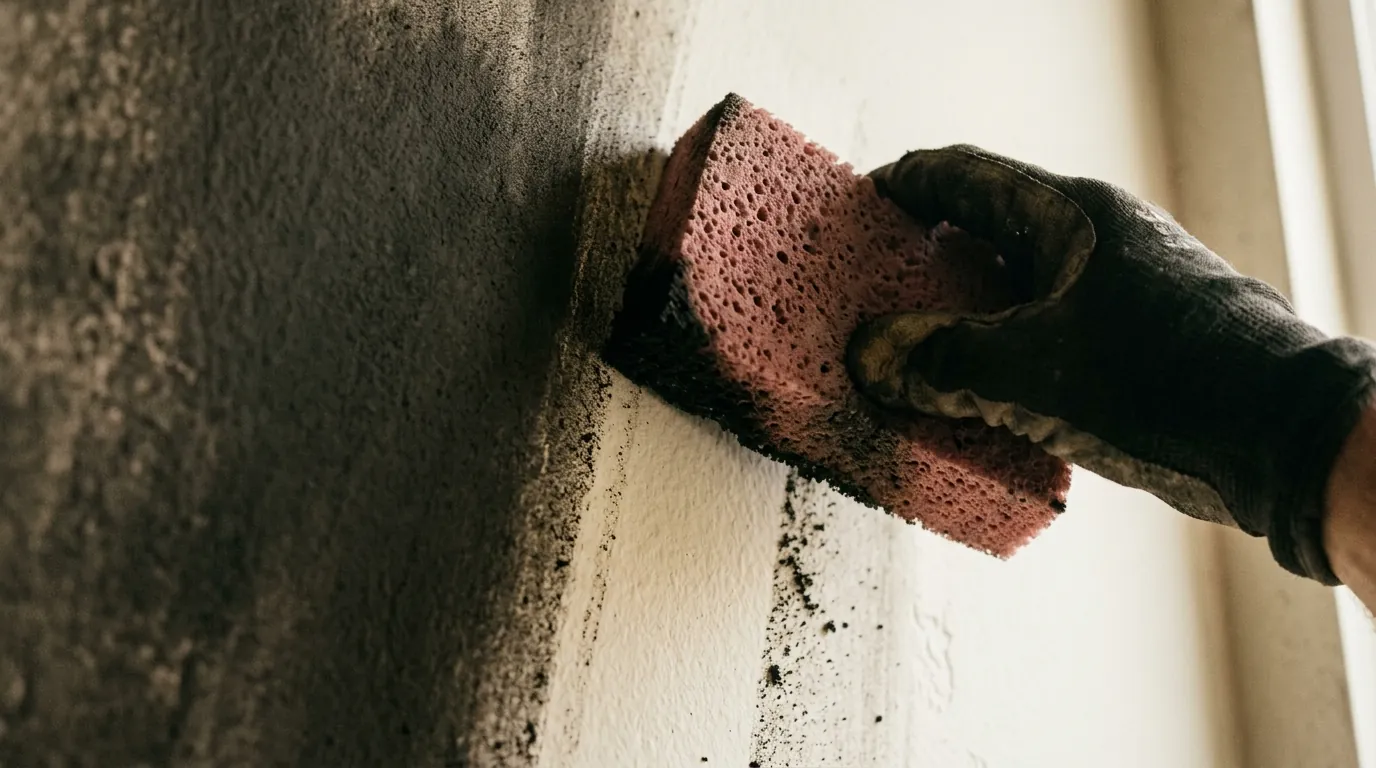
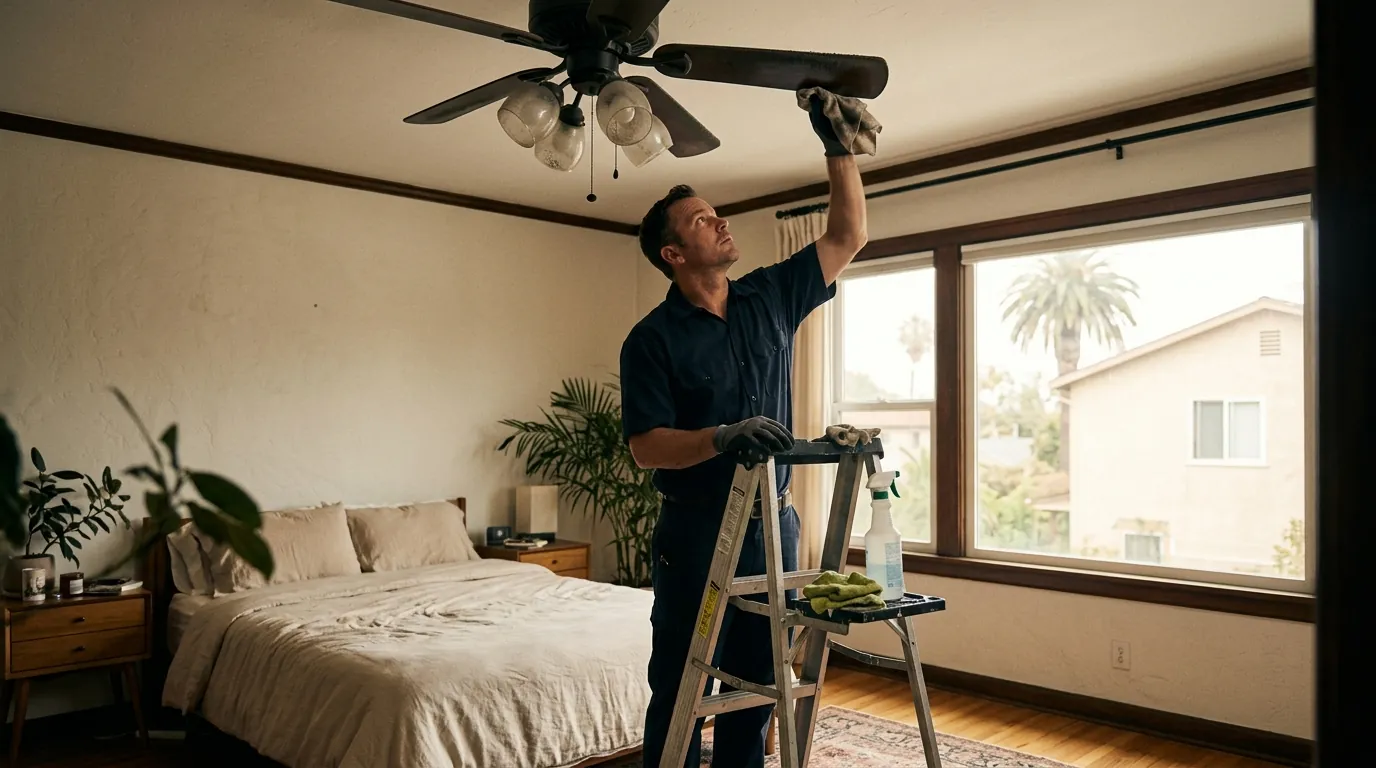
Dry soot comes from fast, hot fires burning wood or paper. It is powdery, sits on the surface and smudges easily. We remove it first with HEPA vacuums and dry chemical sponges, working top down from ceilings to floors, before any liquid touches the surface. Done in that order, painted walls and ceilings often clean up without repainting. Done out of order, the same walls end up needing a stain-blocking primer and two coats of paint. Light fixtures and vents are cleaned in the same pass.
Protein soot
Protein soot comes from cooking fires, where food burned on the stove. It is a thin, yellowish film that you can barely see but can smell strongly, and it clings to cabinets, walls and fabrics throughout the house. It needs degreasing cleaners and careful wiping, then odor treatment, because the smell lives in that film. People often think a kitchen fire left no damage until the smell refuses to fade. Fabrics and curtains in nearby rooms usually need cleaning as well.
Duct and HVAC soot
Duct and HVAC soot happens when the heating or air conditioning ran during or after the fire and pulled smoke through the system. Soot coats the inside of the ducts, the blower and the coil, and every time the system runs it blows soot and odor back into clean rooms. The ducts, registers and air handler are cleaned, and the filter replaced, before the system is turned back on for good. Until then, the thermostat stays off so the ducts cannot move more soot around the house.
What is included
What a soot cleanup includes
- Soot type identified first
- Containment of clean rooms
- HEPA vacuuming top down
- Dry chemical sponge cleaning
- Degreasing where needed
- Duct and register cleaning
- Odor treatment
- Stain-blocking primer where needed
- Photos for your claim
Los Angeles conditions
Forced-air heat spreads the smoke
Across the Los Angeles and Long Beach metro, about 58 percent of homes heat with a warm-air furnace and 46 percent have central air, so a large share of houses have ducts running to every room. When a fire happens and the system runs, smoke rides those ducts into bedrooms and closets that never saw flame. That is why we check the ducts on nearly every smoke job here.
How the job runs
How a soot cleanup runs
WetDry and signed off
- 1
Test the soot
Dry, oily or protein decides the method.
- 2
Protect clean areas
Containment so soot is not tracked around.
- 3
Dry removal first
HEPA vacuums and dry chemical sponges.
- 4
Wet cleaning
Degreasers for oily and protein residue.
- 5
Ducts and HVAC
Cleaned before the system runs again.
- 6
Odor treatment
Deodorizing and sealing where needed.
- 7
Seal and paint
Stain blocker on surfaces that stayed marked.
FAQ
Soot cleanup questions
Light dry soot, carefully, with a dry sponge. Most homeowner attempts smear it; call before you wipe.
Odor sits in soot film, fabric and ducts. It fades only when those are cleaned and treated.
Not always. Dry soot cleaned correctly often leaves paint intact; sealing is for leftover shadows.
Not until the ducts are checked. Running it spreads soot into clean rooms.
Only in empty rooms and never as the main method. Cleaning the residue comes first.
Usually, as part of a covered fire. We document every room affected.
Related work
Related work from the same call
Fire Damage Restoration
Kitchen fire
More on fire Damage RestorationWildfire Smoke and Ash Cleanup
Interior ash removal
Wildfire Smoke and Ash Cleanup in Los AngelesEmergency Board-Up and Tarping
Roof tarping
How we handle emergency Board-Up and TarpingShower and Tub Leak Water Damage
Shower pan leak
More on shower and Tub Leak Water DamageAC Leak Water Damage
Condensate drain line clog
More on AC Leak Water DamageSoot on the walls after a fire?
Call before anyone wipes it. We will test it and clean it the right way.
24/7 emergency line
(323) 709-0141