Guide: seasonal prep
Getting a Los Angeles house ready for the rain season
Roofs and drains here can go eight months without seeing real rain. The first big storm finds every gap at once, so the time to look is before it arrives.
By June Calloway, Restoration Guides Editor Updated September 2026
24/7 emergency line
(323) 709-0141- 1Check the roof edgesFlashing and gutters.
- 2Clear the water pathDownspouts and drains.
- 3Know your shutoffsBefore you need them.
Quick answer
Downtown Los Angeles averages about 14.25 inches of rain a year, most of it between December and March, so roofs and drains go untested for months. Before the season, clear gutters and downspouts, check roof flashing and window seals, make sure soil slopes away from the house, and know where your main water shutoff is.
The pattern
Why the first storm causes most of the calls
Los Angeles gets most of its rain in a handful of winter storms. In February 2024, downtown took more than 8 inches in three days, over half its normal yearly total, and the hills got more than a foot. After a long dry stretch, gutters are full of leaves, flashing has dried and cracked, and small gaps that never mattered in summer suddenly carry real water.
That is why our storm calls cluster in the first big system of the season. Most of what fails could have been spotted in an afternoon in October or November.
Roof
Start at the top: roof edges and flashing
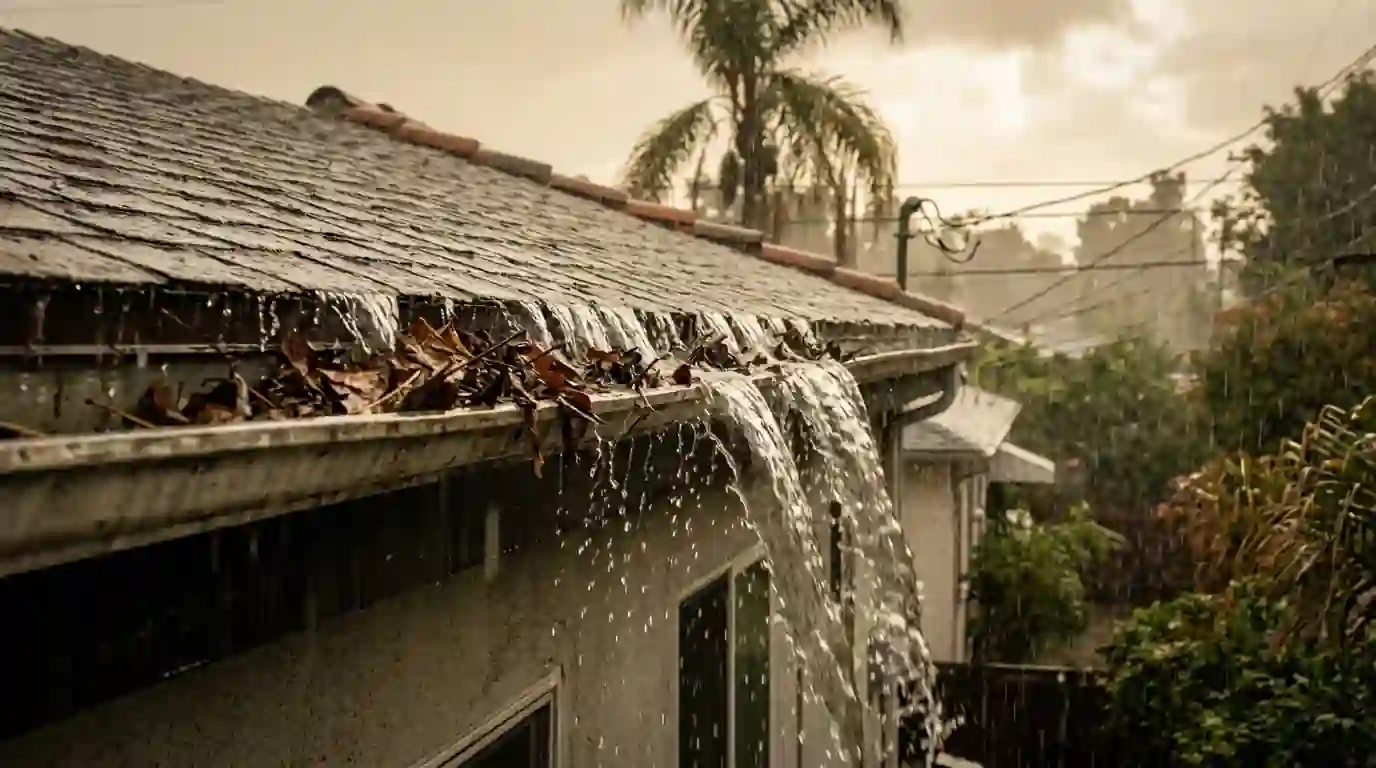
From the ground or a ladder, look for cracked or missing tiles, lifted shingles, and gaps around chimneys, vents and skylights where metal flashing meets the roof. Flat roofs, common on older Los Angeles homes and garages, should have no standing debris or blisters in the coating around drains.
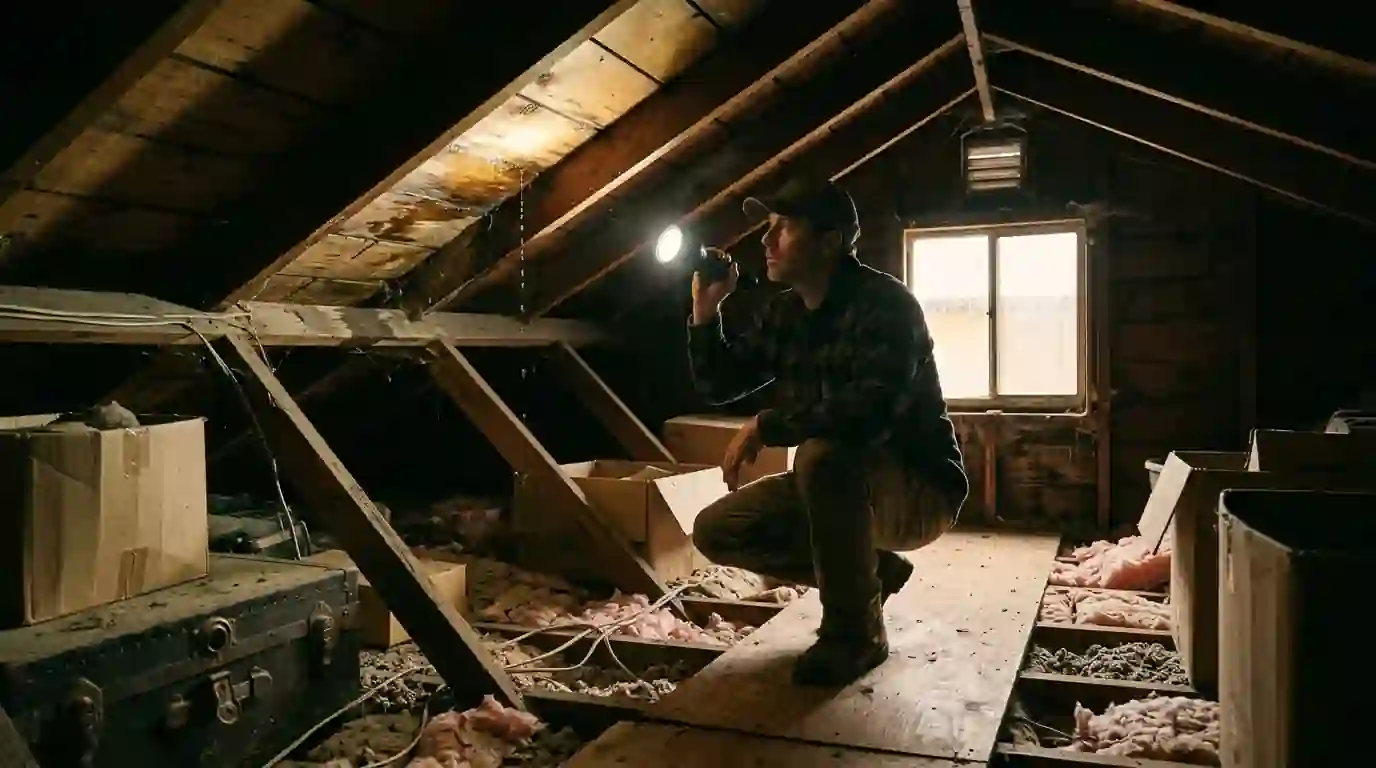
Inside, check the attic on a sunny day for daylight showing through the deck, and look for old stains on the underside of the roof boards. An old stain means water got in before and may again.
Drainage
Gutters, downspouts and where the water goes
Clear gutters and run a hose through them to confirm the downspouts flow. Make sure every downspout discharges well away from the foundation, onto a splash block or into a drain line, not straight against the wall.
Walk the yard and check that soil and hardscape slope away from the house. Planters built up against stucco walls and patios that tilt toward the house are two of the most common reasons water ends up inside a wall or under a raised floor.
Openings
Windows, doors and stucco
Wind-driven rain gets in around windows and sliding doors when sealant has cracked or weep holes in the frames are clogged with dirt. Clear the weep holes, replace failed caulk, and make sure door thresholds and slider tracks drain outward.
Look for cracks in stucco, especially at window corners. Hairline cracks are common and usually harmless, but open cracks let water behind the stucco where it runs down inside the wall. Our ceiling and roof leak page explains what that looks like when it happens.
Storm water already inside? Call any hour and we will get it out before it spreads.
Call (323) 709-0141Slopes
Hillside lots and canyon streets
If the house sits below a slope, check that swales, V-ditches and drains on the hillside are clear and that retaining walls drain through their weep holes. In the February 2024 storm, 475 mudslides were logged across the Los Angeles area, and homes at the base of slopes took the mud and water.
Know the evacuation guidance for your area and keep sandbags if your garage or ground floor has flooded before. Our page on mud and storm water inside covers what happens if water or mud still gets in.
Trees
Trees and branches before the wind
Big winter storms bring wind as well as rain; in February 2024 the Los Angeles area logged a record 390 fallen trees. Branches hanging over the roof, dead limbs and trees leaning toward the house are worth a look from a tree service before the season, not after a limb comes through the ceiling.
If a tree does come down on the house, keep everyone out of the rooms below and call for board-up and tarping once the tree crew has cleared it.
Low points
Under the house and in the garage
On raised-floor houses, look through the crawl space access for standing water, a torn vapor barrier or damp soil near vents. Low vents at grade can let runoff straight under the house during a storm, which means pumping out the crawl space.
In the garage, move boxes and anything made of cardboard or particle board off the floor and onto shelves. Garages sit lowest and have the widest door, so they flood first.
Be ready
Before the storm: know your shutoffs
Find your main water shutoff and your electrical panel now, while it is dry and daylight. Make sure the valve turns and that everyone in the house knows where it is. Save a restoration number in your phone.
If water does get in, the first hour matters most. Our guide to the first hour after a leak walks through the steps.
Follow-up
After the first storm: look before you paint
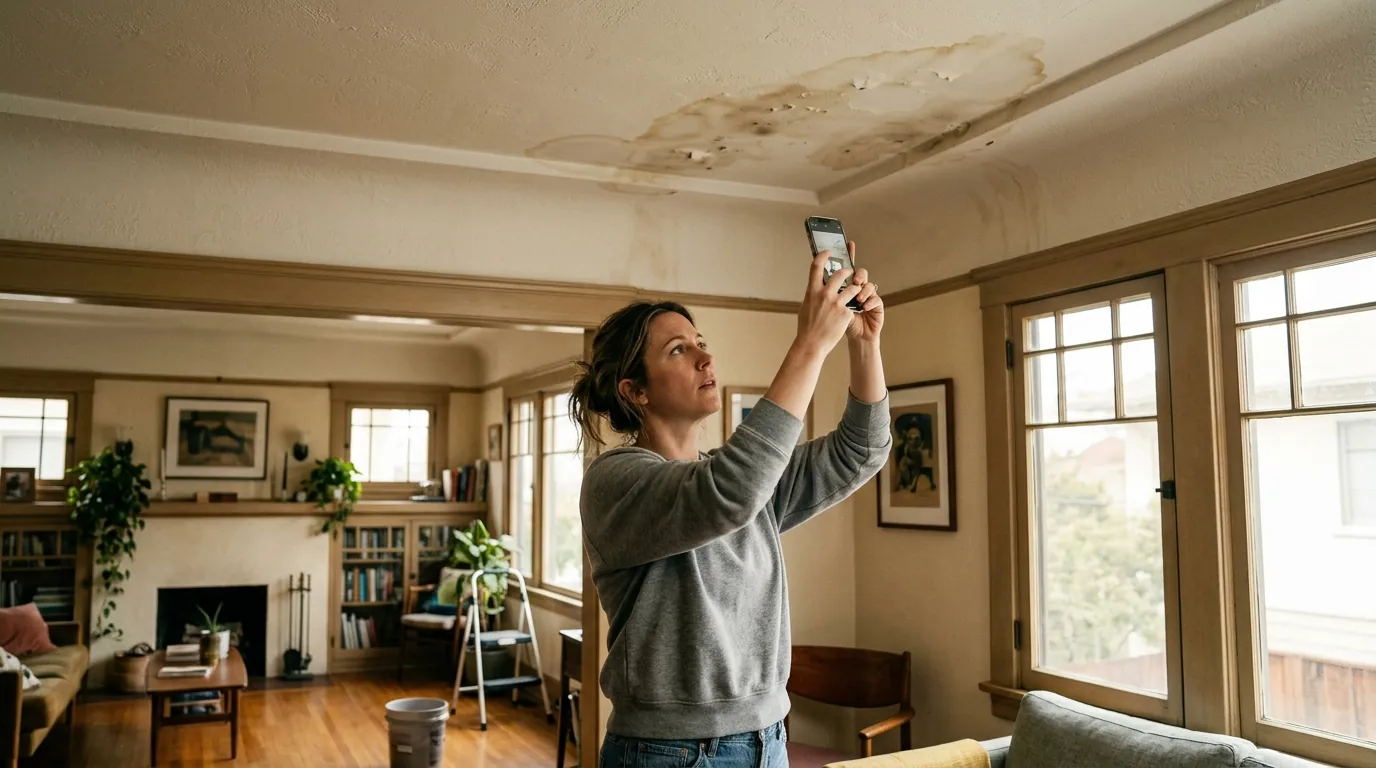
After the first real rain, walk the house and look at ceilings below the roof, corners near windows and the bottom of exterior walls. A new stain means water got in. Photograph it, find the source, and have it checked for moisture before anyone paints over it.
Painting a wet stain is one of the most common ways mold ends up inside a wall months later. A quick moisture check answers whether it dried.
FAQ
Questions readers ask
Most rain falls from December through March, with the heaviest storms often in January and February.
At least once before the rain season, and again after heavy leaf fall.
If your garage or ground floor has taken water before, keeping some ready is sensible.
Roof flashing, window seals and water directed against the house by downspouts or grading.
Not until it is confirmed dry and the source is fixed.
Wind and roof damage often are; outside flood water usually needs flood coverage.
Keep reading
More from our restoration guides
Water Leak in Los Angeles: What to Do in the First Hour
First hour after a leak.
First hour after a leak, explainedHow Fast Mold Grows After a Leak in LA Homes
How fast mold grows.
More on how fast mold growsFiling a Water Damage Claim in Los Angeles, CA
Filing a water damage claim.
More on filing a water damage claimStorm found a gap in your house?
Call and we will dry it out and show you where the water came in.
24/7 emergency line
(323) 709-0141