Guide: emergency first steps
A water leak in your Los Angeles home: the first hour, step by step
Most of the damage from a leak happens in the hours after it is found, not the minutes before. These are the moves that limit it.
By June Calloway, Restoration Guides Editor Updated September 2026
24/7 emergency line
(323) 709-0141- 1Stop the waterMain valve or fixture valve.
- 2Make it safePower, ceilings, slips.
- 3Document, then callPhotos before cleanup.
Quick answer
In the first hour after a water leak in a Los Angeles home, close the main water valve or the fixture valve, switch off power to wet rooms from a dry panel, move belongings off the wet floor, and photograph everything before you clean. Then call for extraction; mold can start on wet drywall and pad within 24 to 48 hours.
Step one
Minute one: stop the water
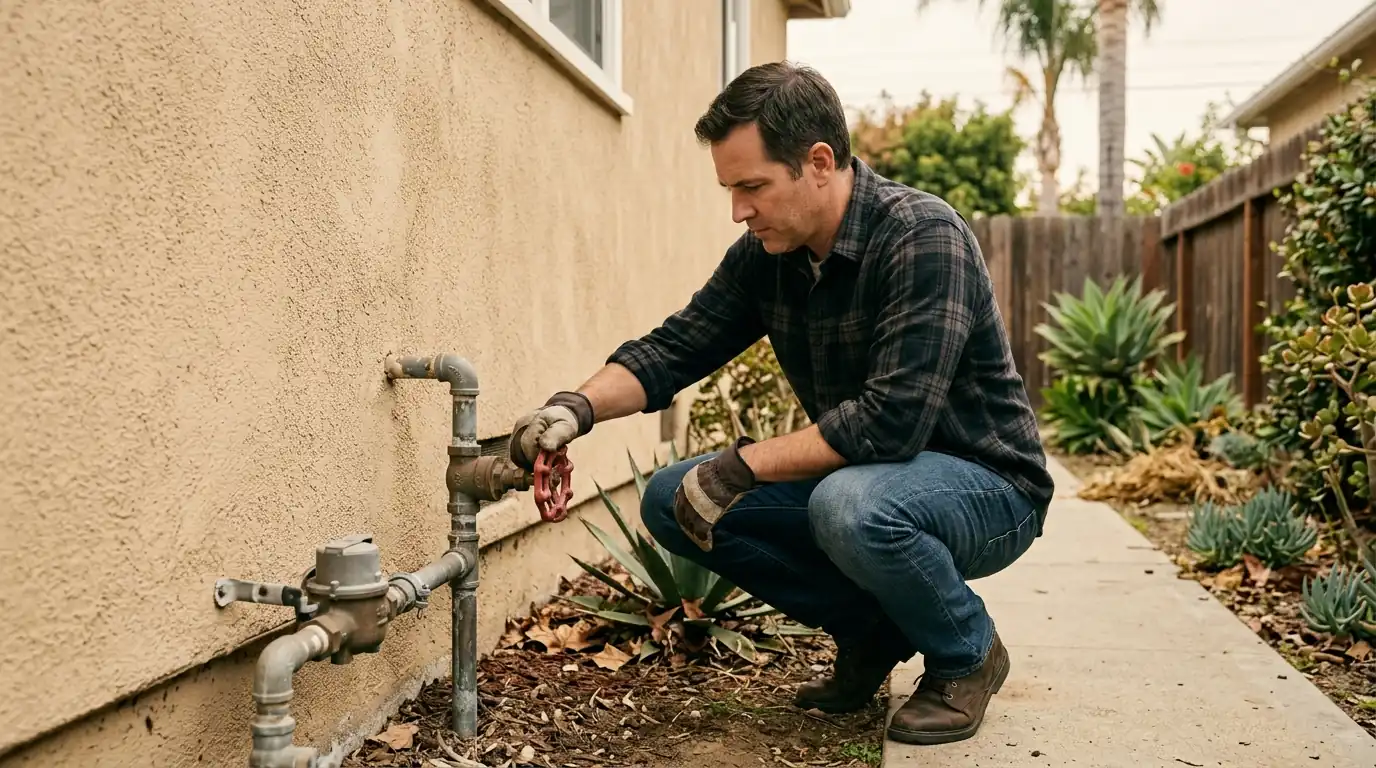
If the leak is at a fixture or appliance, look for its own valve first: the oval handle behind a toilet, the two valves under a sink, the pair behind a washer, or the cold inlet on top of a water heater. Turn them clockwise. That stops the water without cutting supply to the whole house.
If you cannot find the source, close the main. On most Los Angeles houses it sits near the front, by the meter or where the line comes out of the ground, sometimes in the garage. In apartments and condos, look in the water heater closet or under the kitchen sink for a unit shutoff; if there is none, call the building manager right away.
Step two
Make the house safe before you start mopping
Water and electricity are the real danger. If water has reached outlets, cords or a ceiling light, switch off those circuits at the breaker panel, but only if the panel itself and the floor in front of it are dry. If they are not, stay out and say so when you call.
Look up as well as down. A ceiling that is bulging or dripping at a seam is holding water and can come down. Keep people and pets out from under it and put a bucket beneath the drip. Wet tile and laminate are slick, so move slowly and keep children out of the room.
Step three
Protect what you can in ten minutes
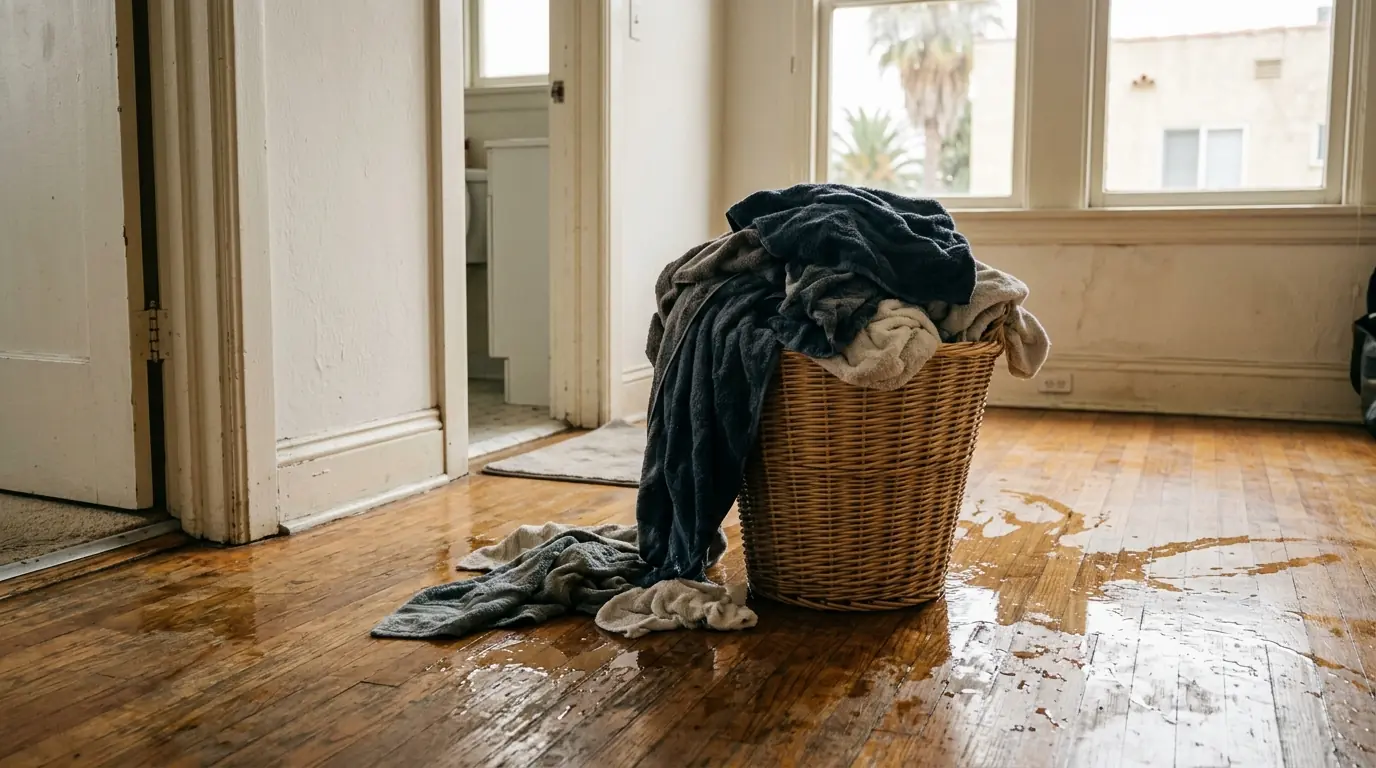
Lift rugs, electronics, books, photos and anything made of paper or fabric off the wet floor and into a dry room. Slide foil or plastic lids under furniture legs that have to stay, so wet carpet does not stain the wood and the finish does not stain the carpet.
Open closet doors and cabinet doors in the wet area so air reaches inside. Pull curtains up off the floor. Do not start pulling up carpet or baseboard yet; that comes later, and it is easier to document the damage before anything is taken apart.
Step four
Photograph it before you clean it
Before you mop, take wide photos of each room and close photos of the source, the water line on walls and cabinets, and anything damaged. A short video walking through the house works too. Insurers ask for exactly this, and it cannot be recreated once the water is gone.
Keep the part that failed if you can, such as a split supply hose or a cracked fitting. Write down the time you found the leak and when you shut it off. Our guide to filing a water damage claim covers what adjusters look for next.
Water still on the floor? Call now and we will walk you through the shutoff while a crew is dispatched.
Call (323) 709-0141Avoid these
What not to do in the first hour
Do not use a household vacuum on water; it is an electrical hazard and it will not pull water from carpet pad anyway. Do not rely on fans alone. They move moisture around the room without removing it, and a closed-up house just gets more humid.
Do not turn the heat up to dry things faster, and do not wait until morning to see if it dries on its own. Water that looks gone from the floor is usually sitting in the pad, the bottom of the drywall and the subfloor, which is where mold starts.
Step five
When to call and what to tell dispatch
Call as soon as the water is stopped and the house is safe. Tell dispatch where the water came from, which rooms it reached, whether it came through a ceiling, and roughly how long it ran. Clean supply water, washer water and sewage are handled very differently, so the source matters.
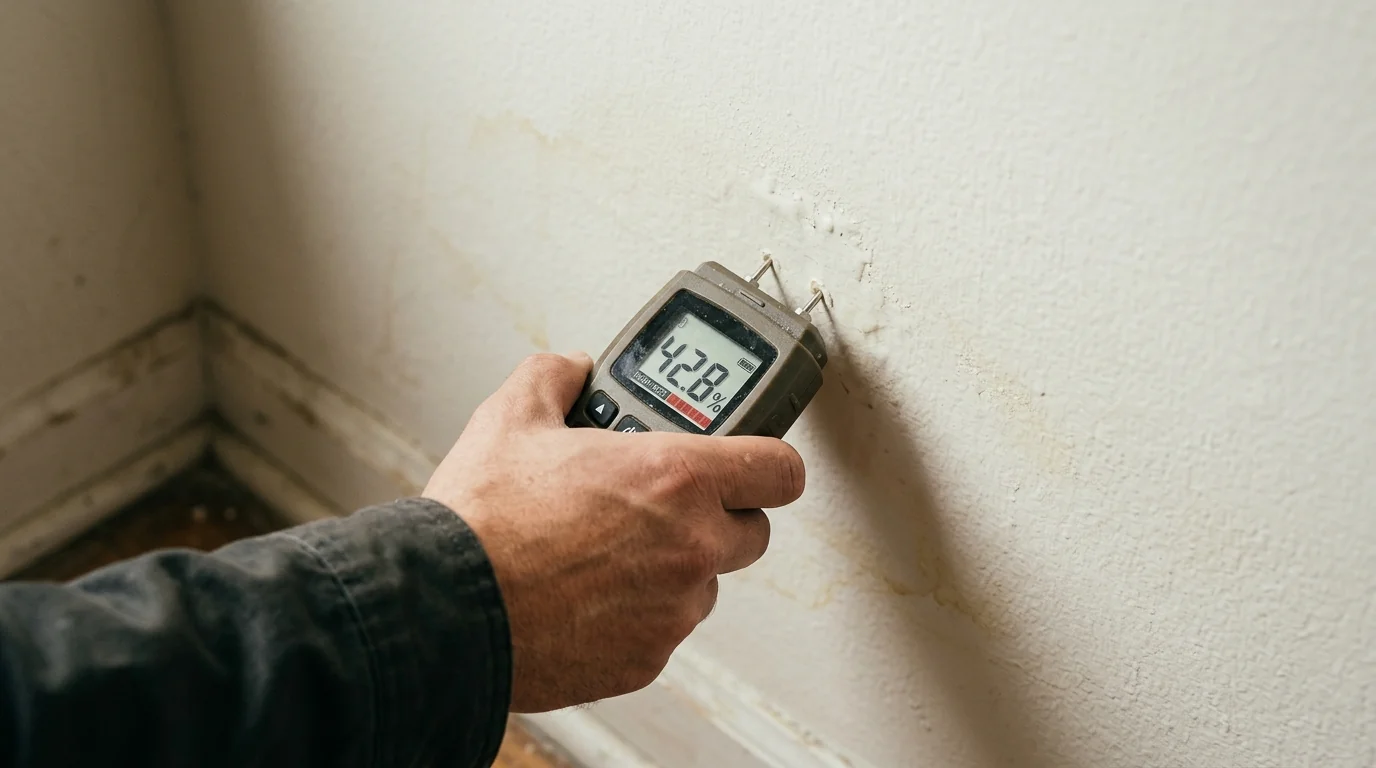
For most leaks, the first visit is emergency water extraction: pulling standing water, mapping moisture with meters, and setting drying equipment. If the source was a pipe inside a wall, our burst pipe cleanup page explains what happens next.
Shared buildings
If you live in an apartment or condo
In a building, water rarely stays in one unit. If it is coming through your ceiling, the source is usually the unit above, so knock on that door or call the manager first; you cannot stop it from your side. If the leak is yours, warn the neighbor below and the manager right away, because their ceiling may already be wet.
Take photos in every unit you can reach and note the times. When several owners, tenants and an association are involved, a clean record per unit prevents most of the arguments later. Our apartment water damage page explains how those jobs are run.
The clock
Why the first day decides the size of the job
Clean water caught within a day is usually a drying job: extraction, a few days of air movers and a dehumidifier, and most materials stay. The same water left for two or three days starts to degrade, soaks further into walls and floors, and gives mold the time it needs to start on wet drywall and pad.
That is the difference between drying a room and rebuilding it. Our guide on how long structural drying takes explains what the next few days look like once equipment is running.
FAQ
Questions readers ask
Usually near the front by the water meter or where the line enters the house, sometimes in the garage.
Only to wet rooms, and only if the breaker panel and the floor in front of it are dry.
Fans help only alongside extraction and a dehumidifier. Alone, they move moisture around.
No. Photograph first, then prevent further damage; policies expect you to.
Clean supply water is, if no power is involved. Sewage or outside flood water is not.
On wet drywall and carpet pad, within 24 to 48 hours.
Keep reading
More from our restoration guides
Filing a Water Damage Claim in Los Angeles, CA
Filing a water damage claim.
More on filing a water damage claimHow Long Structural Drying Takes in Los Angeles, CA
How long drying takes.
Read: how long drying takesHow Fast Mold Grows After a Leak in LA Homes
How fast mold grows.
Read: how fast mold growsLeak stopped, floor still wet?
Call and we will get extraction and drying started before the damage spreads.
24/7 emergency line
(323) 709-0141