Guide: the drying timeline
How long structural drying takes in a Los Angeles home
The honest answer is: until the readings say dry. For most rooms that is three to five days, but the materials and the start time change it.
By June Calloway, Restoration Guides Editor Updated September 2026
24/7 emergency line
(323) 709-0141- 1Start the same dayEvery day waiting adds days.
- 2Keep equipment runningAround the clock.
- 3Dry means a readingNot a date on a calendar.
Quick answer
Structural drying in a Los Angeles home usually takes three to five days for drywall and wood framing when extraction starts the same day. Plaster walls, hardwood floors and concrete slabs often take five to ten days. Drying is finished when moisture readings on wet materials match a dry reference, not after a set number of days.
The goal
What drying actually means
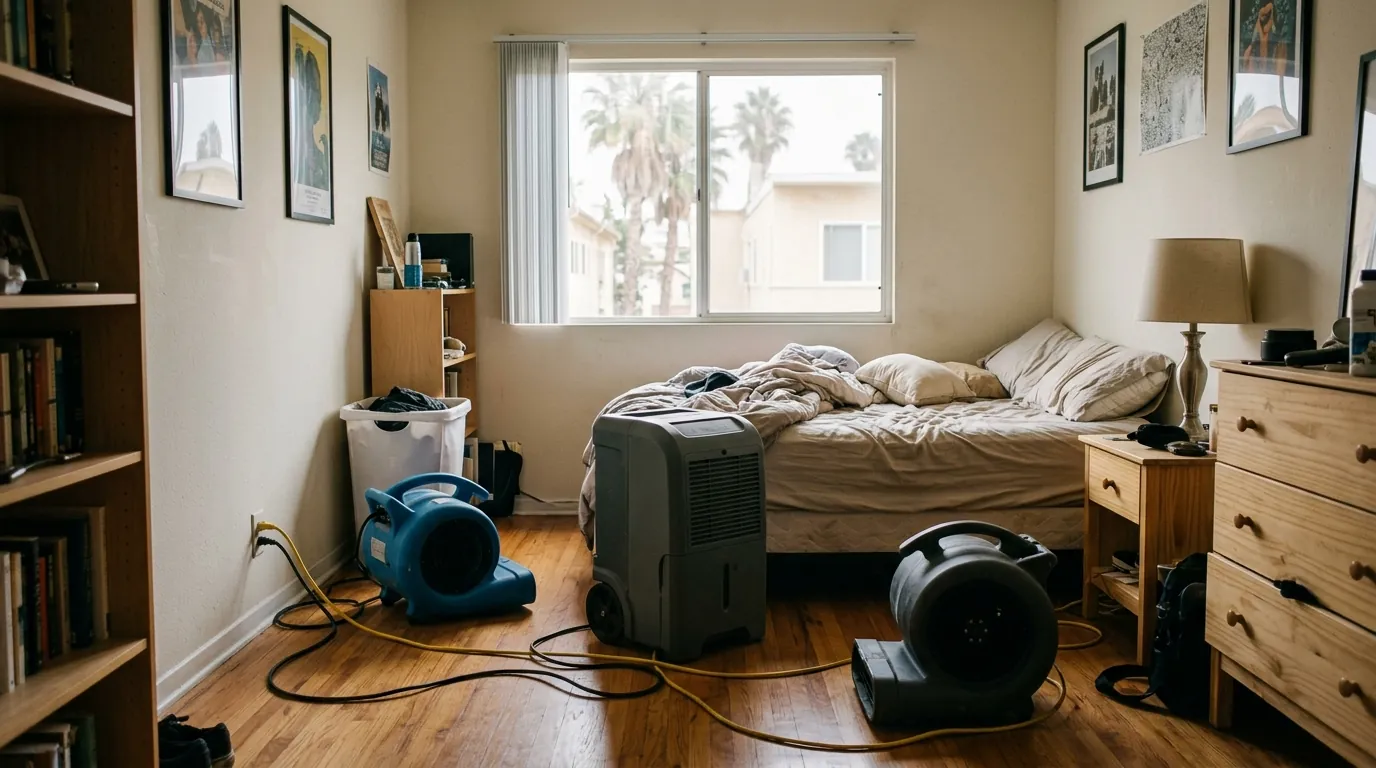
After extraction, the water left is inside materials: drywall, framing, subfloor, plaster, concrete. Air movers pull that moisture to the surface and into the air, and dehumidifiers pull it out of the air so it does not settle back in. Where water got behind a wall, dry air can be pushed into the cavity instead of cutting the wall open.
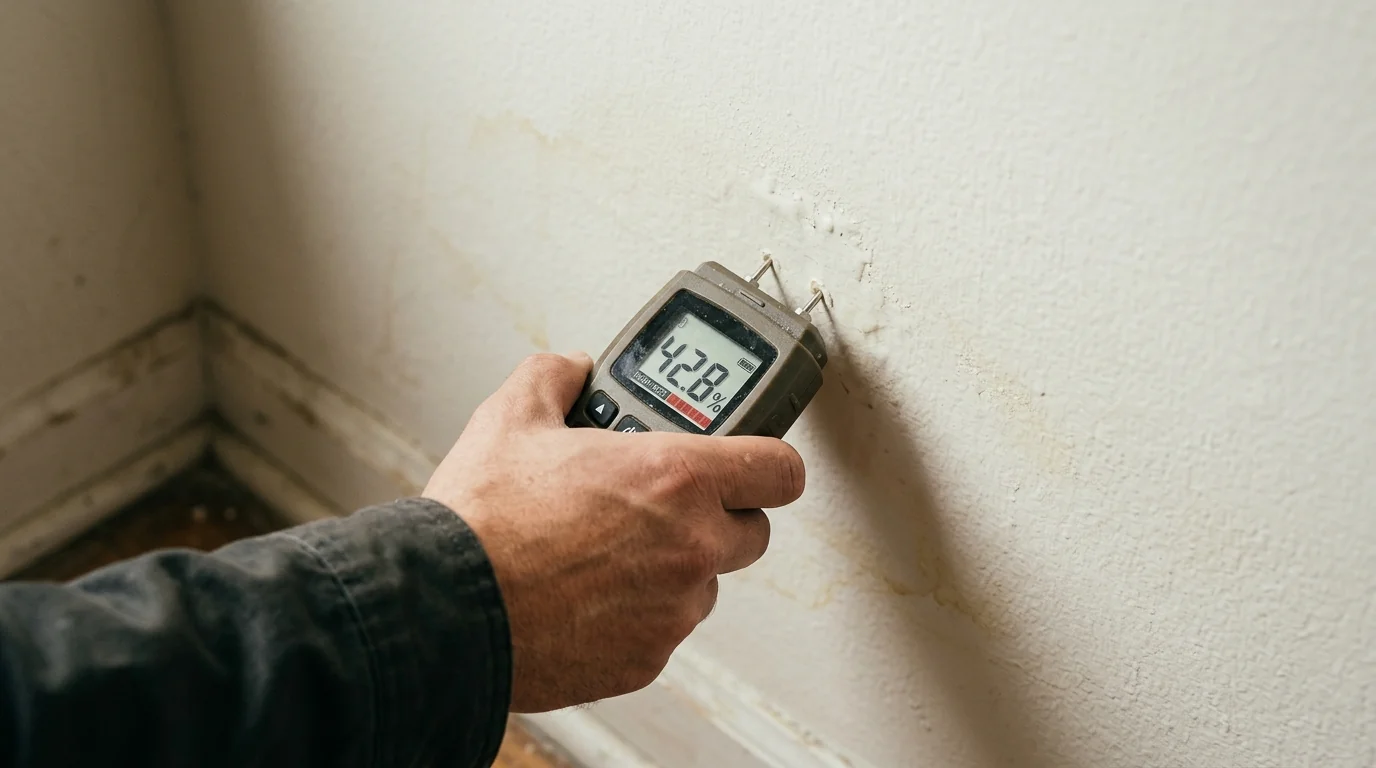
Drying is finished when the wet materials read the same as the same materials in a dry part of the house. That comparison is the whole test. Our structural drying page covers the equipment.
Days one to five
The typical timeline, day by day
Day one is extraction, moisture mapping, removal of what cannot dry, like soaked pad and swollen trim, and setting equipment. Days two through four are drying, with readings taken at the same marked points each visit and equipment moved as areas dry. For most clean-water losses in drywall rooms, readings reach dry somewhere between day three and day five.
When they do, the equipment comes out and the file is closed with final readings. Rebuild, if anything was removed, starts after that.
Slower materials
What makes it take longer
Plaster holds water far longer than drywall, and many older Los Angeles homes have lath and plaster walls. Hardwood floors dry slowly and have to be dried from both sides. Concrete slabs give up water slowly and can read dry on top while holding water lower down.
Insulation inside a wall, cabinets built over a wet floor, and multiple layers of flooring all slow things down too, because they trap moisture against the structure. Sometimes removing one layer saves days.
Walls or floors still wet after a leak? Call and we will map the moisture and set the right equipment.
Call (323) 709-0141Start time
The biggest factor you control: when it starts
Water caught and extracted the same day has mostly stayed near the surface. Water left for two or three days has soaked further into walls, subfloors and the bottom of cabinets, and it may have started to degrade. That turns a three-day dry-out into a week, and sometimes into a tear-out.
It is also why the first hour matters. Our guide to the first hour after a leak covers what to do before the crew arrives.
Living with it
Why the equipment has to stay on
The equipment is loud and the room gets warm. Both are the job working: dehumidifiers put out heat, and warm air holds more moisture, which speeds drying. Turning machines off at night stalls the process and adds days to the end.
If a machine is truly in the way, call and we will reposition it rather than switching it off. Keep doors to the drying area closed so the dehumidifier is working on that room, not the whole house.
Your part
What you can do to help it along
Keep the doors to the drying area closed and windows shut, so the dehumidifier is drying that space rather than pulling in outdoor air. Leave cabinet doors open under sinks and in the wet area. Keep furniture off wet carpet and do not put rugs back down until the floor reads dry.
Keep children and pets away from cords and equipment, and do not move machines yourself; their angles are set to the wet walls. If something is in the way or a breaker trips, call and we will adjust it the same day.
The record
How dry is proven
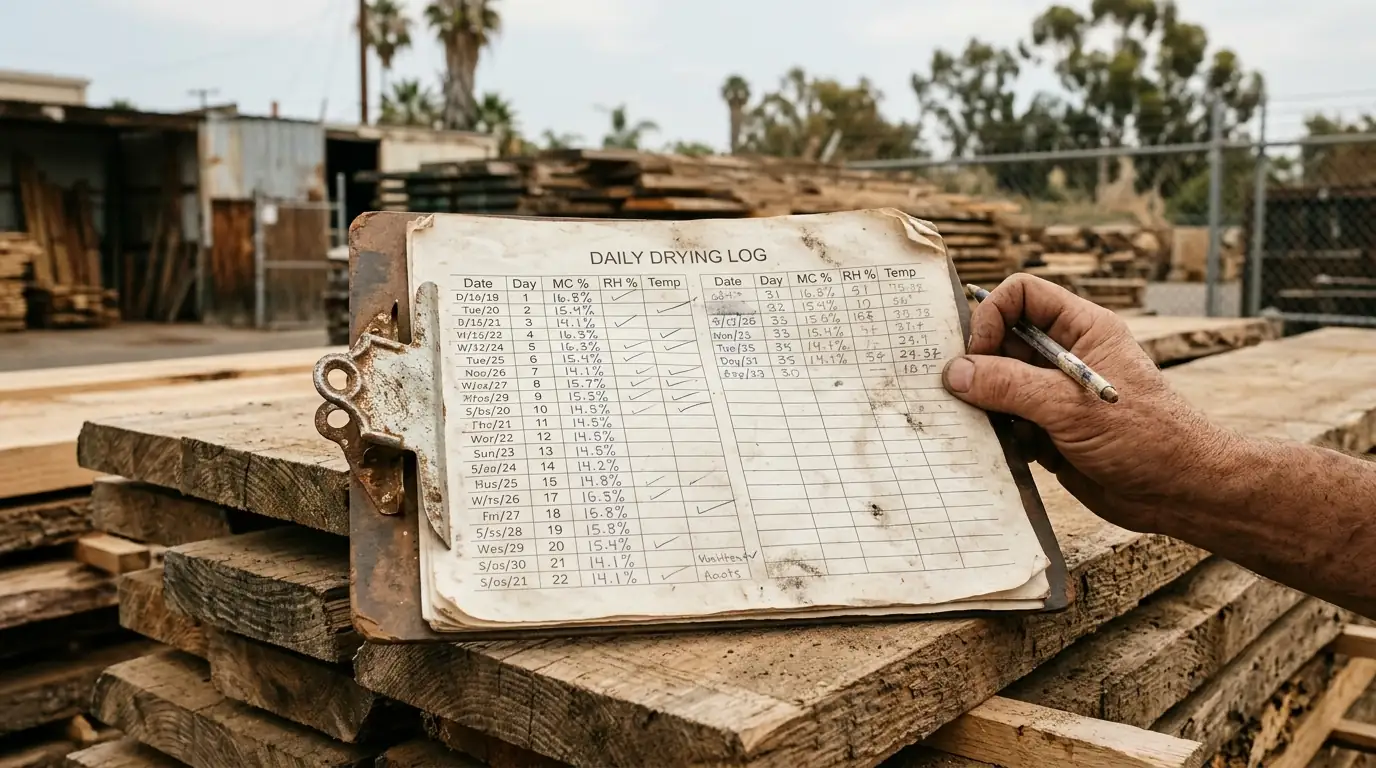
Every visit, readings are taken at the same marked points on the wet materials and on the dry reference, and logged with the date. That log is what tells us when to pull equipment, and it is what an adjuster looks for when approving the drying on a claim.
When the wet points match the reference, the materials are dry. Photos of each setup and the final readings go into the file. Our claims guide explains why that record matters.
Tear-out
When drying is not enough
Drying works for clean water caught early. It is not the answer for materials soaked by sewage or outside flood water, for drywall that swelled or crumbled, for pad under carpet, or for insulation that stayed wet. Those come out, and the structure behind them is dried and disinfected.
Hardwood is its own case; our guide to wet hardwood floors explains what recovers and what does not.
FAQ
Questions readers ask
Usually three to five days for drywall rooms when extraction starts the same day.
Plaster holds much more water than drywall and gives it up slowly.
Please do not. Drying stalls and the total time gets longer.
Readings on wet materials match the same materials in a dry room.
Dehumidifiers give off heat, and warm air speeds up drying.
Not always. Cavity drying through small holes often saves them.
Keep reading
More from our restoration guides
Water Damage Categories and Classes, Explained for LA Homes
Water categories and classes.
Read: water categories and classesWet Hardwood Floors in LA: Save or Replace?
Wet hardwood: save or replace.
Read: wet hardwood: save or replaceHow Fast Mold Grows After a Leak in LA Homes
How fast mold grows.
Our guide to how fast mold growsWaiting for walls or floors to dry?
Call and we will set the right equipment and log it until it is done.
24/7 emergency line
(323) 709-0141