Guide: how the industry grades a loss
Water damage categories and classes, explained for Los Angeles homes
Every restoration scope and most insurance conversations use two words you may not have heard before: category and class. Here is what they mean in plain terms.
By June Calloway, Restoration Guides Editor Updated September 2026
24/7 emergency line
(323) 709-0141- 1Category is the waterHow clean or dirty it is.
- 2Class is the spreadHow much got wet.
- 3Both set the scopeDry it or remove it.
Quick answer
In water damage restoration, the category describes how contaminated the water is (Category 1 clean, 2 gray, 3 black) and the class describes how much water there is and how far it spread (Class 1 smallest to Class 4 hardest to dry). Together they decide what can be dried in place, what must be removed, and roughly what it costs.
The basics
Why these two words matter
The category tells a crew whether wet materials can be cleaned and dried or have to be thrown away. The class tells them how much equipment the job needs and how long drying will take. An adjuster reads the scope the same way.
Two leaks of the same size can end in very different bills because one was clean water caught in an hour and the other was sewage found two days later.
Category 1
Category 1: clean water
Category 1 is water from a clean source: a burst supply line, a leaking faucet, an overflowing sink with no contamination, rain through a window that went straight onto a clean floor. It is not a health hazard at the start, and most materials it wets can be dried in place.
2026 cost guides put Category 1 mitigation at about $3 to $4 per square foot. Our page on pipes that burst covers the most common Category 1 job.
Category 2
Category 2: gray water
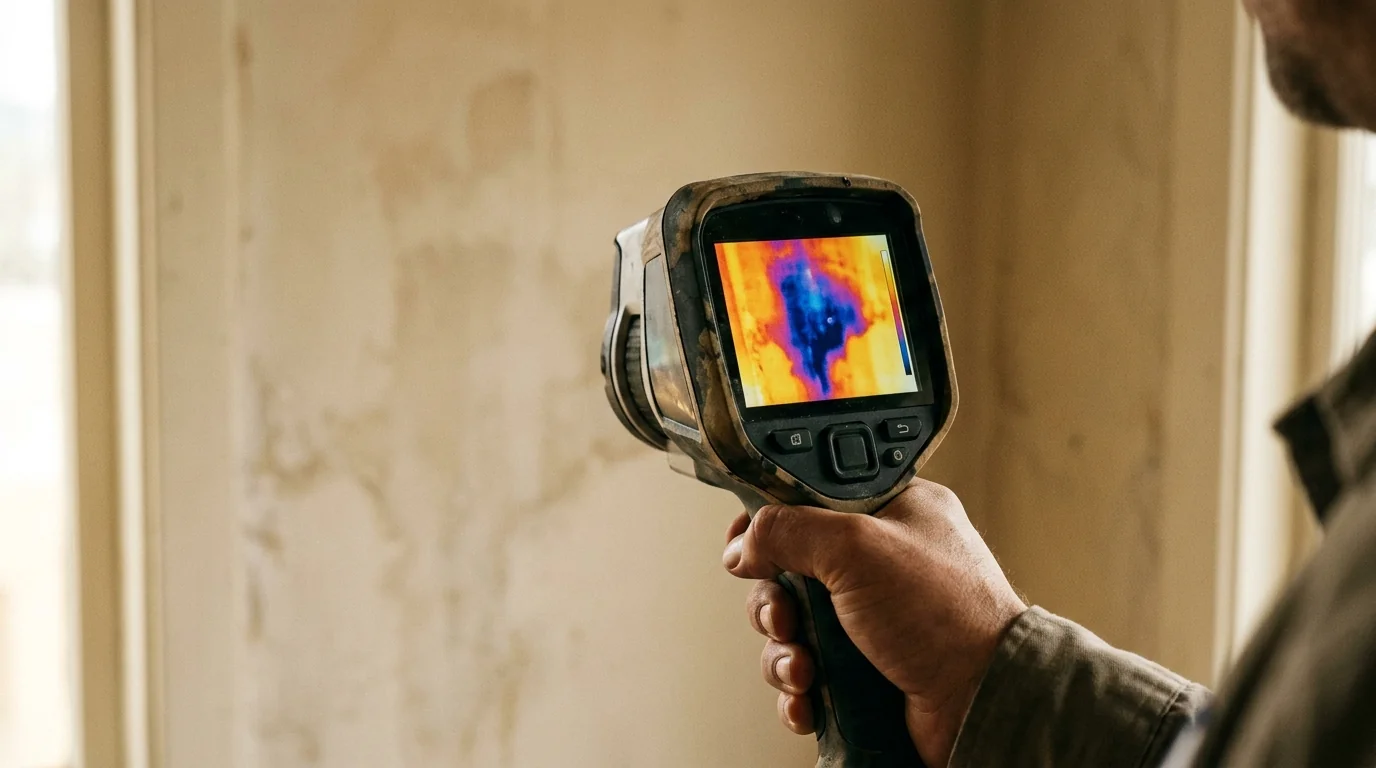
Category 2 water carries some contamination: washing machine or dishwasher discharge, a toilet overflow with urine but no feces, water from a fish tank or waterbed. It can make people sick if it is swallowed or sits on skin, so surfaces are cleaned and disinfected before drying.
Guides put Category 2 at about $4 to $7 per square foot. Porous items it soaked, like carpet pad, are usually replaced rather than dried.
Category 3
Category 3: black water
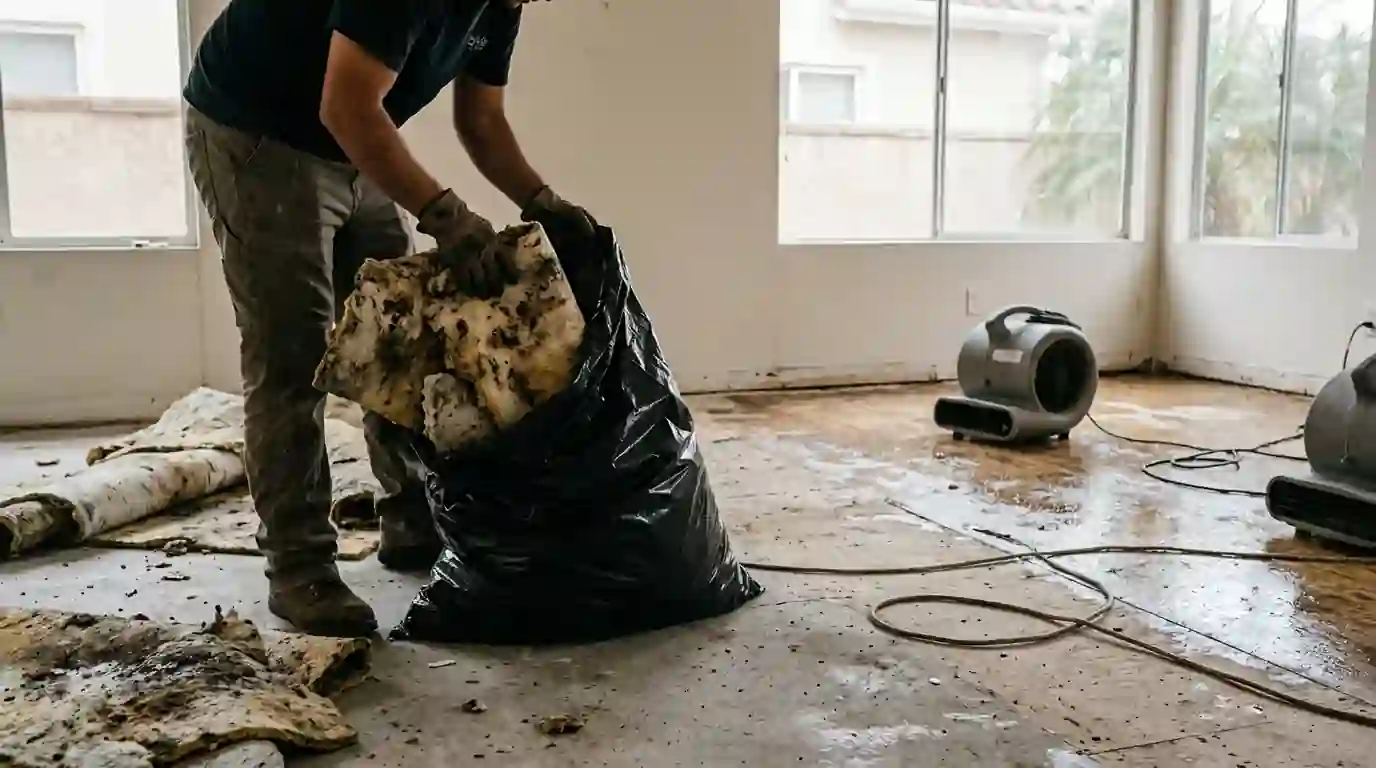
Category 3 is grossly contaminated water: sewage, toilet backflow with feces, and flood water from outside that ran across soil and pavement. When the February 2024 storm pushed rainwater and mud into Los Angeles homes, that water was Category 3 the moment it came in the door.
Everything porous it touched is removed, not dried, and the structure is disinfected. Guides put Category 3 mitigation at about $7 to $7.50 per square foot. See our sewage backup and outside flood water pages.
Not sure what category your water is? Call and we will tell you before anything is dried or thrown out.
Call (323) 709-0141Time matters
Water gets dirtier as it sits
Categories are not fixed. Clean water that sits for a day or two starts to grow bacteria and picks up contamination from the materials it soaks into, so it is treated as Category 2, and later Category 3. Cost guides note that waiting 24 to 48 hours can move clean water up a category.
That is the biggest reason restoration companies push to start extraction the same day. Our guide to the first hour after a leak covers what to do while you wait.
The classes
Classes 1 to 4: how much, and how hard to dry
Class 1 is the smallest: part of a room, mostly low-porosity materials, little water absorbed. Class 2 is a whole room, with carpet and pad wet and water wicked up the walls. Class 3 is the most water, often from above, with ceilings, walls, insulation and floors saturated.
Class 4 is not about volume but difficulty: water trapped in dense materials like hardwood, plaster, concrete and brick that hold it tightly and dry slowly. Guides put minimal Class 1 damage at about $150 to $400 and severe Class 4 flooding at $20,000 to $100,000.
Local note
Why Class 4 is common in older LA houses
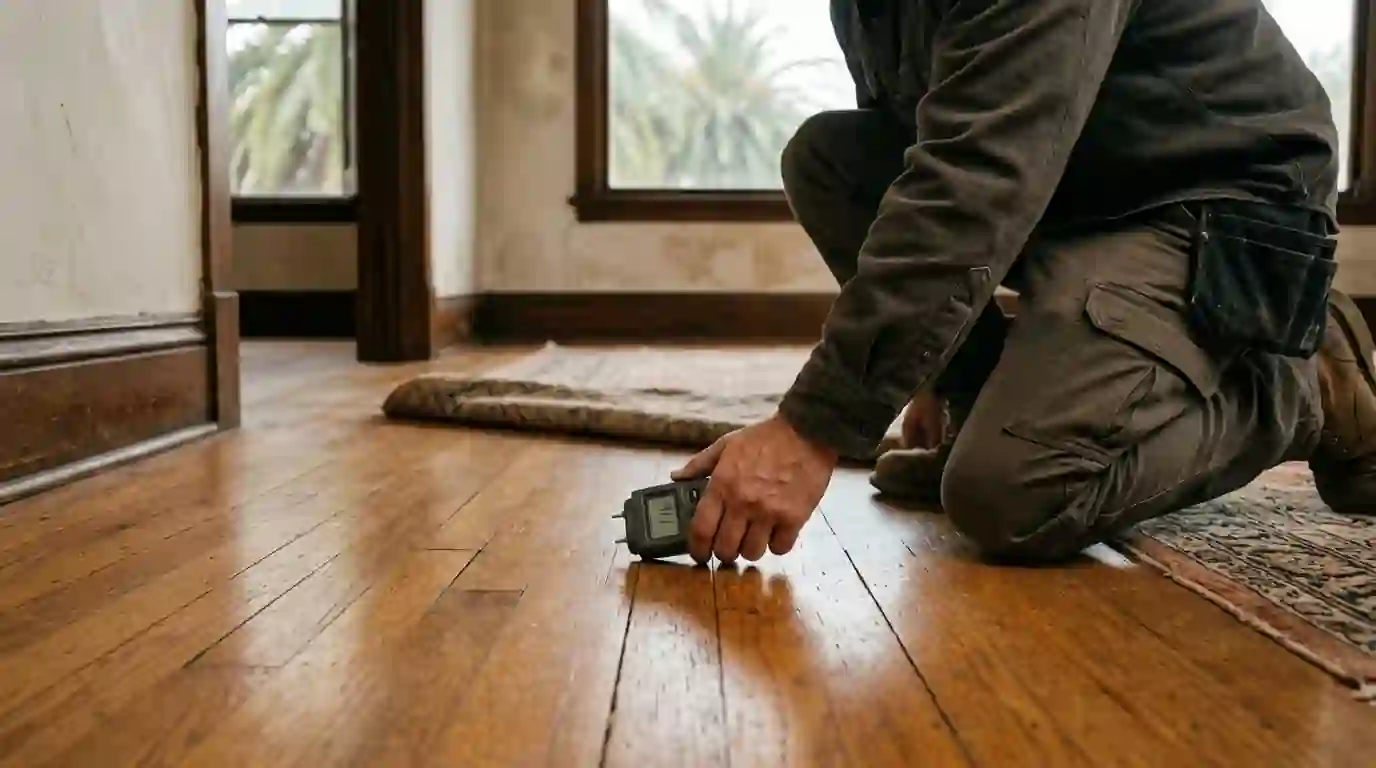
Lath and plaster walls, old-growth oak floors and concrete slabs are everywhere in older Los Angeles houses, and all three are Class 4 materials. A leak that would be a quick Class 2 job in a newer drywall house can take longer here because the materials give up water slowly.
That is also why drying is judged by readings rather than by days. Our guides on drying time and wet hardwood explain what that looks like.
Insurance
What category and class mean for your claim
The category often decides coverage. Sudden Category 1 losses like a burst pipe are commonly covered; Category 3 sewage often needs a sewage backup endorsement; outside flood water usually needs a separate flood policy.
The class shapes the size of the drying line on the claim. Dated moisture readings are the evidence for both. Our claims guide covers the rest.
FAQ
Questions readers ask
Clean water from a supply source, like a burst pipe or a leaking faucet.
Category 2 if there is no feces; Category 3 if there is, or if it came from the sewer.
Yes, once it has run across soil and pavement it is treated as black water.
Water trapped in dense materials like hardwood, plaster or concrete that are slow to dry.
Yes. Left for a day or two it degrades, and the category goes up.
The restoration crew on site, based on the source and how long the water sat.
Keep reading
More from our restoration guides
Filing a Water Damage Claim in Los Angeles, CA
Filing a water damage claim.
Read: filing a water damage claimHow Long Structural Drying Takes in Los Angeles, CA
How long drying takes.
How long drying takes, explainedSewage Backup in Los Angeles: What to Do First
Sewage backup first steps.
Read: sewage backup first stepsWant to know what you are dealing with?
Call and we will tell you the category and class before any work starts.
24/7 emergency line
(323) 709-0141