Guide: before the next quake
Earthquake prep for your Los Angeles water heater and pipes
In a strong earthquake, much of the damage inside a house comes from water: a tipped water heater, a snapped supply line, a broken sprinkler pipe. Most of it can be prevented in an afternoon.
By June Calloway, Restoration Guides Editor Updated September 2026
24/7 emergency line
(323) 709-0141- 1Strap the heaterTwo straps, solid studs.
- 2Flex the linesConnectors that can move.
- 3Know the valvesWater and gas shutoffs.
Quick answer
To keep an earthquake from flooding your Los Angeles home, strap the water heater to the wall studs with two straps, connect it with flexible water and gas connectors, learn where the main water shutoff is and keep a wrench next to it, and know when to shut off gas. After any strong shaking, check the heater, the floors and the ceilings for leaks before water spreads.
The risk
Why earthquakes turn into water jobs
A tank water heater holds 40 to 50 gallons and weighs several hundred pounds full. If it is not secured, strong shaking can walk it off its base or tip it over, tearing the water lines and, on a gas heater, the gas line. Older rigid copper or steel supply lines can also crack where they enter walls and fixtures.
The water from one broken line keeps running until someone closes a valve. After a big quake, plumbers and restoration crews are stretched thin, so the damage you prevent yourself is the damage that never needs drying.
Step one
Strap the water heater properly
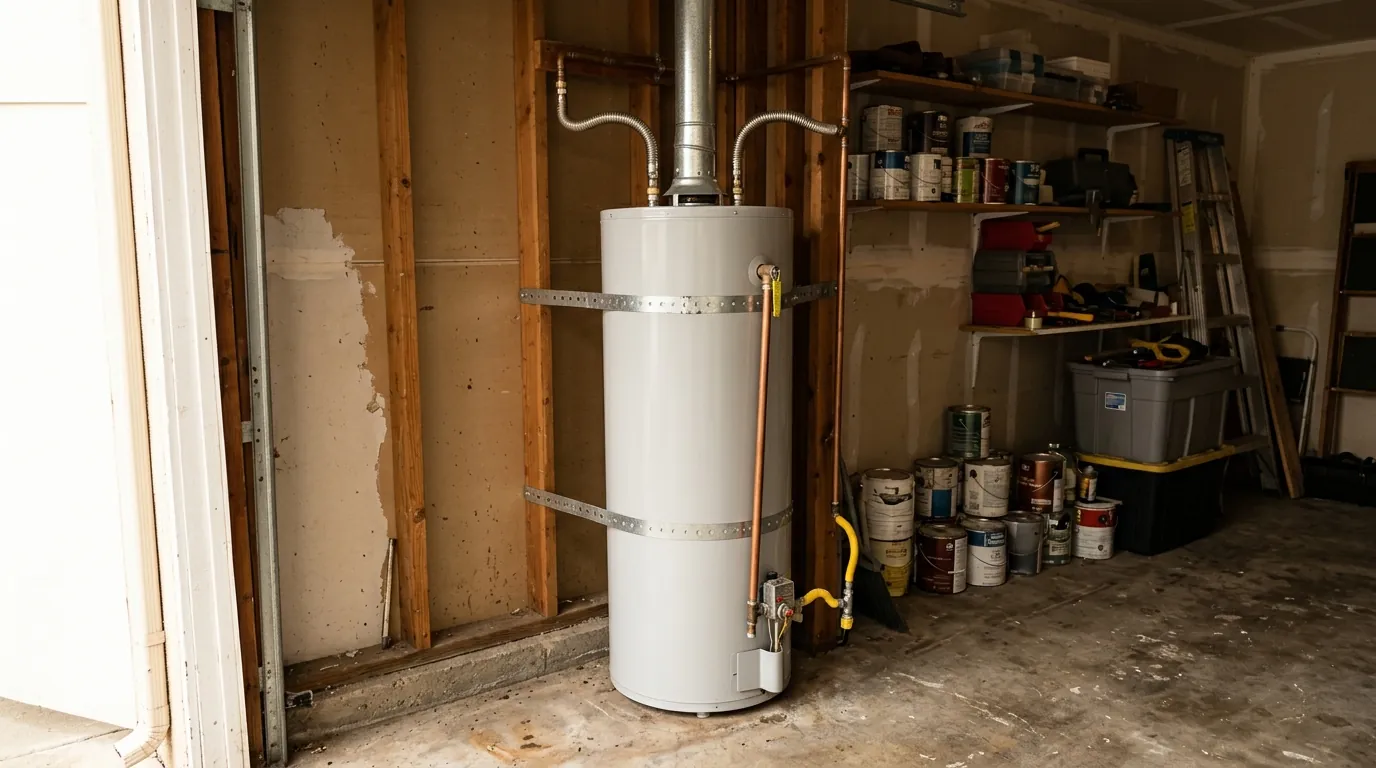
California requires water heaters to be braced, anchored or strapped to resist falling or moving in an earthquake. The state's guidelines call for two straps that wrap the tank, one in the upper third and one in the lower third, with the lower strap at least 4 inches above the controls, fastened into the wall studs rather than just the drywall.
Check an existing installation for straps that are loose, attached to drywall only, or missing on the bottom. Strap kits are sold at hardware stores, but if you are unsure about finding studs or the gas connection, have a plumber do it. The city's Earthquake Brace + Bolt program, aimed at older houses with raised floors, also pays attention to strapping water heaters to cut the risk of water and fire damage.
Step two
Use flexible connectors
Rigid pipes snap when the heater or the wall they are attached to moves. Flexible water connectors at the top of the heater, and an approved flexible gas connector, let the tank shift slightly without breaking anything. The same idea applies to washing machines, dishwashers, toilets and the refrigerator ice-maker line: braided stainless supply hoses hold up far better than old rubber or plastic.
While you are looking, note the age of each hose. Many failures we see have nothing to do with earthquakes; a supply line simply wore out. Replacing them all at once is cheap insurance.
Step three
Find your water shutoff before you need it
On most Los Angeles houses the main water shutoff is near the front, by the meter or where the line comes out of the ground, and sometimes in the garage. Find it now, make sure it turns, and keep a wrench or a meter key next to it. In apartments and condos, find the shutoff for your unit or ask the manager where it is.
Show everyone in the house where it is. After an earthquake, the first person to notice water running should be able to close it in under a minute, in the dark if needed.
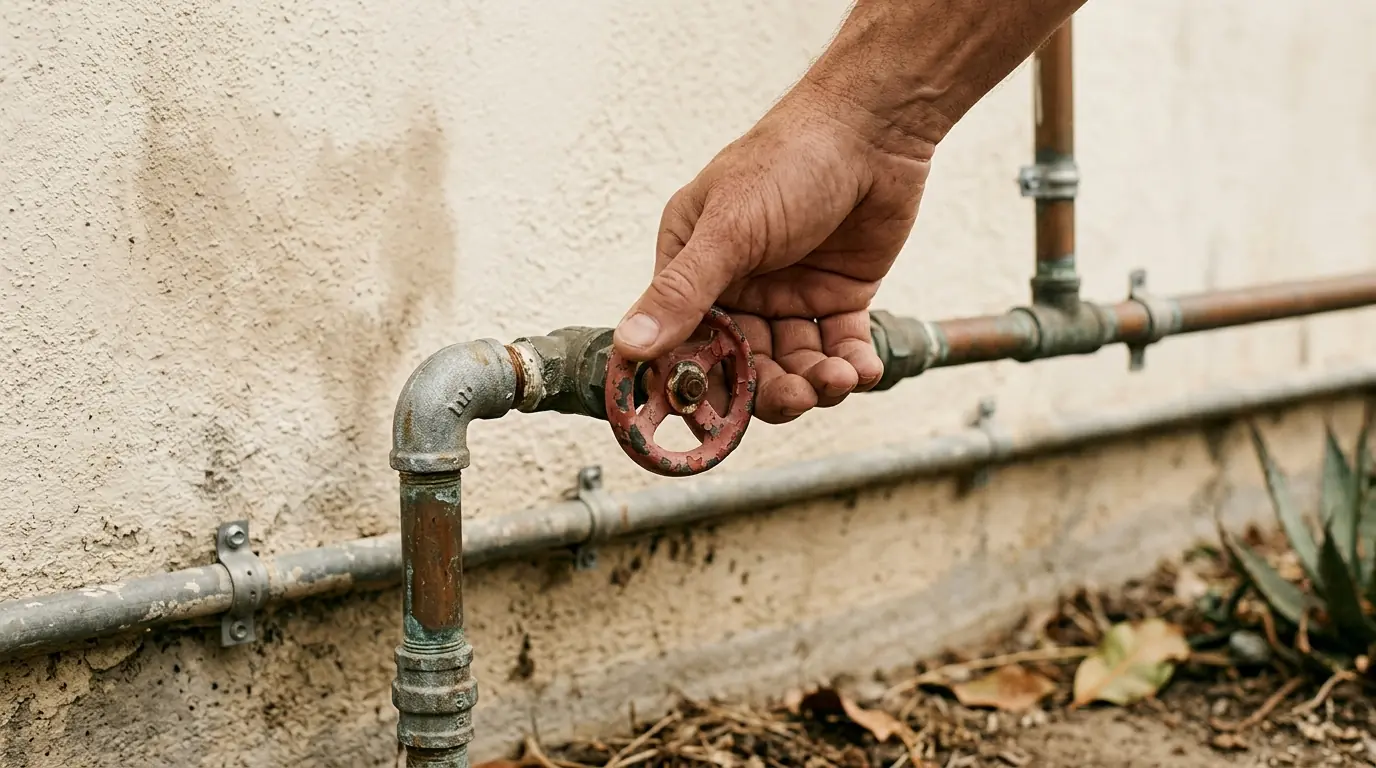
Water running after a quake? Close the main valve and call the 24/7 line.
Call (323) 709-0141Gas
Know when to shut off gas, and when not to
Do not shut off the gas just because there was an earthquake. Shut it off only if you smell gas, hear it hissing, or see a broken gas line, and then leave the house and call the gas company from outside. Once the gas is off at the meter, the utility has to turn it back on and relight appliances, which can take days after a big quake.
Keep a gas shutoff wrench at the meter and learn which way the valve turns. Some homes have an automatic seismic gas shutoff valve; if yours does, find out how it resets.
Under the floor
Older raised-floor houses
Many older Los Angeles houses sit on a raised wood floor with short cripple walls around a crawl space. In strong shaking, an unbolted or unbraced house can slide off its foundation, tearing plumbing that runs under the floor. The Earthquake Brace + Bolt program targets exactly these houses built before 1979, and bolting and bracing protects the pipes as well as the structure.
If your house is on a raised floor, look under it once a year for drips, damp soil or sagging insulation. A slow leak under the floor is easier to deal with on a calm day than after a quake. Our crawl space water removal page shows what we do when water is already there.
Afterward
What to check after the shaking stops
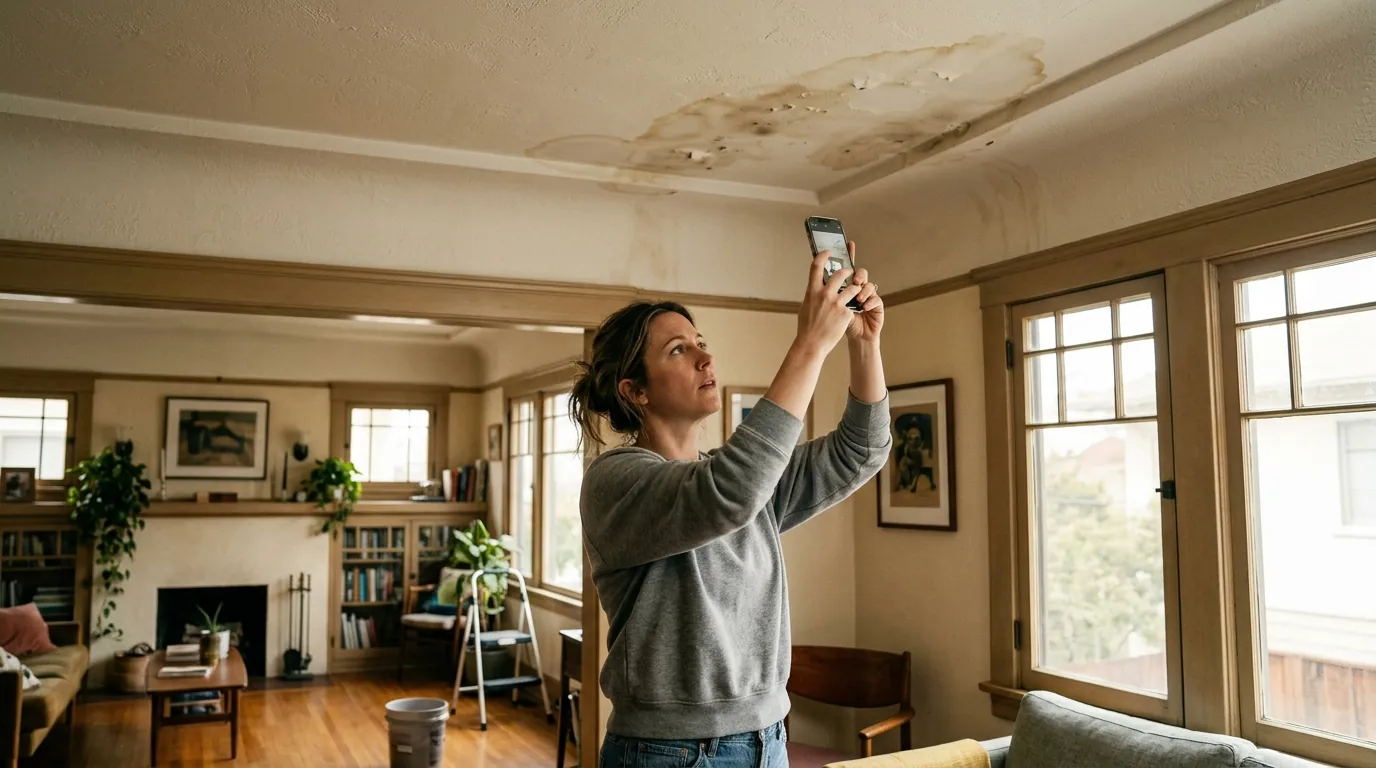
Once everyone is safe, walk the house. Look at the water heater, under sinks, behind the toilet and washer, and at ceilings below bathrooms. Listen for running water with every tap closed, and check the water meter: if it is spinning with everything off, there is a leak somewhere.
In condos and apartments, fire sprinkler pipes and shared risers can crack in the walls and ceilings. A water stain spreading on a ceiling or a damp patch at the base of a wall after a quake should be checked right away, because it can be coming from a unit above you. Our guide to the first hour after a leak covers what to do next.
Getting help
When to call us
If a quake leaves water on your floors, in a wall or under the house, close the main valve and call. We extract the water, read the walls and floors for moisture that has spread out of sight, and dry the structure with logged readings, then handle repairs once it is dry.
After a large earthquake, calls come in all at once. Having the water shut off, the house photographed and the source noted before we arrive helps us start faster. Our earthquake damage cleanup page explains how those jobs run.
FAQ
Questions readers ask
Yes. California requires water heaters to be braced, anchored or strapped against earthquake movement.
One in the upper third and one in the lower third of the tank, with the lower strap at least 4 inches above the controls.
No. Only if you smell gas, hear hissing or see a broken line.
Check the water meter with all taps closed. If it moves, there is a leak.
A program that helps strengthen older raised-floor houses, including strapping water heaters.
Yes. They let fixtures move slightly without the line breaking.
Keep reading
More from our restoration guides
Water Leak in Los Angeles: What to Do in the First Hour
First hour after a leak.
Our guide to first hour after a leakOld Pipes and Water Damage Risk in LA Homes
Old pipes and leak risk.
Read: old pipes and leak riskSigns of a Slab Leak in a Los Angeles Home
Signs of a slab leak.
Read: signs of a slab leakWater in the house after shaking?
Close the main and call; we will extract, read and dry it.
24/7 emergency line
(323) 709-0141