Guide: renters and landlords
Water damage in a Los Angeles rental: who handles what
In a rental, three people care about the same leak: the tenant, the owner and whoever owns the unit next door. Clear steps and clear records keep it from becoming an argument.
By June Calloway, Restoration Guides Editor Updated September 2026
24/7 emergency line
(323) 709-0141- 1Stop and reportShutoff, then the landlord.
- 2Write it downPhotos and a written notice.
- 3Belongings are yoursRenters insurance.
Quick answer
If water damage hits a Los Angeles rental, the tenant should stop the water if possible, report it to the landlord or manager immediately and in writing, and photograph everything. Landlords generally handle repairs to the building; tenants' belongings are usually a renters insurance matter. Check your lease for the details.
Step one
First: stop it and report it
If the water is coming from a fixture in your unit, close its valve: behind the toilet, under the sink, behind the washer. If it is coming through the ceiling or a wall, the source is probably another unit or a building line, so call the manager right away; you cannot stop it from your side.
Report it to the landlord or property manager immediately by phone, then follow up in writing, by email or through the tenant portal. A written notice with the date and time is the record everyone will rely on later.
Step two
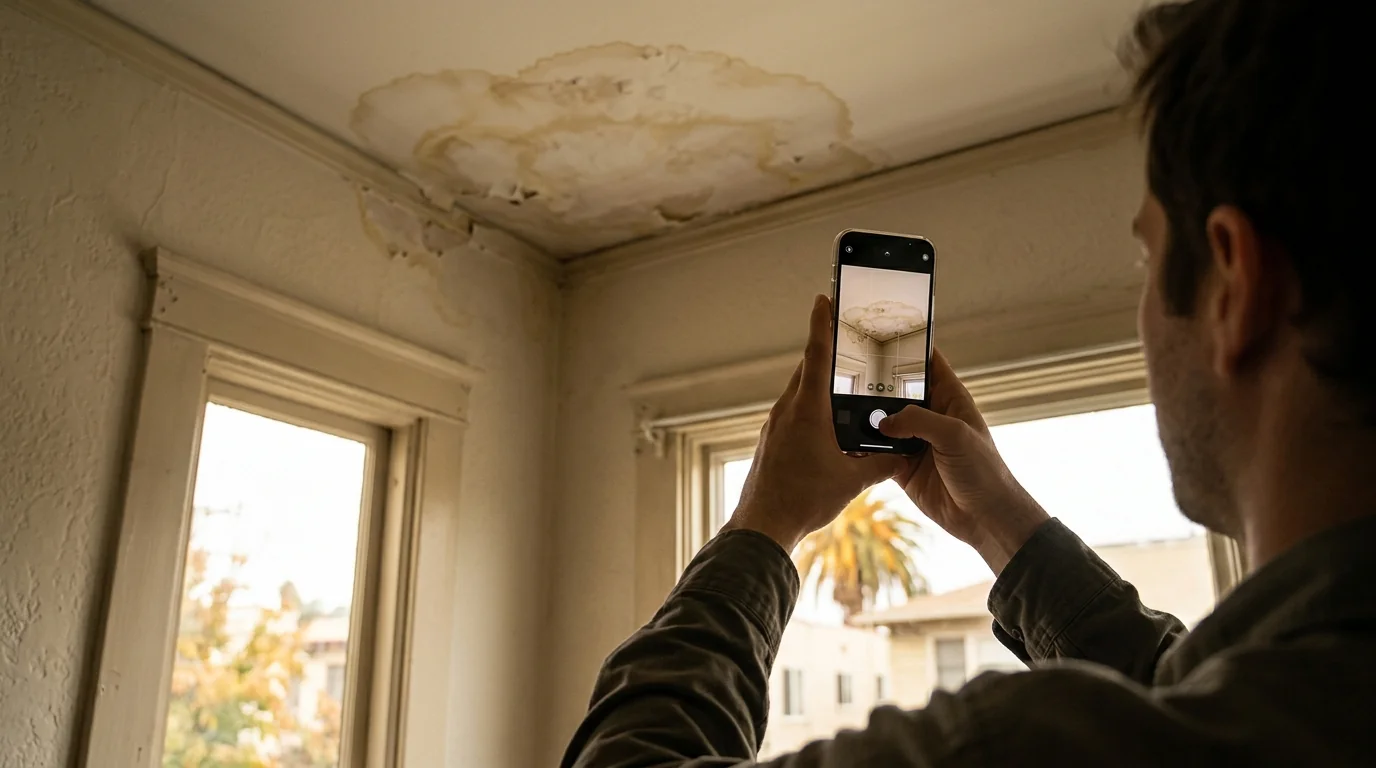
Photograph before anything is moved
Take wide photos of each affected room and close photos of the source, the water line on walls, damaged flooring and your belongings. Add them to your written notice. If the water came from above, note it; if it came from your unit, note what failed.
Keep a simple list of damaged belongings with rough values and photos. That list is what a renters insurance claim is built on. Our claims guide covers what adjusters ask for.
The building
What landlords usually handle
In general, the owner is responsible for the building itself: plumbing, roof, walls, floors and fixtures, and for getting the unit dried and repaired so it is livable. The owner's insurance usually covers the structure, and the owner or manager usually arranges the restoration company.
Your lease may add specifics, such as how quickly you must report problems or who handles damage you caused. This guide is general information, not legal advice; for a dispute, local tenant resources or an attorney can tell you where you stand.
Managing a leak in a rental building? Call and we will document every affected unit separately.
Call (323) 709-0141Your belongings
What tenants usually handle
Your belongings are generally yours to insure, which is what renters insurance is for. It often covers personal property damaged by a sudden leak and may cover a hotel if the unit is not livable. Check your policy and report the claim with your photos and list.
If the leak came from another unit, their liability may come into play, which is another reason the written record of where the water came from matters.
Stacked units
When the water comes from upstairs
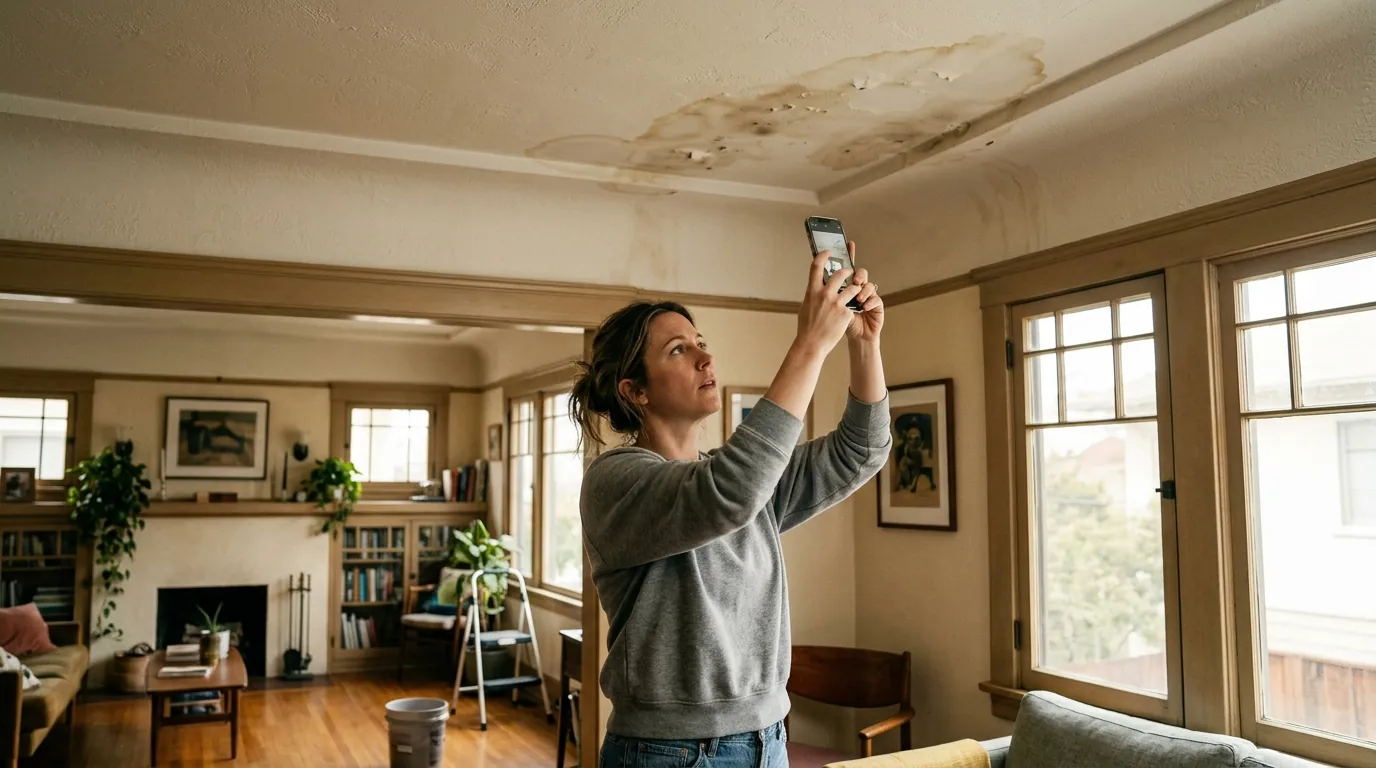
In buildings, a leak in one unit shows up as a stain or drip in the unit below, often through a light fixture. Turn off that light's circuit, put a bucket down, move belongings, and call the manager so they can reach the unit above and stop it.
A restoration company working the building should read every unit the water could have reached, above, below and beside, and keep a separate record for each. Our apartment water damage page explains how that is done.
Landlords
For owners: when a tenant reports a leak
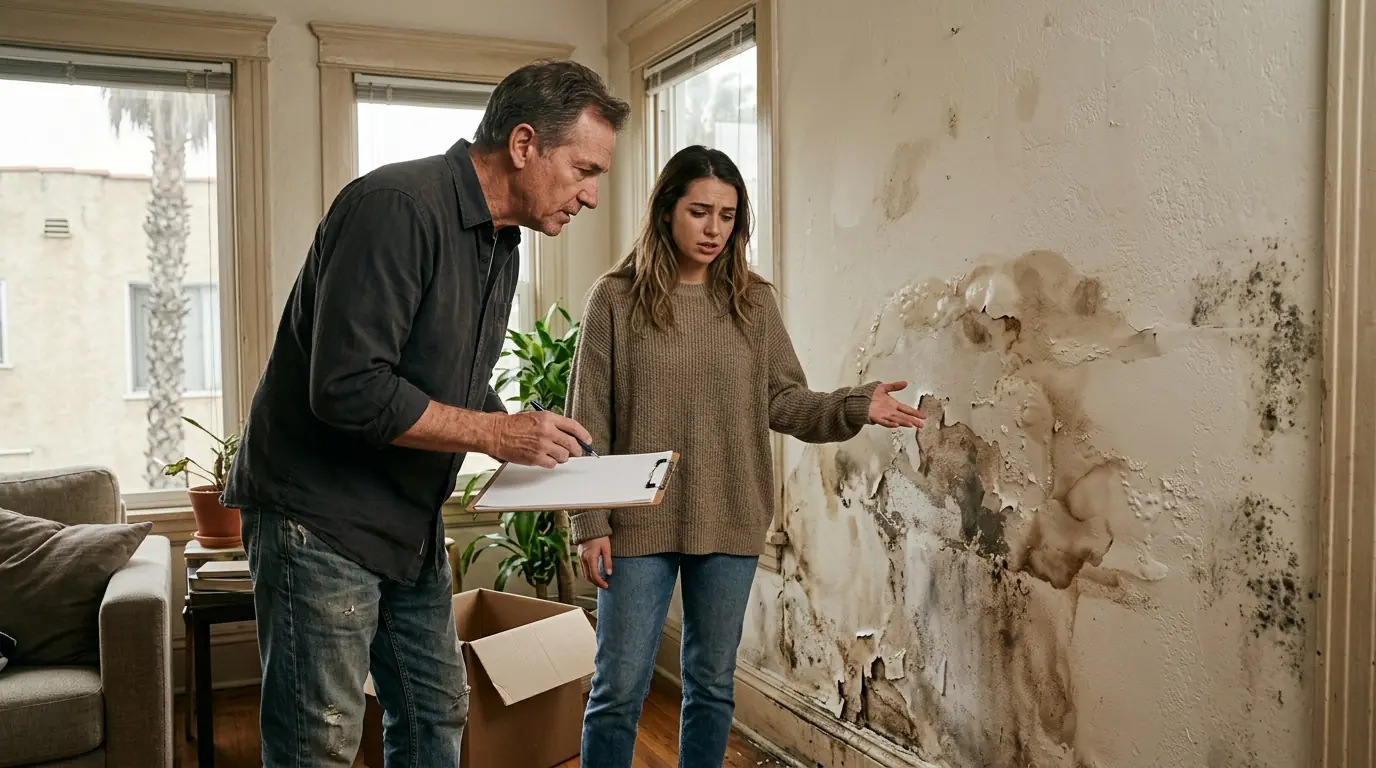
Respond quickly and get the water stopped and extracted the same day; delay is what turns a drying job into a rebuild and a habitability problem. Arrange access to any unit above or beside, because water rarely stays in one unit.
Ask the restoration company for a record per unit: photos, readings and what was removed. It makes your own claim simpler, answers the tenant's questions, and separates your repairs from their belongings claim.
During repairs
Living in the unit during drying
Most clean-water leaks are dried with tenants staying, using air movers and a dehumidifier for three to five days. The equipment is loud and should stay on. Sewage, contaminated water or a lost kitchen or only bathroom can make a unit temporarily unlivable.
If that happens, ask the landlord what arrangements they are making, and check whether your renters policy includes additional living expenses. Keep receipts for anything you pay.
After the leak
Why mold questions come up later
Mold can start on wet drywall and carpet pad within a day or two. If a leak in your unit was mopped up but never properly dried, a musty smell weeks later is a warning sign. Report it in writing, the same way as the original leak.
A moisture check shows whether walls or floors are still wet without opening them. Our guide on how fast mold grows explains the timeline.
FAQ
Questions readers ask
Generally the owner for the building and the tenant's renters insurance for belongings; the lease and cause matter.
Yes. Call first, then follow up in writing with the date, time and photos.
Usually the landlord arranges it. In an emergency, stop the water and notify them right away.
Often for belongings damaged by a sudden leak; check your policy.
Usually not for clean water. Contaminated water or a lost kitchen or bathroom can change that.
Tell the manager right away and document that the water came from above.
Keep reading
More from our restoration guides
Filing a Water Damage Claim in Los Angeles, CA
Filing a water damage claim.
Our guide to filing a water damage claimHow Fast Mold Grows After a Leak in LA Homes
How fast mold grows.
How fast mold grows, explainedCondo and HOA Leaks in LA: Who Handles What
Condo and HOA leaks.
Read: condo and HOA leaksLeak in a rental unit or building?
Call and we will dry every affected unit and keep a clear record for each.
24/7 emergency line
(323) 709-0141