Guide: shared buildings
Condo and HOA water leaks in Los Angeles: who handles what
In a condo, a leak is rarely just yours. It runs through shared walls, ceilings and pipes, and the cleanup involves neighbors, the association and usually two insurance policies.
By June Calloway, Restoration Guides Editor Updated September 2026
24/7 emergency line
(323) 709-0141- 1Stop the sourceYour valve or the manager.
- 2Warn the neighborsAbove, below, beside.
- 3Document each unitPhotos and readings.
Quick answer
When a leak hits a Los Angeles condo, stop the water at your unit valve or call the manager to shut the riser, warn the units above and below, and photograph every affected room before cleanup. Who repairs what is set by your CC&Rs and California law: in general the association handles common areas and owners handle their own units, but the source of the leak and your documents decide the details.
The source
Start with where the water came from
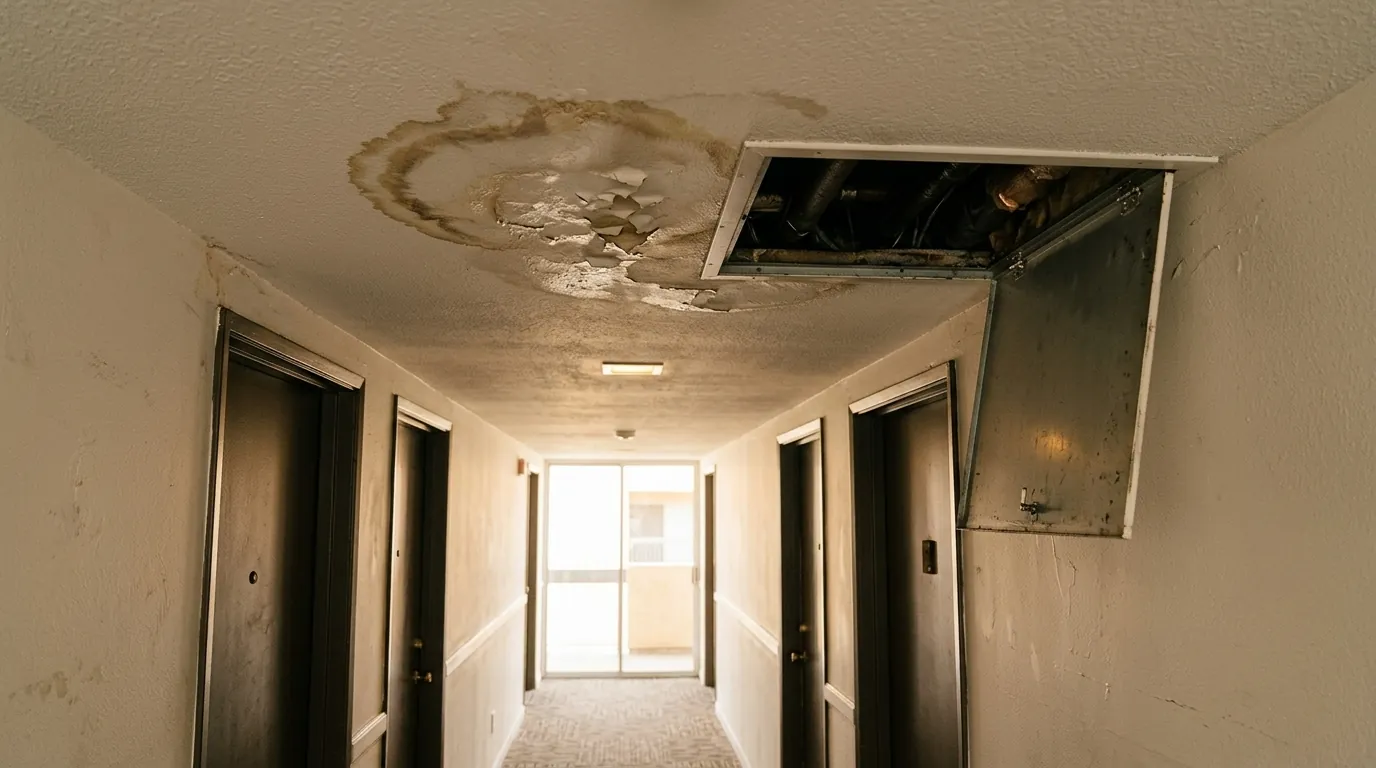
Almost every question that follows, who pays, whose insurance responds, who coordinates the repair, depends on where the leak started. A failed supply line under your sink is different from a cracked riser inside a shared wall. Both are different from a roof leak that runs down through the top floor.
So the first job, after the water is stopped, is to find and photograph the source. If you cannot see it, a moisture map across the affected units usually shows which way the water traveled and where it came from.
Common area and your unit
Who usually repairs what
Under California's Davis-Stirling Act, the general rule is that the association repairs and maintains the common areas. Each owner maintains their own unit and any exclusive-use common area attached to it, such as a balcony or patio, unless the CC&Rs say otherwise. Many CC&Rs spell out exactly where the line falls, for example at the drywall, the studs or the pipes inside the wall.
That is why it is worth finding your CC&Rs before the next leak, not during it. If the documents are unclear, ask the manager or the board how they have handled similar leaks before. We document every unit and the common areas separately. So the facts are there whichever way the responsibility falls.
Insurance
Two insurance policies, sometimes more
Most associations carry a master policy that covers the building structure and common areas. Owners usually carry their own condo policy, often called an HO-6, for the inside of their unit, their belongings and the deductible they may owe under the master policy. When a leak crosses several units, more than one policy may respond.
Call your own insurer early, even if you think the association's policy will cover the damage. Our guide to filing a water damage claim in Los Angeles explains what adjusters look for.
Right now
The first hour in a shared building
If the leak is yours, close the valve at the fixture or the unit shutoff, usually in the water heater closet or under the kitchen sink. If water is coming from above, you cannot stop it from your side: knock on the door above, and call the manager or the HOA's emergency number so someone can shut the riser.
Warn the neighbor below right away, because their ceiling may already be wet. Switch off power to any wet room from a dry panel, move belongings away from the water, and keep people out from under a sagging ceiling.
Water coming through a condo ceiling? Call the manager to stop it, then call us.
Call (323) 709-0141Paperwork
Document every unit separately
Take wide photos of each affected room in your unit, then ask your neighbors to do the same in theirs. Note the time the leak was found and when it was stopped. Keep any failed part, such as a split hose or a cracked fitting.
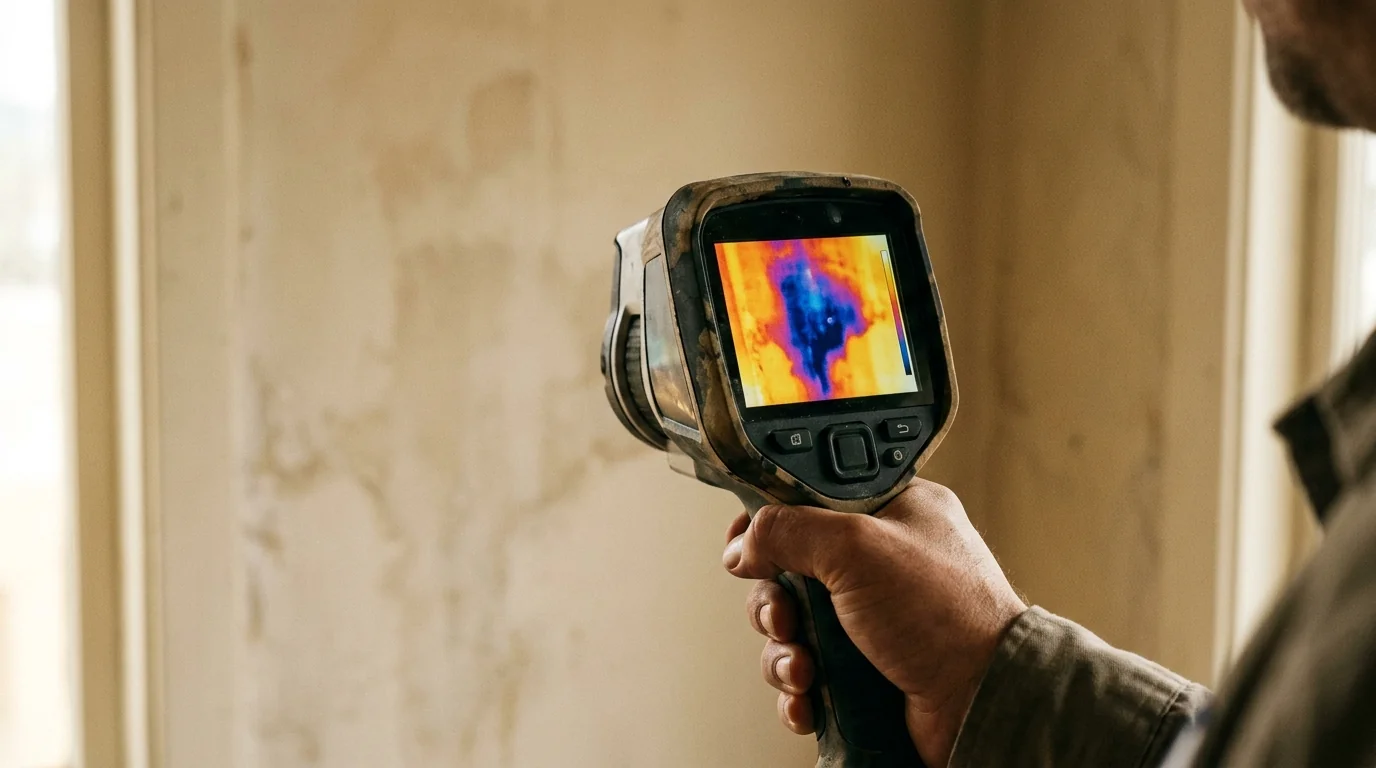
On our jobs, every unit the water reached gets its own photos, moisture readings and drying log, and so do the hallways and common areas. When several owners, an association and multiple insurers are involved, separate records per unit prevent most of the disputes later.
Neighbors
Working with the unit above or below
Drying a leak in a shared building often means getting into a neighbor's unit to read their ceiling or wall. Most neighbors are happy to help once they understand their own home may be wet. The manager can usually help arrange access if a unit is empty or the owner is away.
Be patient with the order of work. Drying usually has to happen in every affected unit at the same time, because a wet wall shared between two units will not dry from one side.
Hidden moisture
Mold and drying inside shared walls
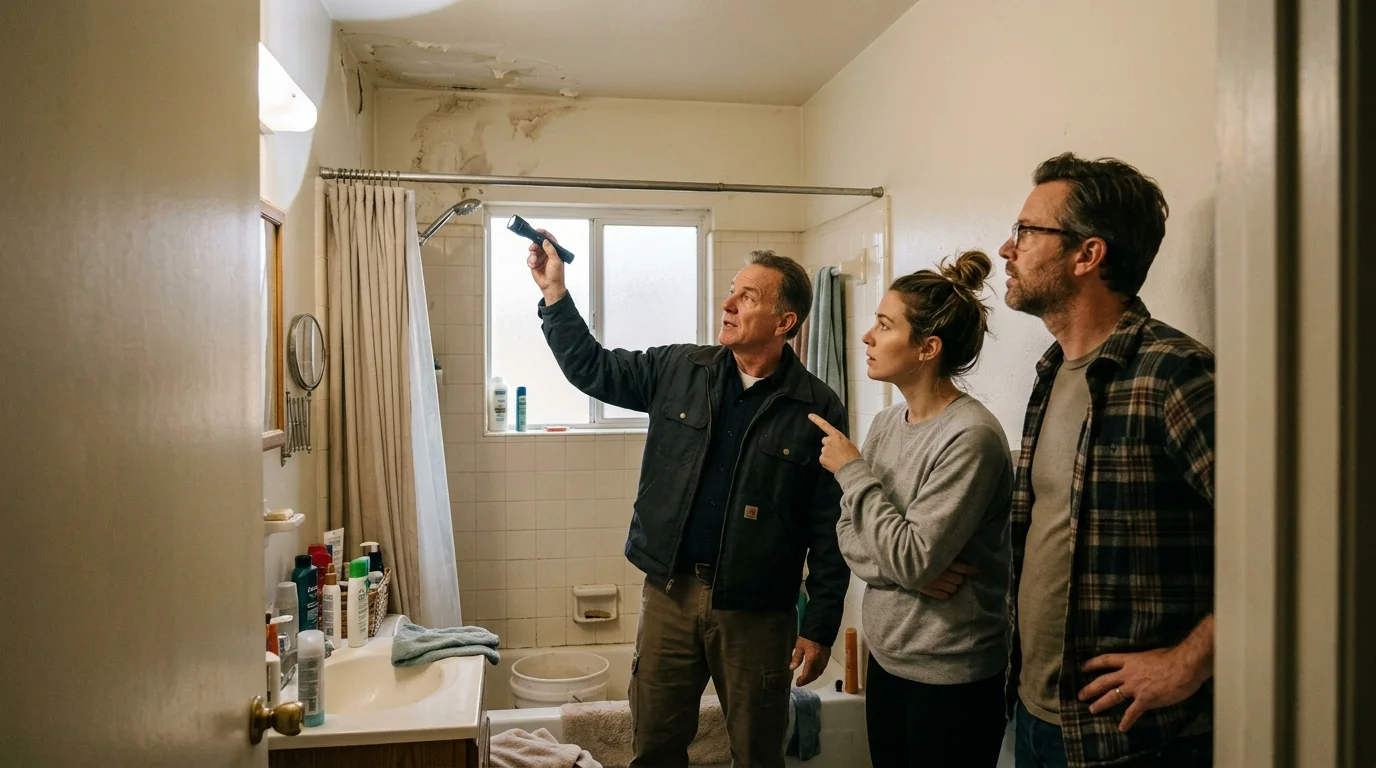
Water in a condo tends to travel along floor joists and down wall cavities. So the damage often extends well beyond the stain you can see. Walls that stay wet for more than a day or two can start to grow mold, especially behind cabinets and baseboards.
That is why we read walls and ceilings in every unit around the source, open only what will not dry in place, and keep equipment running until each unit reads dry. Our guide on how fast mold grows after a leak explains the timing.
Our approach
How we work with HOAs and managers
We answer the line 24/7 and can talk with the owner, the manager and the board on the same job. Each party gets the records that apply to them: the owner for the unit, the association for the common areas, and each insurer for its part of the loss.
Our apartment and multi-unit water damage page shows how those jobs run day to day. If you are a board member or manager, call and we can talk through how a leak in your building would be handled before it happens.
FAQ
Questions readers ask
It depends on the source and your CC&Rs. The association, the upstairs owner or their insurers may each have a share.
Often for common pipes such as risers, but your CC&Rs decide where the line falls.
Usually yes. The master policy rarely covers your unit interior, belongings or deductible share.
No. Stop the water, document it and start drying. Waiting lets mold start.
Yes. We keep separate records for each unit and the common areas.
Access is usually arranged through the manager. Most neighbors agree once they know their unit may be wet.
Keep reading
More from our restoration guides
Water Damage in an LA Rental: Who Handles What
Water damage in a rental.
Read: water damage in a rentalFiling a Water Damage Claim in Los Angeles, CA
Filing a water damage claim.
Our guide to filing a water damage claimHow Fast Mold Grows After a Leak in LA Homes
How fast mold grows.
Read: how fast mold growsLeak in your condo building?
Call the 24/7 line and we will document every unit it reached.
24/7 emergency line
(323) 709-0141