Guide: hiring the right crew
How to choose a water damage restoration company in Los Angeles
You usually pick a restoration company in the worst hour of your week, with water on the floor. A few questions on that first call separate the careful crews from the rest.
By June Calloway, Restoration Guides Editor Updated September 2026
24/7 emergency line
(323) 709-0141- 1Ask how they respondWho answers, how soon.
- 2Ask how they dryReadings and a daily log.
- 3Get it in writingScope, photos, paperwork.
Quick answer
To choose a water damage restoration company in Los Angeles, ask who answers the phone at night and how soon a crew can arrive, whether the same crew extracts, dries and rebuilds, how they measure moisture and how often they log it, and whether you get a written scope and photos for your insurer. Avoid anyone who pressures you to sign on the spot or will not explain the plan.
The job
What you are really hiring
Water damage restoration is not just cleanup. The company you call will decide what gets cut out and what gets saved, how long the equipment runs, and what your insurer sees in the file. A good crew dries as much of the house as it can and documents everything; a careless one either tears out too much or leaves moisture behind the wall that turns into mold.
That means the questions that matter are about process and paperwork, not slogans. You want a crew that will explain what it is doing in plain language, show you the readings, and leave you with a record you can hand to an adjuster.
Response
Ask who answers, and how fast they come
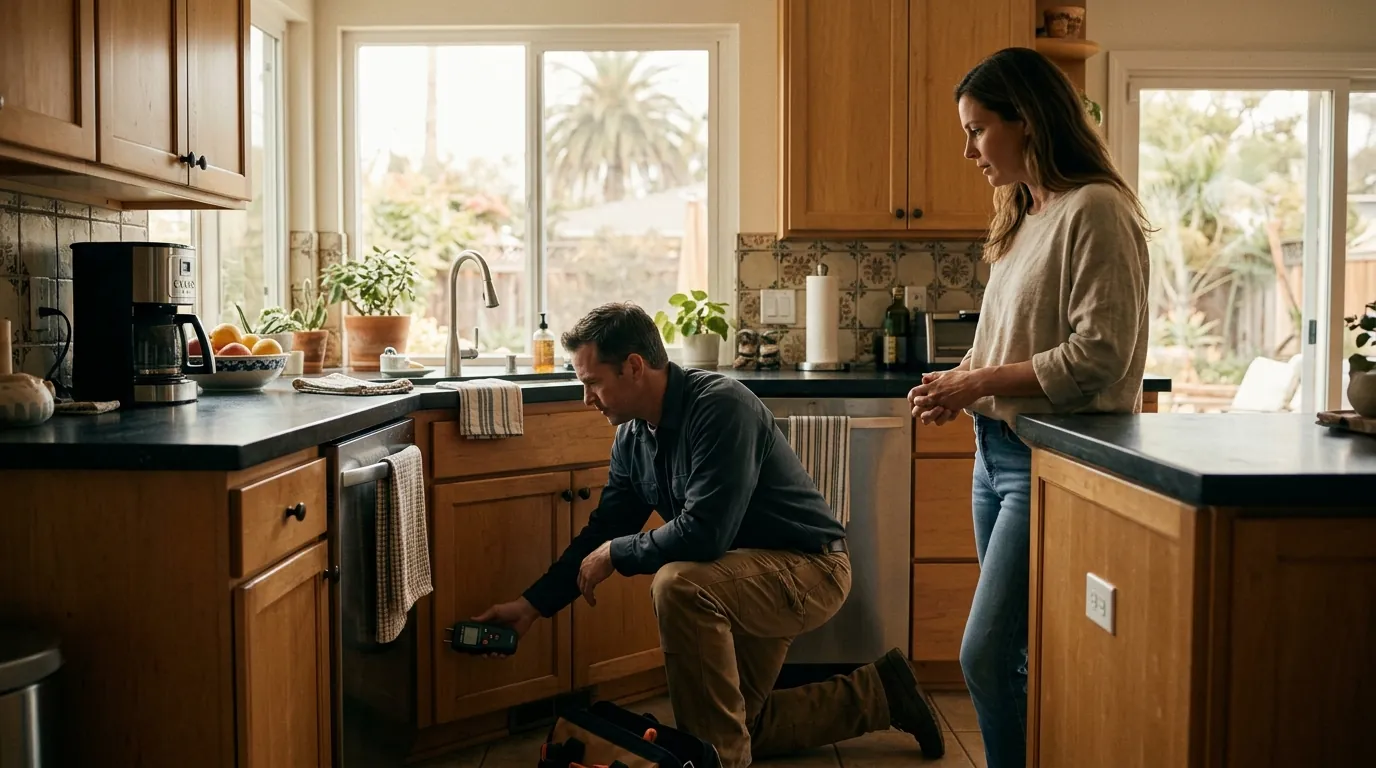
Call the number on the website and pay attention to what happens. A real person who asks where the water came from, which rooms it reached and whether power is involved is a good sign. A voicemail at midnight, or someone who only takes a name and promises a callback, is not.
Ask for a realistic arrival window, not a promise. Across Los Angeles, drive time depends heavily on where you are and the traffic at that hour, and an honest dispatcher will say so. Ask what you should do while you wait: a good one will walk you through shutting off the water and making the room safe.
One crew or many
Ask who does the work from start to finish
Some jobs pass through several hands: one company extracts, another dries, a third rebuilds. Each handoff is a chance for readings to be lost, photos to go missing and nobody to own the result. Ask whether the crew that removes the water also runs the drying, takes the readings and puts the rooms back together.
Also ask what happens if they cannot get to you in time. A straight answer about when they would point you to someone closer is better than a vague promise that leaves water sitting in your floor for hours.
Moisture readings
Ask how they measure dry
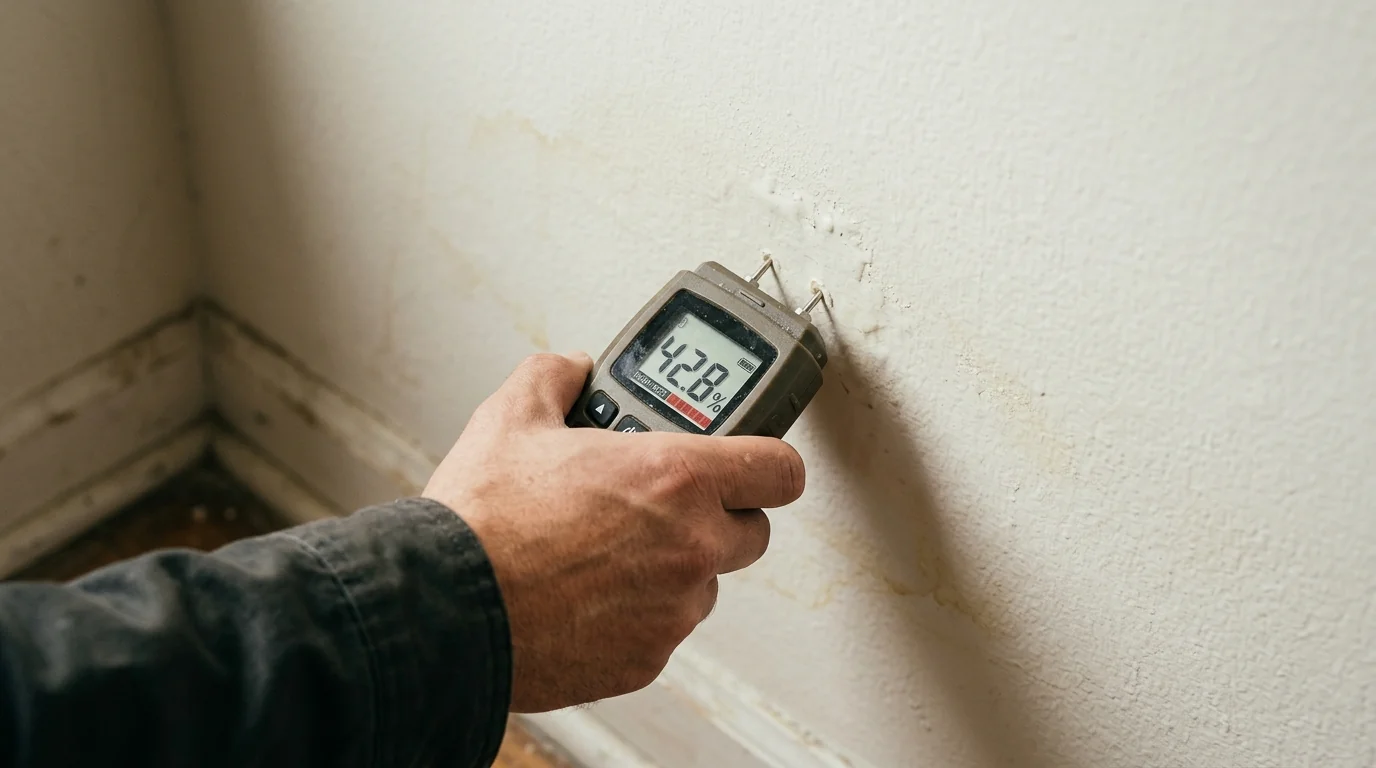
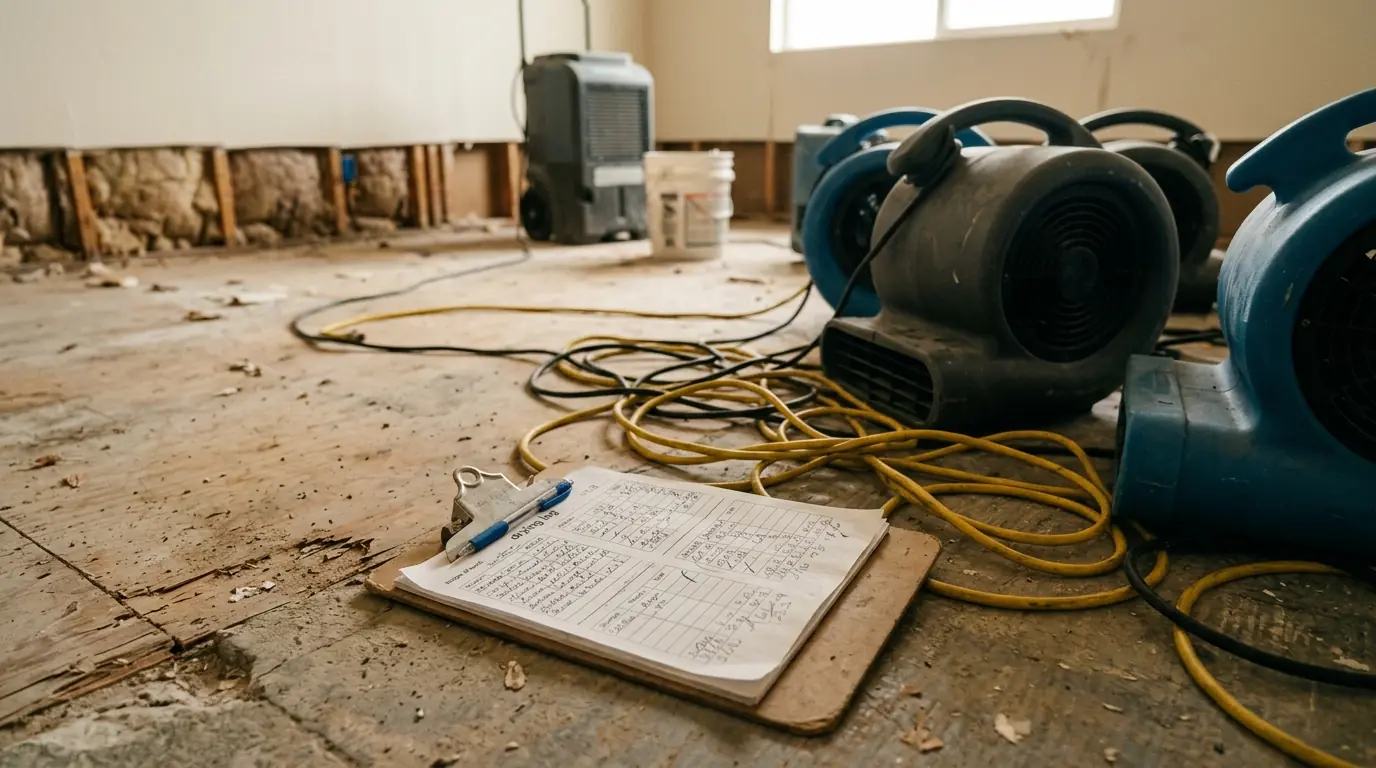
Drying is measured, not guessed. A professional crew uses moisture meters on walls, floors and framing, compares them against a dry area of the same material, and records those readings every visit. Equipment should come off only when the readings say the materials are dry, not when a set number of days has passed.
Ask whether you will get a copy of the drying log. It protects you if mold shows up months later, and adjusters expect to see it. Our guide on how long structural drying takes explains what normal progress looks like.
Water on the floor right now? Call and ask us anything on this list while a crew is dispatched.
Call (323) 709-0141Paperwork
Get the scope and the photos in writing
Before materials come out, you should know what is being removed and why. A short written scope listing the rooms, the materials and the equipment is reasonable to ask for, even on an emergency visit. Wide photos of each room and close photos of the source and the damage should be taken before anything is cut.
If your insurer is involved, ask whether the company documents the loss in the format adjusters use and whether it will talk with your adjuster directly. You still own the claim, but a clean file makes it move faster. Our guide to filing a water damage claim in Los Angeles covers what to expect.
Contracts
Read before you sign
You will usually be asked to sign an authorization so work can start. Read it. Look for what you are agreeing to pay if insurance does not cover the job, and whether the form assigns your insurance benefits to the company. You can ask questions, ask for a copy, and take a minute before signing; a reputable company will not rush you.
Be careful with anyone who demands a large cash deposit before any work, refuses to give a written scope, or will not leave a copy of what you signed. Emergency work should start fast, but the paperwork should still make sense.
Warning signs
Red flags worth walking away from
Watch for pressure tactics: claims that the whole house must be gutted before anyone has taken a reading, scary talk about mold with no testing, or a price that changes every time you ask a question. Watch too for crews that set fans in a room and leave without a dehumidifier or a plan to come back and check.
None of these mean a company is dishonest, but each one is worth a direct question. A careful crew will happily explain its readings, its equipment and why each piece of drywall or carpet is coming out.
Our approach
How we handle these questions
We answer the line 24/7, give you a real arrival window, and walk you through the shutoff while the crew is on the way. The crew that extracts the water also takes and logs the moisture readings on every visit, removes only what cannot dry, and handles the rebuild, so there is one set of photos and one log from start to finish.
If you want to see what a first visit includes, our emergency water damage restoration page lays it out step by step. And if you are still deciding who to call, call us anyway and ask these same questions.
FAQ
Questions readers ask
Who answers at night, how soon a crew can arrive, and what you should do while you wait.
Ask for the moisture readings and the drying log. Equipment should come off when materials read dry.
It helps. One crew keeps one set of readings and photos from start to finish.
Usually not. Check your policy, but you can generally choose who works in your home.
Yes, an authorization is normal. Read it and keep a copy.
Pressure to sign, no written scope, or tearing things out before any readings are taken.
Keep reading
More from our restoration guides
Filing a Water Damage Claim in Los Angeles, CA
Filing a water damage claim.
Read: filing a water damage claimHow Long Structural Drying Takes in Los Angeles, CA
How long drying takes.
Read: how long drying takesWater Leak in Los Angeles: What to Do in the First Hour
First hour after a leak.
Read: first hour after a leakWant straight answers on the first call?
Call the 24/7 line and ask us how we would handle your job.
24/7 emergency line
(323) 709-0141